From Aqua Guide, the free encyclopedia
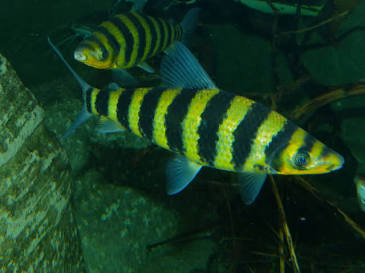
Banded Leporinus
Leporinus fasciatus
- Temperature
- 22–26 °C
- pH
- 5.5 – 7.5
- Min. tank size
- 570 L
- Lifespan
- 8-10 years
- Diet
- omnivore
- Care level
- moderate
| Scientific classification | |
|---|---|
| Scientific Name: | Leporinus fasciatus |
| Family: | Anostomidae |
| Origin: | South America (Amazon basin) |
| Care Characteristics | |
| Care Level: | moderate |
| Diet: | omnivore |
| Max Size: | 37.00 cm |
| Water Type: | freshwater |
| Temp Group: | tropical |
| Temperament: | semi aggressive |
| Min Group: | 5+ together |
| Varieties: | No cultivated strains — this is a wild-caught fish from the Amazon basin. The banding changes with age, which causes a good deal of confusion: juveniles carry a different number of bands from adults, and the pattern shifts as the fish grows, so a young fish and a mature one can look like different species. Several Leporinus and Anostomus species reach the trade under similar names and vary considerably in adult size and temperament. Leporinus affinis is very similar and slightly smaller; Anostomus anostomus, the striped headstander, is a horizontally striped fish of about 18 cm and is the better choice for a smaller tank. All of them are nose-down swimmers and all of them jump. |
| Lifespan: | 8-10 years |
Quick Tips
- Bioload:High
- Min Tank:570 L
- Substrate:Any
- Plant Safe:Yes
- Filtration:Standard
Banded Leporinus (Leporinus fasciatus) is a species of fish in the family Anostomidae. It is native to South America (Amazon basin). The banded leporinus is a torpedo in black and gold hoops that spends its life at forty-five degrees, nose down — which is how the headstanders got their name. It reaches 37 cm and lives in rocky stretches of fast-flowing water in the Amazon basin, feeding on worms, crustaceans, insects, plant matter and smaller fish. That plant matter is the catch: a leporinus will strip an aquarium of every leaf in it, so a planted tank is not an option. It is also a determined jumper and a fin-nipper toward slower tank mates, and it becomes more aggressive with age and in small numbers. Keep five or more in a very large tank with strong flow, smooth rockwork and a lid that seals.
Compatibility
- Temperament
- semi aggressive
- Keep in
- Groups of 5+
- Swims
- middle
- Fin nipper
- No
- Delicate fins
- No
Species similar to Banded Leporinus
Matched on family, then category, then water type