From Aqua Guide, the free encyclopedia
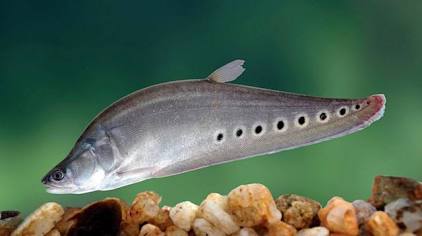
Clown Knifefish
Chitala ornata
- Temperature
- 24–28 °C
- pH
- 6 – 7.5
- Min. tank size
- 2000 L
- Lifespan
- 10-15 years
- Diet
- carnivore
- Care level
- difficult
| Scientific classification | |
|---|---|
| Scientific Name: | Chitala ornata |
| Family: | Notopteridae |
| Origin: | Asia (Mekong, Chao Phraya and Meklong basins) |
| Care Characteristics | |
| Care Level: | difficult |
| Diet: | carnivore |
| Max Size: | 100.00 cm |
| Water Type: | freshwater |
| Temp Group: | tropical |
| Temperament: | semi aggressive |
| Min Group: | Can be kept alone |
| Varieties: | No cultivated strains — this is a wild-caught and pond-farmed fish from the Mekong, Chao Phraya and Meklong basins in Laos, Thailand, Cambodia and Vietnam. The number and arrangement of the white ocelli along the flank varies between individuals and increases with age, so no two adults are marked quite alike. Several featherbacks reach the trade and differ enormously in adult size. Chitala ornata is the commonest; C. blanci and C. lopis grow larger still; Notopterus notopterus, the bronze featherback, is much smaller at around 60 cm and is the sensible choice for anyone drawn to the shape. The African knifefish, Xenomystus nigri, is smaller again at 30 cm. |
| Lifespan: | 10-15 years |
Quick Tips
- Bioload:High
- Min Tank:2000 L
- Substrate:Any
- Plant Safe:Yes
- Filtration:Standard
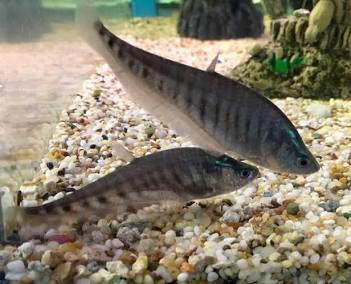
Clown Knifefish (Chitala ornata) is a species of fish in the family Notopteridae. It is native to Asia (Mekong, Chao Phraya and Meklong basins). The clown knifefish moves by rippling a single long fin along its underside, which lets it swim backwards as easily as forwards — and it does, constantly, with its body held rigid. It reaches a metre, is an obligate air-breather that must reach the surface, and lives in the flowing water of large and medium rivers and pools across the Mekong, Chao Phraya and Meklong basins, moving into flooded forest when the water rises between June and October. It is a crepuscular and nocturnal surface predator taking fishes, crustaceans and insects, and anything small enough will be eaten. The row of white ocelli along the flank appears with age; juveniles are barred instead. It needs a tank the size of a small pond.
Compatibility
- Temperament
- semi aggressive
- Keep in
- Can be kept alone
- Swims
- middle
- Fin nipper
- No
- Delicate fins
- No
Species similar to Clown Knifefish
Matched on family, then category, then water type