From Aqua Guide, the free encyclopedia
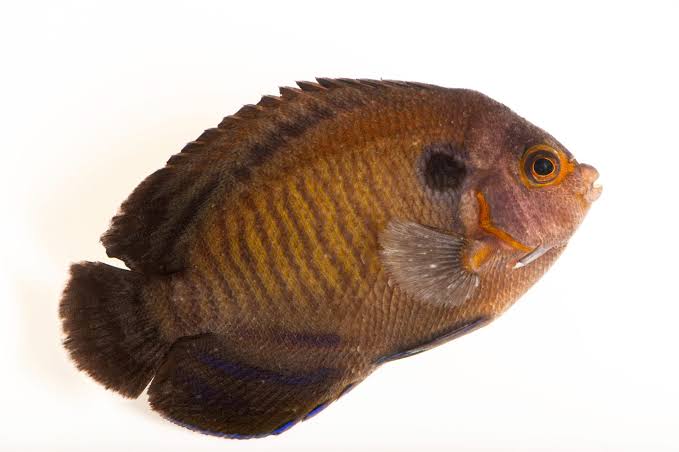
Midnight Angelfish
Centropyge nox
- Temperature
- 24–27 °C
- Salinity
- 1.02 – 1.026 SG
- Min. tank size
- 200 L
- Lifespan
- 5-10 years
- Diet
- omnivore
- Care level
- moderate
| Scientific classification | |
|---|---|
| Scientific Name: | Centropyge nox |
| Family: | Pomacanthidae |
| Origin: | Western Pacific reefs |
| Care Characteristics | |
| Care Level: | moderate |
| Diet: | omnivore |
| Max Size: | 10.00 cm |
| Water Type: | marine |
| Temp Group: | tropical |
| Reef Safe: | Reef Safe with Caution |
| Temperament: | semi aggressive |
| Min Group: | Can be kept alone |
| Varieties: | No cultivated strains — this is a wild-caught fish that only occasionally reaches the trade, and its colouring is consistent: a sleek, uniform bluish-black body with an irregular yellow patch behind the gill cover, above the pectoral fin. Juveniles are similar to adults, which is unusual among angelfish. The species was first described in 1853 by the Dutch ichthyologist Pieter Bleeker. The genus Centropyge contains the dwarf angelfish as a group, and several are far more commonly traded: C. bispinosa, the coral beauty; C. loricula, the flame angel; C. tibicen, the keyhole angel; and C. fisheri. All share the harem structure, the protogynous sex change, the algae-grazing diet and the coral-nipping caveat, and none should be kept two to a tank. |
| Lifespan: | 5-10 years |
Quick Tips
- Bioload:Low to medium
- Min Tank:200 L
- Substrate:Live rock with abundant algae and cover
- Plant Safe:Yes
- Filtration:Moderate to high (mature reef)
Midnight Angelfish (Centropyge nox) is a species of fish in the family Pomacanthidae. It is native to Western Pacific reefs. The midnight angelfish is a solid bluish-black fish with almost no markings, and that is the entire point of it. In a reef full of orange, yellow and blue, a dwarf angel that is simply black reads as a deliberate choice. The name comes from the Latin nox, meaning night. It reaches 10 cm and comes from the western Pacific, from the Ryukyu Islands south to New Caledonia and the Great Barrier Reef, west to Indonesia and east to the Caroline Islands, on coral-dense outer reef slopes between about 10 and 70 metres. It lives in harems of three to seven fish and shows a preference for habitats with dense and varied growth of benthic invertebrates. It only occasionally appears in the aquarium trade.
Compatibility
- Temperament
- semi aggressive
- Keep in
- Can be kept alone
- Swims
- middle
- Fin nipper
- No
- Delicate fins
- No
- Reef
- Reef Safe with Caution
Species similar to Midnight Angelfish
Matched on family, then category, then water type