From Aqua Guide, the free encyclopedia
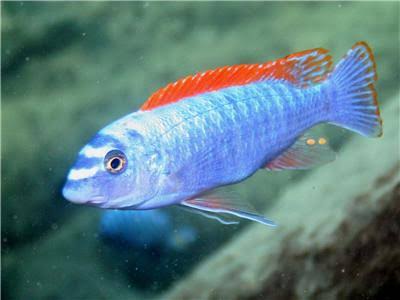
Trewavas's Cichlid
Labeotropheus trewavasae
- Temperature
- 21–24 °C
- pH
- 7.6 – 8.6
- Min. tank size
- 280 L
- Lifespan
- 6-10 years
- Diet
- herbivore
- Care level
- moderate
| Scientific classification | |
|---|---|
| Scientific Name: | Labeotropheus trewavasae |
| Family: | Cichlidae |
| Origin: | Africa (Lake Malawi, rocky shores) |
| Care Characteristics | |
| Care Level: | moderate |
| Diet: | herbivore |
| Max Size: | 11.70 cm |
| Water Type: | freshwater |
| Temp Group: | tropical |
| Temperament: | aggressive |
| Min Group: | 4+ together |
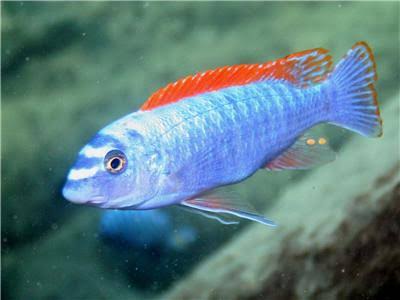
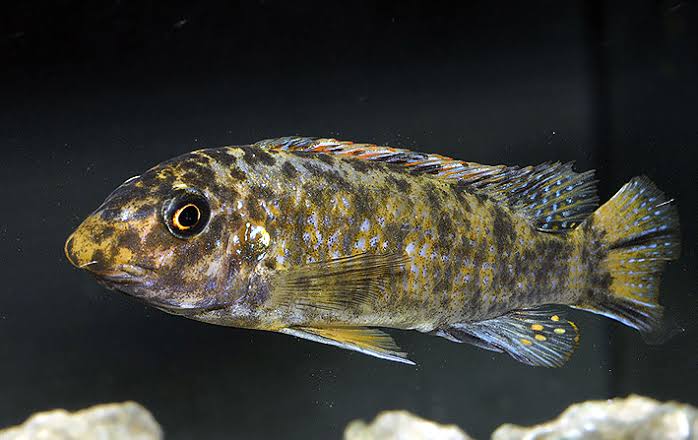
| Varieties: | No cultivated strains in the ordinary sense, but the species carries an unusual amount of natural variation and the trade uses it. Orange-blotch and marbled morphs occur naturally in females, and geographical variants from different parts of the Malawi shoreline differ substantially in colour — blue males with red dorsals, orange males, and a range of blotched forms — sold under location names. The genus contains one other species commonly kept, Labeotropheus fuelleborni, which is larger, deeper-bodied and shares the hooded snout and the temperament. Both are sometimes called scrapermouth mbuna, and both need the same crowded, rock-filled, cool, vegetable-fed tank. |
| Lifespan: | 6-10 years |
Quick Tips
- Bioload:Medium
- Min Tank:280 L
- Substrate:Any
- Plant Safe:Yes
- Filtration:Standard
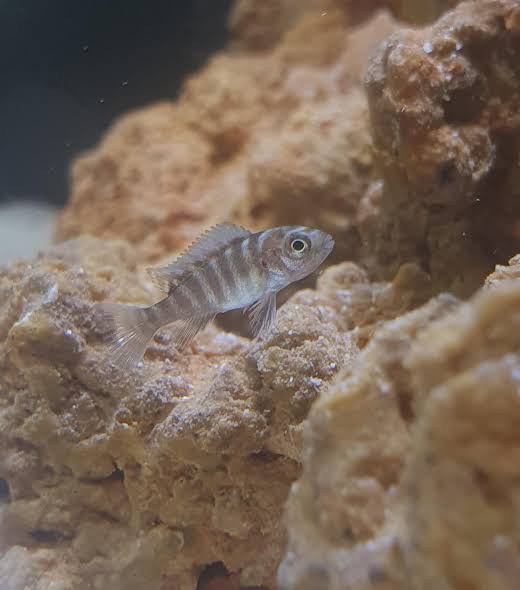
Trewavas's Cichlid (Labeotropheus trewavasae) is a species of fish in the family Cichlidae. It is native to Africa (Lake Malawi, rocky shores). Trewavas's cichlid has a snout that overhangs its mouth like a hood, and that shape is a tool. It lets the fish hold its body almost parallel to a rock face while scraping algae off it, working surfaces that a mbuna with a terminal mouth cannot reach at that angle. It reaches 11.7 cm, lives on the rocky shores of Lake Malawi down to about 15 metres, and scrapes algae off rock while also taking small crustaceans and worms. Females are mouthbrooders, carrying eggs and young. Marbled and orange-blotch females occur naturally, and the species has produced several colour strains in the trade. It is aggressive even by mbuna standards — keep it crowded, over rock, with plenty of females.
Compatibility
- Temperament
- aggressive
- Keep in
- Groups of 4+
- Swims
- middle
- Fin nipper
- No
- Delicate fins
- No
Species similar to Trewavas's Cichlid
Matched on family, then category, then water type