From Aqua Guide, the free encyclopedia
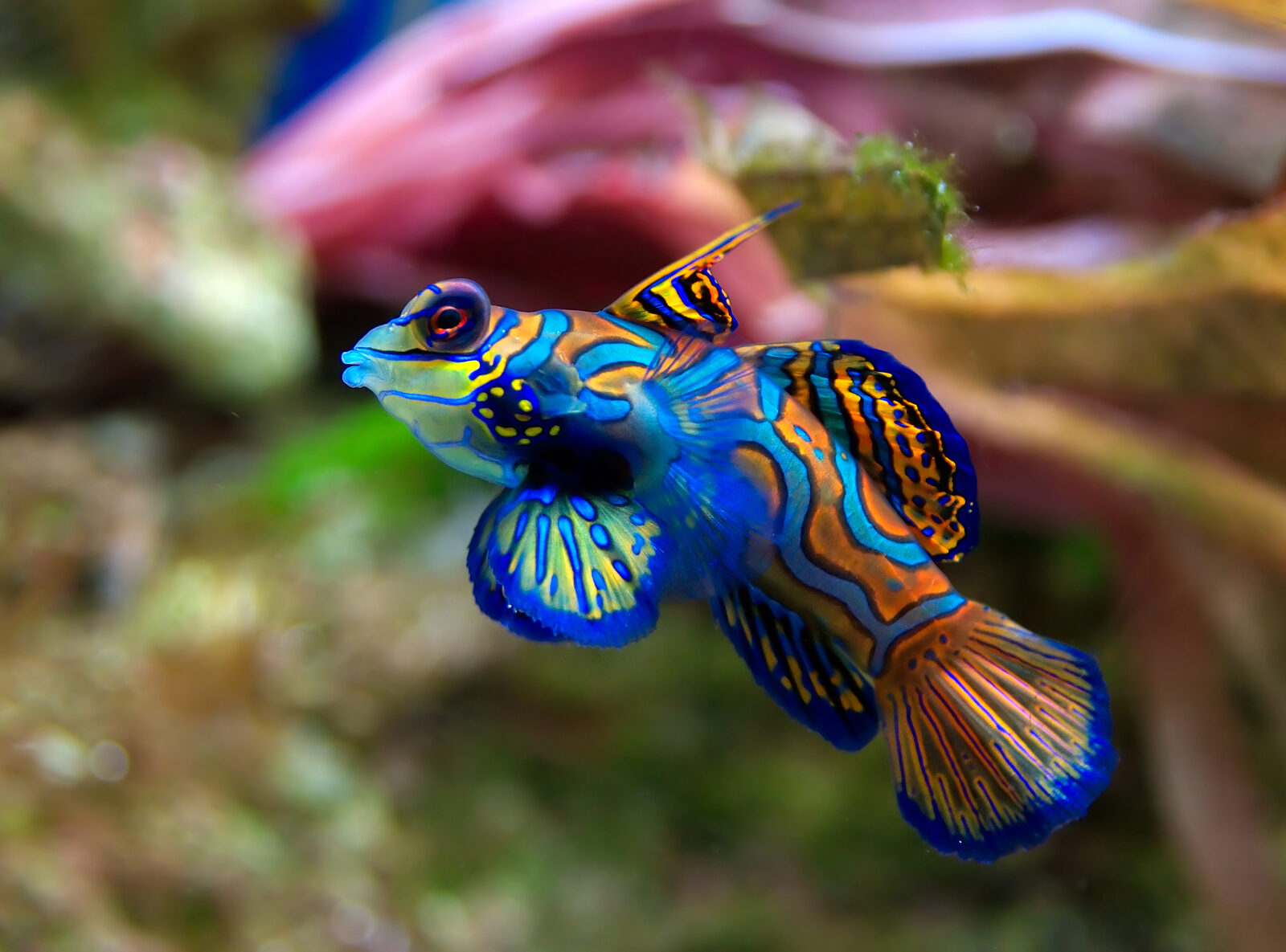
Mandarin Dragonet
Synchiropus splendidus
- Temperature
- 24–27 °C
- Salinity
- 1.02 – 1.026 SG
- Min. tank size
- 300 L
- Lifespan
- 3-5 years
- Diet
- carnivore
- Care level
- expert
| Scientific classification | |
|---|---|
| Scientific Name: | Synchiropus splendidus |
| Family: | Callionymidae |
| Origin: | Western Pacific reefs |
| Care Characteristics | |
| Care Level: | expert |
| Diet: | carnivore |
| Max Size: | 6.00 cm |
| Water Type: | marine |
| Temp Group: | tropical |
| Reef Safe: | Reef Safe |
| Temperament: | peaceful |
| Min Group: | Can be kept alone |
| Varieties: | No cultivated colour strains, but a closely related species that is frequently confused with it. Synchiropus splendidus, this fish, is the mandarin dragonet proper, patterned in swirling green, orange and blue lines. Synchiropus picturatus, the spotted mandarin or psychedelic dragonet, has bold dark-ringed spots on a green ground and is often sold under the same name. Their requirements are identical. A red or "ruby" form of splendidus appears occasionally and is a natural colour variant. Captive-bred specimens of both species are now produced commercially, trained onto frozen foods, and they are the responsible and the practical choice — a wild mandarin in an immature tank is very likely to starve. Other dragonets in the trade include the scooter blenny, Synchiropus ocellatus, which is plainer and has the same feeding requirements. |
| Lifespan: | 3-5 years |
Quick Tips
- Bioload:Very low
- Min Tank:300 L
- Substrate:Mature live rock and sand rich in copepods
- Plant Safe:Yes
- Filtration:Moderate to high (large mature reef with deep live rock)
Mandarin Dragonet (Synchiropus splendidus) is a species of fish in the family Callionymidae. It is native to Western Pacific reefs. The mandarin dragonet is the most beautiful fish in the marine hobby and the one most often killed by kindness. It is genuinely extraordinary. It is one of only two vertebrate species known to produce blue colouration through cellular pigment — cyanophores — rather than through structural light scattering, which is why the blue is so saturated and unlike anything else in a reef tank. It reaches about 6 cm and comes from the Pacific, from the Ryukyu Islands south to Australia, in sheltered lagoons and inshore reefs. The problem is food. Wild mandarins pick continuously at harpacticoid copepods, polychaete worms, small gastropods, amphipods, fish eggs and ostracods, and many refuse anything else.
Compatibility
- Temperament
- peaceful
- Keep in
- Can be kept alone
- Swims
- bottom
- Fin nipper
- No
- Delicate fins
- No
- Reef
- Reef Safe
Species similar to Mandarin Dragonet
Matched on family, then category, then water type