From Aqua Guide, the free encyclopedia
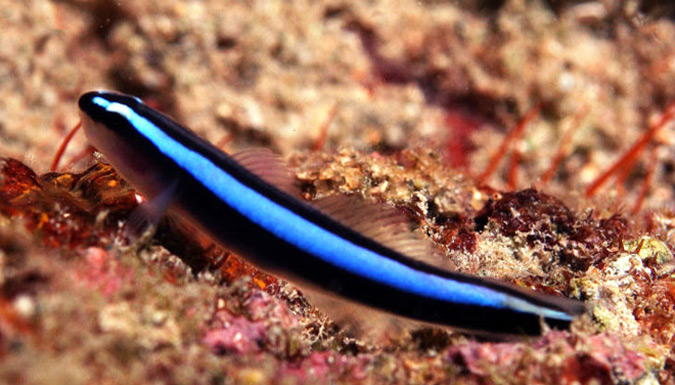
Neon Goby
Elacatinus oceanops
- Temperature
- 24–27 °C
- Salinity
- 1.02 – 1.026 SG
- Min. tank size
- 40 L
- Lifespan
- 1-2 years
- Diet
- carnivore
- Care level
- easy
| Scientific classification | |
|---|---|
| Scientific Name: | Elacatinus oceanops |
| Family: | Gobiidae |
| Origin: | Western Atlantic/Caribbean reefs |
| Care Characteristics | |
| Care Level: | easy |
| Diet: | carnivore |
| Max Size: | 5.00 cm |
| Water Type: | marine |
| Temp Group: | tropical |
| Reef Safe: | Reef Safe |
| Temperament: | peaceful |
| Min Group: | 2+ together |
| Varieties: | No cultivated colour strains — the black body with an electric blue stripe is the wild-type appearance, and it is consistent. Almost all trade stock is captive-bred, which is unusual among marine fish and is the main reason this species succeeds where its Indo-Pacific counterpart fails. The genus Elacatinus contains a number of Caribbean cleaner gobies, several of which reach the trade: E. evelynae, the sharknose goby; E. randalli, the yellowline goby; E. figaro, the barber goby from Brazil; and E. multifasciatus. Most are captive-bred and all perform the same cleaning role. Hybrids between species occur in commercial production and are sometimes traded under invented names. For anyone wanting a cleaner fish that will actually live, these gobies rather than Labroides are the answer. |
| Lifespan: | 1-2 years |
Quick Tips
- Bioload:Very low
- Min Tank:40 L
- Substrate:Live rock with small caves/ledges
- Plant Safe:Yes
- Filtration:Moderate (reef conditions)
Neon Goby (Elacatinus oceanops) is a species of fish in the family Gobiidae. It is native to Western Atlantic/Caribbean reefs. The neon goby is the cleaner fish that actually works in an aquarium. It is a Caribbean species — Florida to Belize, on coral heads between 1 and 45 metres — and it performs the same role as the Indo-Pacific cleaner wrasse, operating stations where larger fish queue to have parasites picked off. The difference is that this one is captive-bred in quantity, accepts prepared foods readily, and survives. It reaches just 5 cm, is jet black with an electric blue stripe, and is hardy, peaceful and reef safe. The one caveat is lifespan: one to two years is normal, which is short even for a small fish.
Compatibility
- Temperament
- peaceful
- Keep in
- Groups of 2+
- Swims
- bottom
- Fin nipper
- No
- Delicate fins
- No
- Reef
- Reef Safe
Species similar to Neon Goby
Matched on family, then category, then water type