From Aqua Guide, the free encyclopedia
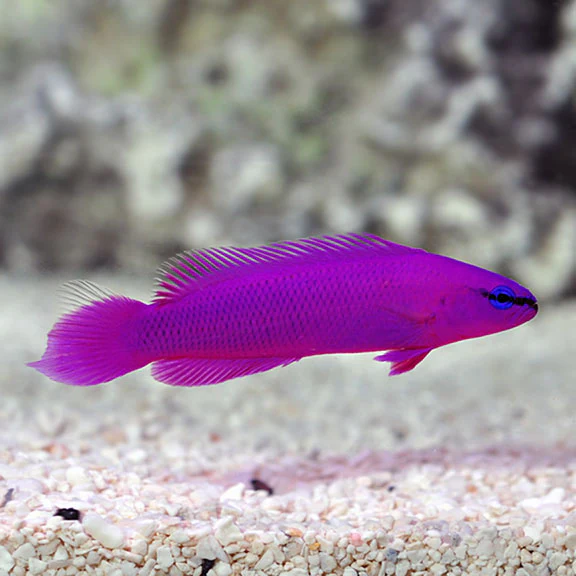
Orchid Dottyback
Pseudochromis fridmani
- Temperature
- 24–27 °C
- Salinity
- 1.02 – 1.026 SG
- Min. tank size
- 75 L
- Lifespan
- 5-7 years
- Diet
- carnivore
- Care level
- easy
| Scientific classification | |
|---|---|
| Scientific Name: | Pseudochromis fridmani |
| Family: | Pseudochromidae |
| Origin: | Red Sea reefs (now widely captive-bred) |
| Care Characteristics | |
| Care Level: | easy |
| Diet: | carnivore |
| Max Size: | 6.30 cm |
| Water Type: | marine |
| Temp Group: | tropical |
| Reef Safe: | Reef Safe |
| Temperament: | peaceful |
| Min Group: | Can be kept alone |
| Varieties: | No cultivated colour strains of the species itself — the solid magenta is what it is, and no breeder has improved on it. Almost all trade stock is captive-bred, which is unusual among marine fish and has taken collection pressure off a Red Sea endemic. Hybrids exist. The Indigo Dottyback is a commercially produced cross between P. fridmani and P. sankeyi, and other crosses within the genus circulate under trade names. The genus Pseudochromis contains a number of aquarium species, most of them considerably more aggressive: P. sankeyi, the striped dottyback; P. springeri; P. aldabraensis, the neon dottyback; and P. porphyreus, the magenta dottyback, which resembles this species and is wild-caught and far less peaceful. Anyone buying a purple dottyback should check which of the two they are getting. |
| Lifespan: | 5-7 years |
Quick Tips
- Bioload:Low
- Min Tank:75 L
- Substrate:Live rock with caves and crevices
- Plant Safe:Yes
- Filtration:Moderate (reef conditions)
Orchid Dottyback (Pseudochromis fridmani) is a species of fish in the family Pseudochromidae. It is native to Red Sea reefs (now widely captive-bred). The orchid dottyback is a solid magenta-purple fish about 6 cm long, and it is the exception in a family with a poor reputation. Most dottybacks are territorial, aggressive out of all proportion to their size, and difficult to house. This one is peaceful enough for a general reef community, hardy, and — importantly — captive-bred in quantity, which makes it both a better fish and a better purchase. It is endemic to the Red Sea, sheltering in holes and under overhangs on reefs down to 60 metres. It was named after David Fridman, curator at the Maritime Museum in Eilat, who collected the original type specimen in 1968.
Compatibility
- Temperament
- peaceful
- Keep in
- Can be kept alone
- Swims
- middle
- Fin nipper
- No
- Delicate fins
- No
- Reef
- Reef Safe
Species similar to Orchid Dottyback
Matched on family, then category, then water type