From Aqua Guide, the free encyclopedia
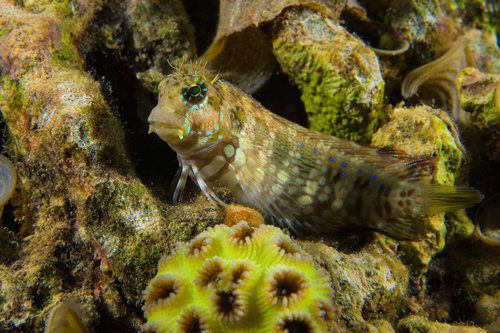
Lawnmower Blenny
Salarias fasciatus
- Temperature
- 24–27 °C
- Salinity
- 1.02 – 1.026 SG
- Min. tank size
- 110 L
- Lifespan
- 2-6 years
- Diet
- herbivore
- Care level
- moderate
| Scientific classification | |
|---|---|
| Scientific Name: | Salarias fasciatus |
| Family: | Blenniidae |
| Origin: | Indo-Pacific reefs |
| Care Characteristics | |
| Care Level: | moderate |
| Diet: | herbivore |
| Max Size: | 14.00 cm |
| Water Type: | marine |
| Temp Group: | tropical |
| Reef Safe: | Reef Safe |
| Temperament: | peaceful |
| Min Group: | Can be kept alone |
| Varieties: | No cultivated strains — the wild-type fish is what is sold, and its olive-to-brown mottling with dark bars and white spots varies constantly with mood and camouflage rather than between individuals. Georges Cuvier described the species as Salarias quadripennis, later judged a junior synonym of Bloch's 1786 name. Several other algae-grazing blennies reach the trade and are worth knowing. Salarias ramosus, the starry blenny, is similar with more pronounced spotting. Atrosalarias fuscus, the black sailfin blenny, is dark and shy. Ecsenius species — the bicolor and midas blennies among them — are smaller, and the midas swims more freely than most blennies. For serious hair algae, none of them are a substitute for nutrient control, a tang or a sea hare. |
| Lifespan: | 2-6 years |
Quick Tips
- Bioload:Low
- Min Tank:110 L
- Substrate:Live rock with film algae to graze
- Plant Safe:Yes
- Filtration:Moderate (reef conditions)
Lawnmower Blenny (Salarias fasciatus) is a species of fish in the family Blenniidae. It is native to Indo-Pacific reefs. The lawnmower blenny is bought to eat algae, and its actual diet is more complicated than the name suggests. Despite the common name, it functions primarily as a detritivore: plant material makes up only about 15 per cent of its diet, and the rest is organic debris and small organisms scraped off the rock. It does graze — it works surfaces continuously and does reduce film algae — but a keeper expecting a tank cleared of hair algae will be disappointed, and a keeper relying on the tank to feed it will starve it. It reaches 14 cm, has eyes set high on a blunt head, and changes colour to hide from predators.
Compatibility
- Temperament
- peaceful
- Keep in
- Can be kept alone
- Swims
- bottom
- Fin nipper
- No
- Delicate fins
- No
- Reef
- Reef Safe
Species similar to Lawnmower Blenny
Matched on family, then category, then water type