From Aqua Guide, the free encyclopedia
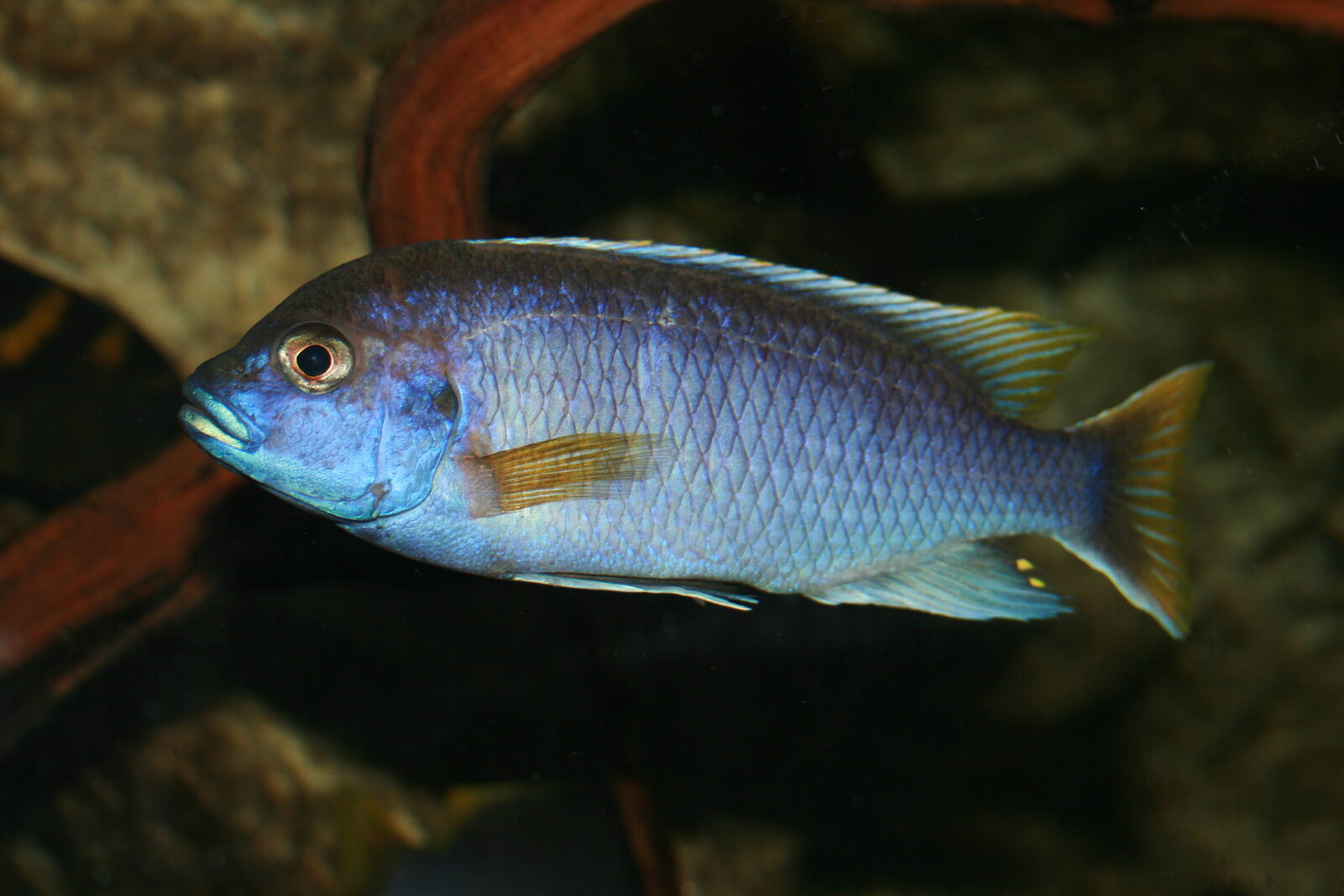
Acei Cichlid
Pseudotropheus sp. "acei"
- Temperature
- 24–28 °C
- pH
- 7.8 – 8.6
- Min. tank size
- 280 L
- Lifespan
- 6-8 years
- Diet
- herbivore
- Care level
- easy
| Scientific classification | |
|---|---|
| Scientific Name: | Pseudotropheus sp. "acei" |
| Family: | Cichlidae |
| Origin: | Africa (Lake Malawi, East African Rift) |
| Care Characteristics | |
| Care Level: | easy |
| Diet: | herbivore |
| Max Size: | 15.00 cm |
| Water Type: | freshwater |
| Temp Group: | tropical |
| Temperament: | semi aggressive |
| Min Group: | 6+ together |
| Varieties: | Two main geographic forms reach the trade, and they are worth telling apart. The Msuli form — the commonest — has a purple-blue body with bright yellow fins, and is what most shops sell as "yellow-tail acei". The Ngara form carries the same body colour with white fins, and is traded as the "white-tail acei". Other locality forms including Luwala appear occasionally. They should not be deliberately mixed, since they interbreed readily and the resulting fish are neither. The taxonomy is unsettled. The fish was first collected in the 1920s, was moved to Gephyrochromis and back to Pseudotropheus, and remains formally undescribed — so the correct written form keeps the quotation marks. Among mbuna, the fish most often kept alongside it are the yellow lab, the rusty cichlid and the socolofi, all of which sit at the calmer end of the group and share its water requirements. |
| Lifespan: | 6-8 years |
Quick Tips
- Bioload:Medium to high
- Min Tank:280 L
- Substrate:Aragonite/coral sand; rock caves plus driftwood to graze
- Plant Safe:Not reliably plant-safe (grazes algae)
- Filtration:High (hard alkaline water; strong filtration)
Acei Cichlid (Pseudotropheus sp. "acei") is a species of fish in the family Cichlidae. It is native to Africa (Lake Malawi, East African Rift). The acei is the mbuna for people who have been told mbuna are impossible. It is often called the most peaceful fish in the mbuna group, and it behaves differently from the rest of them in the tank: it shoals rather than holds a rock territory, it uses open water and the upper levels, and it is far less inclined to relentless aggression. The reason is ecological. Where most mbuna scrape algae from rock, this species is adapted to harvest algae from submerged logs and roots, using flat teeth built for wood rather than stone, and it lives over sandy, log-strewn shoreline rather than in the rock jumble. It reaches around 15 cm, is purple-blue with contrasting yellow or white fins depending on the form, and is still formally undescribed — hence the awkward name Pseudotropheus sp. "acei".
Compatibility
- Temperament
- semi aggressive
- Keep in
- Groups of 6+
- Swims
- middle
- Fin nipper
- No
- Delicate fins
- No
Species similar to Acei Cichlid
Matched on family, then category, then water type