From Aqua Guide, the free encyclopedia
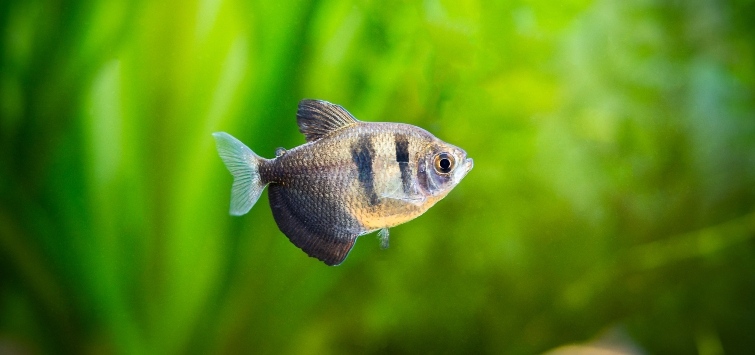
Black Skirt Tetra
Gymnocorymbus ternetzi
- Temperature
- 20–26 °C
- pH
- 6 – 7.5
- Min. tank size
- 75 L
- Lifespan
- 5 years
- Diet
- omnivore
- Care level
- easy
| Scientific classification | |
|---|---|
| Scientific Name: | Gymnocorymbus ternetzi |
| Family: | Acestrorhamphidae |
| Origin: | South America (Paraguay and Guaporé river basins) |
| Care Characteristics | |
| Care Level: | easy |
| Diet: | omnivore |
| Max Size: | 7.50 cm |
| Water Type: | freshwater |
| Temp Group: | tropical |
| Temperament: | semi aggressive |
| Min Group: | 6+ together |
| Varieties: | A leucistic white form is established in the trade, and the species was the base for the genetically modified GloFish range, sold in several fluorescent colours. Both need identical care to the wild form. Artificially dyed "painted" tetras are also sold and are best avoided — the dye is injected and the fish do not live as long. |
| Lifespan: | 5 years |
Quick Tips
- Bioload:Low to medium
- Min Tank:75 L
- Substrate:Gravel or sand; planted with open swimming space
- Plant Safe:Plant-safe
- Filtration:Moderate
Black Skirt Tetra (Gymnocorymbus ternetzi) is a species of fish in the family Acestrorhamphidae. It is native to South America (Paraguay and Guaporé river basins). The black skirt tetra is among the easiest tetras to keep alive and among the easiest to keep badly. It is a deep, angular, almost four-sided fish with two bold black bars behind the gills and a dense field of dark pigment cells spread evenly over the rear half of the body — the smoky "skirt" that names it. That pigment fades as the fish ages, so an old black skirt is a grey one. It reaches 7.5 cm and comes from the Paraguay and Guaporé basins through to Argentina, with introduced populations in the upper Paraná and the Paraíba do Sul. It eats worms, small crustaceans and insects, matures at around two years, and lives three to five — sometimes past six. Kept in too small a group, it becomes a fin-nipper.
Compatibility
- Temperament
- semi aggressive
- Keep in
- Groups of 6+
- Swims
- middle
- Fin nipper
- Yes
- Delicate fins
- No
Species similar to Black Skirt Tetra
Matched on family, then category, then water type