From Aqua Guide, the free encyclopedia
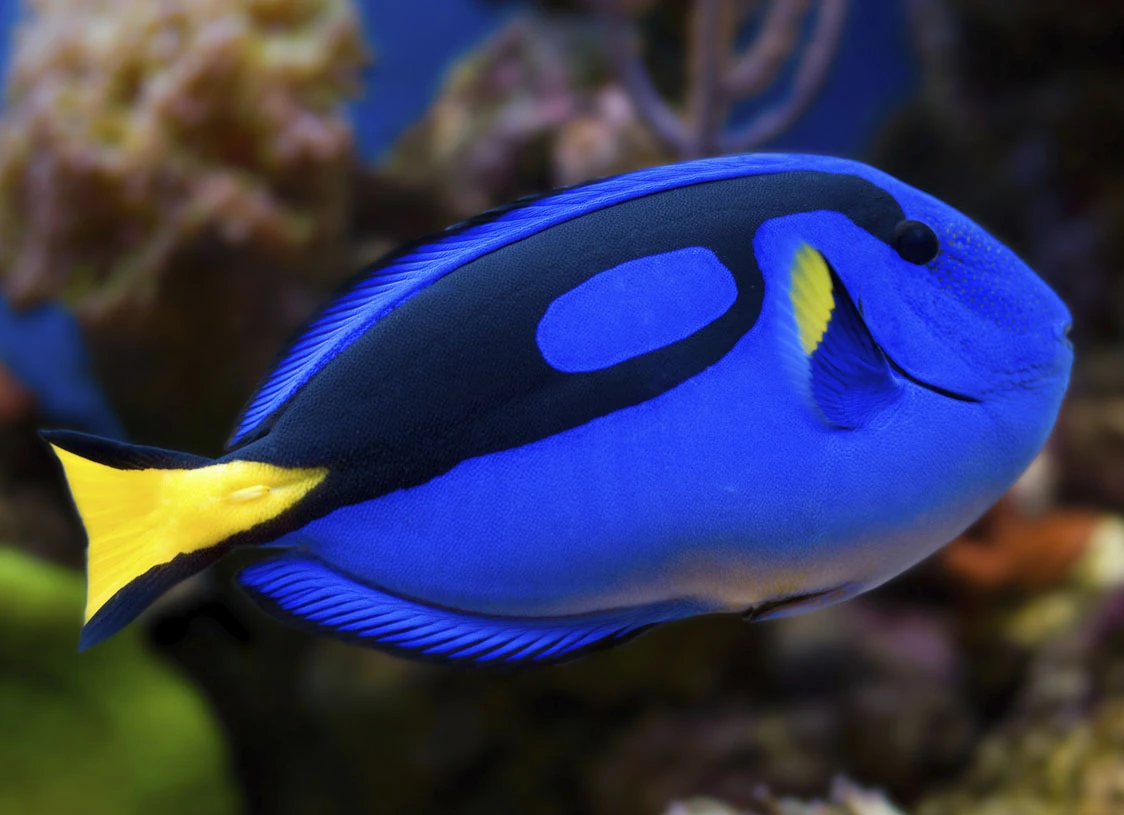
Blue Tang
Paracanthurus hepatus
- Temperature
- 24–27 °C
- Salinity
- 1.02 – 1.026 SG
- Min. tank size
- 680 L
- Lifespan
- 8-20 years
- Diet
- herbivore
- Care level
- difficult
| Scientific classification | |
|---|---|
| Scientific Name: | Paracanthurus hepatus |
| Family: | Acanthuridae |
| Origin: | Indo-Pacific reefs |
| Care Characteristics | |
| Care Level: | difficult |
| Diet: | herbivore |
| Max Size: | 30.00 cm |
| Water Type: | marine |
| Temp Group: | tropical |
| Reef Safe: | Reef Safe |
| Temperament: | semi aggressive |
| Min Group: | Can be kept alone |
| Varieties: | No cultivated colour strains — the royal blue body, black palette marking and yellow tail are consistent across the range. Juveniles are a brighter, more yellow-tinged blue and darken with maturity. The species is monotypic within its genus: Paracanthurus hepatus is the only member of Paracanthurus, which is unusual and reflects how distinct the fish is among surgeonfish. Captive-bred specimens, first produced in 2016, are now available in small numbers and are the better purchase where they can be found. A single specimen appeared in the Mediterranean in 2015, and Hawaiian records are presumed to be aquarium releases. Among other tangs, the Zebrasoma species — yellow, sailfin and purple tangs — are the common alternatives, all of them large, all of them ich-prone, and none of them beginner fish. |
| Lifespan: | 8-20 years |
Quick Tips
- Bioload:High
- Min Tank:680 L
- Substrate:Live rock with caves; open swimming space
- Plant Safe:Yes
- Filtration:High (strong flow; pristine, oxygen-rich water)
Blue Tang (Paracanthurus hepatus) is a species of fish in the family Acanthuridae. It is native to Indo-Pacific reefs. The blue tang is the "Dory" fish, and it is a poor first marine fish for reasons that have nothing to do with the film. It grows large — over 30 cm — swims constantly, is notoriously prone to marine ich, and needs a tank most people underestimate by a factor of three. It ranks as the eighth most traded marine species worldwide, with around 95,000 imported in 2011. Interestingly, the data show no significant increase in imports following the release of Finding Nemo in 2003, so the "Dory effect" is less clear-cut than often claimed. It was first captive-bred in 2016, after a six-year effort — a genuine landmark, since surgeonfish larvae are among the hardest to rear.
Compatibility
- Temperament
- semi aggressive
- Keep in
- Can be kept alone
- Swims
- middle
- Fin nipper
- No
- Delicate fins
- No
- Reef
- Reef Safe
Species similar to Blue Tang
Matched on family, then category, then water type