From Aqua Guide, the free encyclopedia
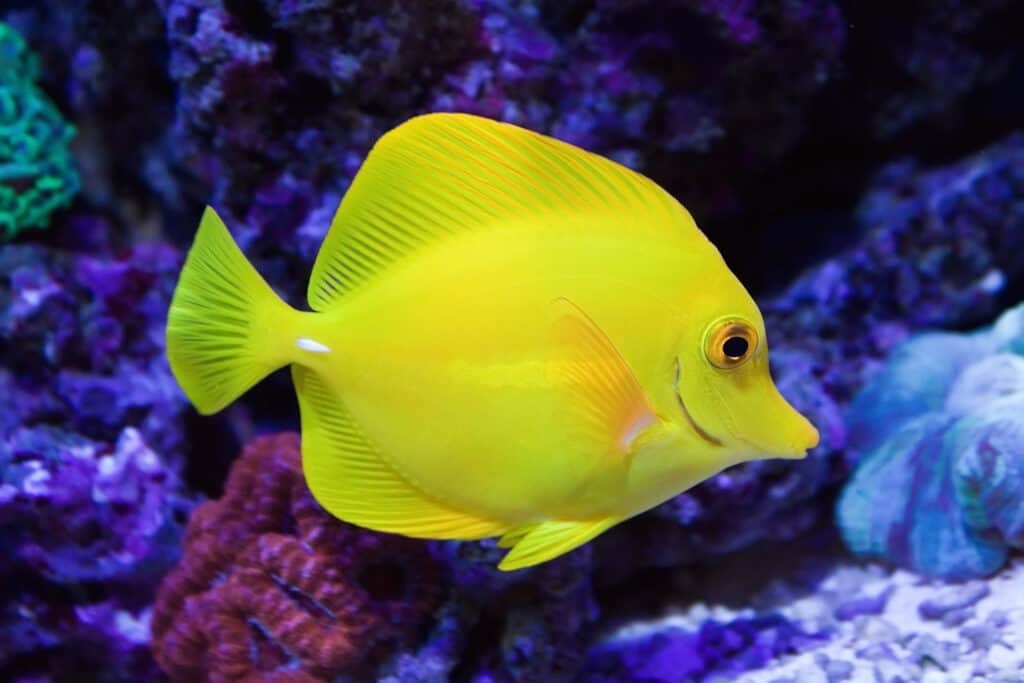
Yellow Tang
Zebrasoma flavescens
- Temperature
- 24–28 °C
- Salinity
- 1.02 – 1.026 SG
- Min. tank size
- 300 L
- Lifespan
- 10-20 years
- Diet
- herbivore
- Care level
- moderate
| Scientific classification | |
|---|---|
| Scientific Name: | Zebrasoma flavescens |
| Family: | Acanthuridae |
| Origin: | Pacific (notably around Hawaii) |
| Care Characteristics | |
| Care Level: | moderate |
| Diet: | herbivore |
| Max Size: | 20.00 cm |
| Water Type: | marine |
| Temp Group: | tropical |
| Reef Safe: | Reef Safe |
| Temperament: | semi aggressive |
| Min Group: | Can be kept alone |
| Varieties: | No cultivated colour strains — the solid yellow is the species' whole appearance, and it is consistent across the range. Captive-bred specimens, first produced in 2015, are now the principal source of new stock following Hawaii's January 2021 collection ban, which ended a fishery of 300,000 to 500,000 fish a year. Those captive-bred fish are hardier, better adapted to prepared food and taken from no reef, and they are the sensible purchase despite the price. Occasional sightings off Florida and in the Mediterranean are presumed aquarium releases. The genus Zebrasoma contains several other tangs in the trade: Z. xanthurum, the purple tang; Z. veliferum and Z. desjardinii, the sailfin tangs; and Z. scopas, the brown tang. All share the disc shape, the territoriality toward similar fish and the demanding diet. |
| Lifespan: | 10-20 years |
Quick Tips
- Bioload:Medium to high
- Min Tank:300 L
- Substrate:Live rock with caves; open swimming space
- Plant Safe:Yes
- Filtration:High (strong flow; clean water)
Yellow Tang (Zebrasoma flavescens) is a species of fish in the family Acanthuridae. It is native to Pacific (notably around Hawaii). The yellow tang is the most recognisable fish in the marine hobby, and its supply changed overnight in January 2021. Hawaii's aquarium collection ban ended a fishery that had taken 300,000 to 500,000 fish a year, and prices went from around $65 to over $400. The species had been captive-bred for the first time in 2015, in direct response to collection pressure, and that work is now the main source of new fish. It grows to about 20 cm in the wild, lives on shallow reefs between 2 and 46 metres around the Ryukyu, Mariana, Marshall and Hawaiian islands, and is predominantly herbivorous. It also cleans marine turtles, picking algae from their shells.
Compatibility
- Temperament
- semi aggressive
- Keep in
- Can be kept alone
- Swims
- middle
- Fin nipper
- No
- Delicate fins
- No
- Reef
- Reef Safe
Species similar to Yellow Tang
Matched on family, then category, then water type