From Aqua Guide, the free encyclopedia
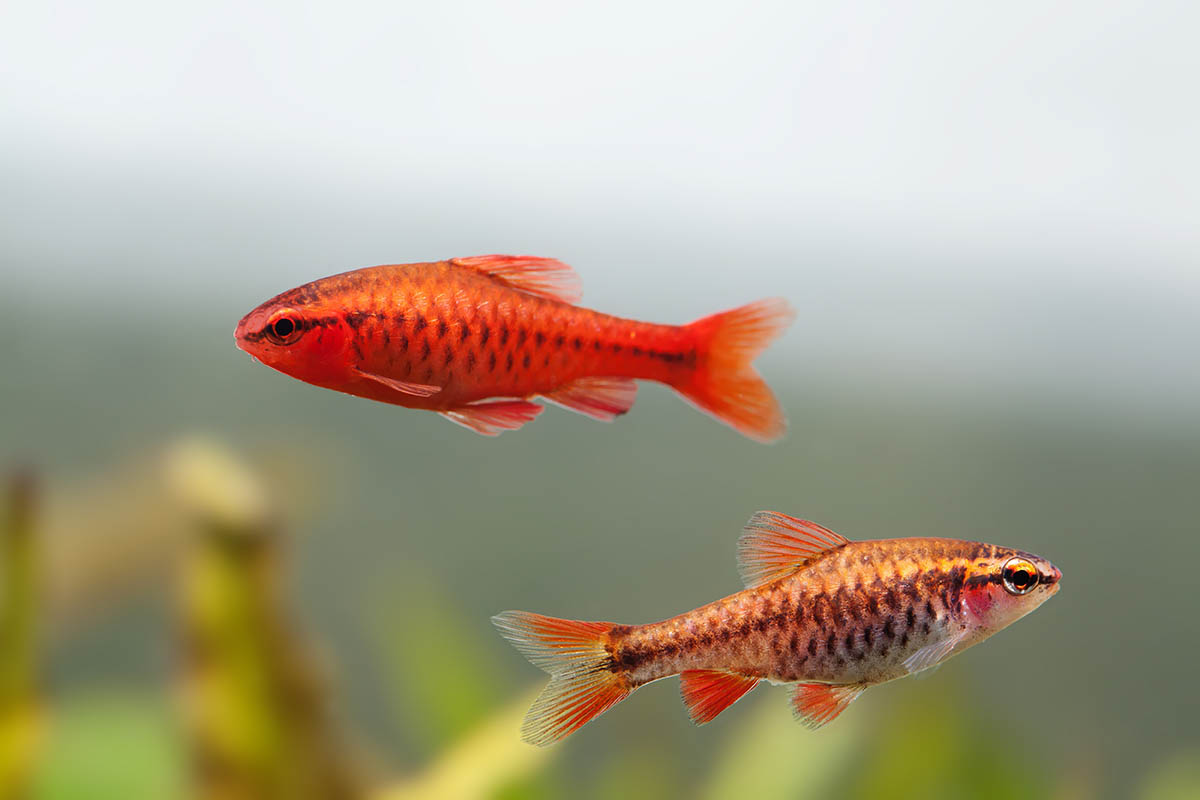
Cherry Barb
Rohanella titteya
- Temperature
- 23–27 °C
- pH
- 6 – 7.5
- Min. tank size
- 60 L
- Lifespan
- 4-7 years
- Diet
- omnivore
- Care level
- easy
Vulnerable on the IUCN Red List. That describes the wild population — the criteria cover only wild populations inside their natural range, and captive-bred fish are not assessed. Captive-bred stock is widely available and takes nothing from the wild population.
| Scientific classification | |
|---|---|
| Scientific Name: | Rohanella titteya |
| Family: | Cyprinidae |
| Origin: | Sri Lanka (shaded forest streams) |
| Care Characteristics | |
| Care Level: | easy |
| Diet: | omnivore |
| Max Size: | 5.00 cm |
| Water Type: | freshwater |
| Temp Group: | tropical |
| Temperament: | peaceful |
| Min Group: | 6+ together |
| Varieties: | Alongside the wild form the trade offers an albino strain and a long-finned strain. Both are captive-developed and identical in care; the long-finned form is slower and more easily nipped, so it suits a calmer tank than the standard fish. |
| Lifespan: | 4-7 years |
Quick Tips
- Bioload:Low
- Min Tank:60 L
- Substrate:Dark sand/gravel; densely planted with shade
- Plant Safe:Plant-safe
- Filtration:Low to moderate
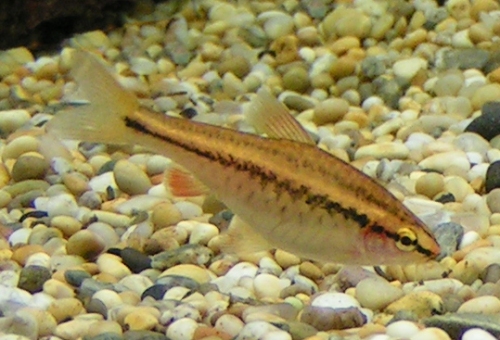
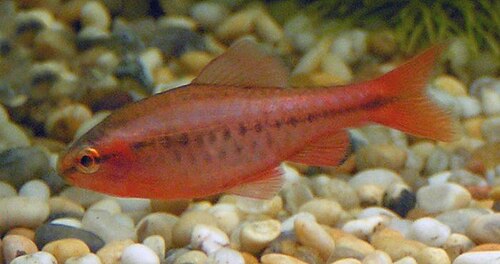
Cherry Barb (Rohanella titteya) is a species of fish in the family Cyprinidae. It is native to Sri Lanka (shaded forest streams). The cherry barb is the calm one, and the one whose success in the trade has not helped it at home. Males turn deep cherry-red when courting; females are fawn with a greenish sheen, silver along the sides and belly, and two pinkish stripes. Both carry a dark horizontal line from the snout through the eye to the tail. It reaches 5 cm and is endemic to Sri Lanka, in heavily shaded, shallow, calm water over silt and leaf litter, with introduced populations in Mexico and Colombia. It is assessed as Vulnerable, from overcollection and habitat loss — while being farmed in very large numbers for the aquarium trade. In 2023 it was moved out of Puntius into a genus of its own, Rohanella — named for Rohan Pethiyagoda, who first recognised that Sri Lanka’s barbs did not belong there — while titteya is simply the Sinhala name for the fish. Much of the trade still labels it Puntius.
Compatibility
- Temperament
- peaceful
- Keep in
- Groups of 6+
- Swims
- middle
- Fin nipper
- No
- Delicate fins
- No
Species similar to Cherry Barb
Matched on family, then category, then water type