From Aqua Guide, the free encyclopedia
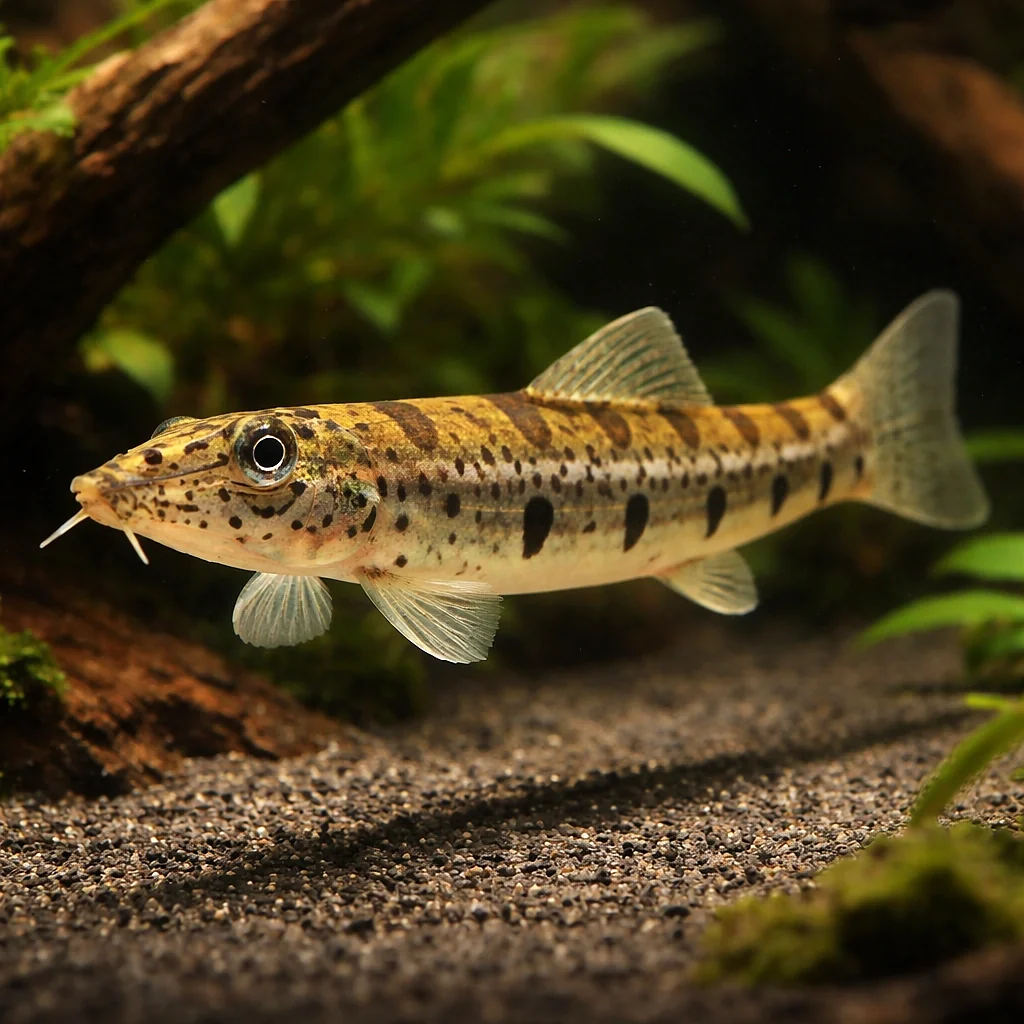
Horsehead Loach
Acantopsis dialuzona
- Temperature
- 16–24 °C
- pH
- 6 – 8
- Min. tank size
- 243 L
- Lifespan
- 8-10 years
- Diet
- carnivore
- Care level
- moderate
| Scientific classification | |
|---|---|
| Scientific Name: | Acantopsis dialuzona |
| Family: | Cobitidae |
| Origin: | Southeast Asia (sandy-bottomed rivers) |
| Care Characteristics | |
| Care Level: | moderate |
| Diet: | carnivore |
| Max Size: | 20.00 cm |
| Water Type: | freshwater |
| Temp Group: | subtropical |
| Temperament: | peaceful |
| Min Group: | 6+ together |
| Varieties: | No cultivated strains, and a taxonomy that is genuinely confused. Acantopsis choirorhynchos, long the standard name for this fish in the hobby, is now considered a junior synonym of A. dialuzona — so both names refer to the same species and older books and shop labels use either. Beyond that, populations from different regions may represent distinct species, and the genus is under review. Fish arriving in shipments from Thailand, Indonesia and Vietnam are not necessarily the same animal, which is one reason reported sizes and requirements vary in the literature. Several other Acantopsis reach the trade sporadically under names such as long-nosed loach or banded horseface loach. For a keeper the practical advice is unaffected: deep soft sand, a group, a large tank and cool water suit all of them. If a sand-sifter is wanted for a smaller aquarium, the various Pangio kuhli loaches and the sand-sifting gobies are more realistic options. |
| Lifespan: | 8-10 years |
Quick Tips
- Bioload:Medium
- Min Tank:243 L
- Substrate:Deep, soft, fine sand (essential - it buries itself)
- Plant Safe:Plant-safe (may disturb roots when burrowing)
- Filtration:Moderate to high (clean, oxygenated water)
Horsehead Loach (Acantopsis dialuzona) is a species of fish in the family Cobitidae. It is native to Southeast Asia (sandy-bottomed rivers). The horsehead loach lives in sand. Not on it — in it. The species spends much of its time completely buried, or with only the eyes projecting, and it feeds by taking sand into the mouth and sifting it through the gills. Everything about it follows from that: the long body, the downturned snout, the high-set eyes and the sand-coloured mottling. It reaches 200 mm standard length, which is larger than most people expect, and the specialist minimum tank is a 120 × 45 cm base at around 243 litres — with a soft sand substrate as an absolute requirement rather than a preference. It is also cool-water, at 16 to 24 °C (61–75 °F). Juveniles are commonly exported but adults rarely appear in the hobby, which suggests its needs are frequently unmet.
Compatibility
- Temperament
- peaceful
- Keep in
- Groups of 6+
- Swims
- bottom
- Fin nipper
- No
- Delicate fins
- No
Species similar to Horsehead Loach
Matched on family, then category, then water type