From Aqua Guide, the free encyclopedia
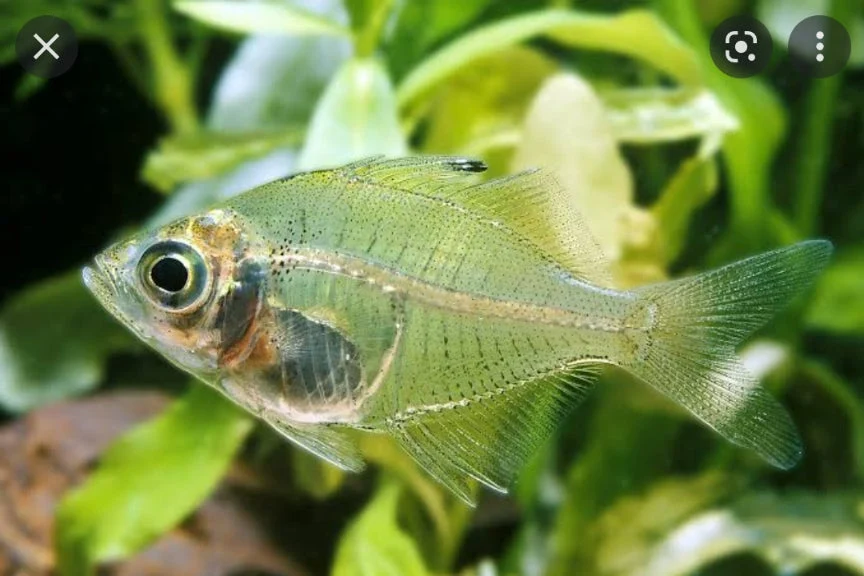
Indian Glassfish
Parambassis ranga
- Temperature
- 20–30 °C
- pH
- 6.5 – 8
- Min. tank size
- 110 L
- Lifespan
- 3-4 years
- Diet
- carnivore
- Care level
- moderate
| Scientific classification | |
|---|---|
| Scientific Name: | Parambassis ranga |
| Family: | Ambassidae |
| Origin: | South Asia (slow and still waters of India, Bangladesh, Myanmar) |
| Care Characteristics | |
| Care Level: | moderate |
| Diet: | carnivore |
| Max Size: | 8.00 cm |
| Water Type: | freshwater |
| Temp Group: | tropical |
| Temperament: | peaceful |
| Min Group: | 6+ together |
| Varieties: | No cultivated strains, and the "varieties" you will see offered are the problem rather than a feature. Painted or disco glassfish — pink, orange, blue, green and purple specimens — are dyed. The dye is injected repeatedly with a large needle, and most fish do not survive more than a few months. There is no strain, no line and no genetics involved. Campaigning has virtually removed them from UK stores, and they remain available in other markets. The only honest response is not to buy them, and to say why at the counter. The trade continues while there is demand. The natural fish is transparent with a faint golden or greenish cast and a visible skeleton. Several related Ambassidae are traded alongside it. Parambassis lala, the highfin glassfish, is smaller; P. siamensis is another common import; and the larger P. wolffii reaches 20 cm and is a genuine predator sold as a "glass perch". Wild-caught and farmed stock of P. ranga both circulate. Unrelated transparent fish sold under similar names include the glass catfish, which is a silurid, and various glass tetras. |
| Lifespan: | 3-4 years |
Quick Tips
- Bioload:Low
- Min Tank:110 L
- Substrate:Dark substrate (shows off the body); planted with cover
- Plant Safe:Plant-safe
- Filtration:Moderate
Indian Glassfish (Parambassis ranga) is a species of fish in the family Ambassidae. It is native to South Asia (slow and still waters of India, Bangladesh, Myanmar). The Indian glassfish is transparent enough to show its own skeleton, and it is best known for something done to it rather than anything it does. For many years it has been artificially injected with luminous dyes on fish farms in Asia and sold as "painted" glassfish or "disco fish". The process involves repeatedly injecting the fish with a large needle, and most do not survive more than a few months afterwards. Protracted campaigning has virtually removed painted fish from UK stores; they remain available internationally. The undyed fish is a good one. It comes from slow and still waters across India, Bangladesh and Myanmar, reaches 80 mm standard length, and shoals peacefully in mid-water with the light catching the internal structure. One more myth attaches to it: despite decades of advice to the contrary, this species does not require brackish water.
Compatibility
- Temperament
- peaceful
- Keep in
- Groups of 6+
- Swims
- middle
- Fin nipper
- No
- Delicate fins
- No
Species similar to Indian Glassfish
Matched on family, then category, then water type