From Aqua Guide, the free encyclopedia
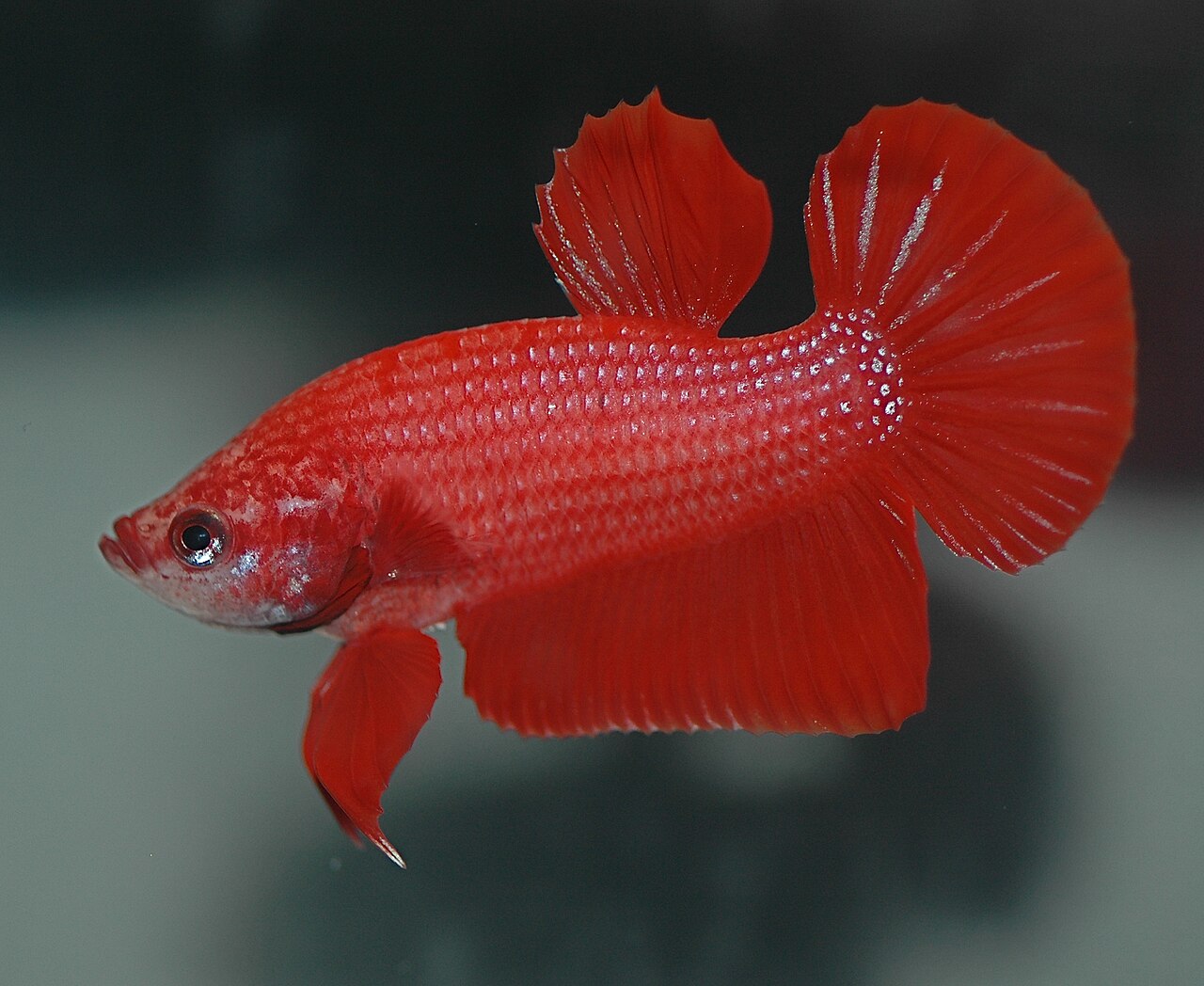
Betta (Siamese Fighting Fish)
Betta splendens
- Temperature
- 22–30 °C
- pH
- 6 – 8
- Min. tank size
- 41 L
- Lifespan
- 3 years
- Diet
- carnivore
- Care level
- moderate
Vulnerable on the IUCN Red List. That describes the wild population — the criteria cover only wild populations inside their natural range, and captive-bred fish are not assessed. Captive-bred stock is widely available and takes nothing from the wild population.
| Scientific classification | |
|---|---|
| Scientific Name: | Betta splendens |
| Family: | Osphronemidae |
| Origin: | Thailand, Cambodia and the Mekong basin of Southeast Asia |
| Care Characteristics | |
| Care Level: | moderate |
| Diet: | carnivore |
| Max Size: | 7.00 cm |
| Water Type: | freshwater |
| Temp Group: | tropical |
| Temperament: | aggressive |
| Min Group: | Can be kept alone |
| Varieties: | Centuries of selective breeding have produced more strains than any other aquarium fish, sorted mainly by tail shape. Veiltail is the oldest ornamental form, described in 1927, and the cheapest — a long, drooping asymmetric tail. Doubletail, with the caudal split into two lobes, was developed around 1960; delta and superdelta followed, and halfmoon, which spreads to a full 180 degrees, is the modern show standard. Crowntail carries extended fin rays that project past the webbing like spikes. Plakat is the short-finned form closest to the fighting fish and the wild body plan — faster, hardier, and much easier to keep than the trailing-finned strains. Colour strains are a separate axis entirely: solids, bi-colours, marbles that change pattern through life, koi and galaxy patterns, and the dragon scale forms with thick metallic scaling. Longer fins cost the fish something. Halfmoon and heavily finned strains swim badly, tire quickly, tear their fins on decor and are more prone to fin rot. If you want a betta that behaves like a fish rather than an ornament, buy a plakat. Cheap mass-produced veiltails from large Southeast Asian and Eastern European farms often carry genetic defects and health problems. The wild form is rarely seen in the hobby at all. |
| Lifespan: | 3 years |
Quick Tips
- Bioload:Low
- Min Tank:41 L
- Substrate:Sand or smooth gravel; resting plants (e.g. betta hammock) appreciated
- Plant Safe:Plant-safe
- Filtration:Low (gentle flow; sponge filter ideal)
Betta (Siamese Fighting Fish) (Betta splendens) is a species of fish in the family Osphronemidae. It is native to Thailand, Cambodia and the Mekong basin of Southeast Asia. The betta has been domesticated for more than a thousand years — among the earliest of any fish, and longer than the goldfish. DNA evidence suggests it has been bred for fighting since the thirteenth century, and only in the early twentieth century did breeders switch from selecting for aggression to selecting for colour and finnage. It is native to mainland Southeast Asia — Cambodia, Laos, Myanmar, Malaysia, Thailand and Vietnam — where it lives in shallow, heavily vegetated water: marshes, floodplains and rice paddies. The wild fish is green, brown and grey with short fins, and colours up only when agitated. It looks almost nothing like the fish in the shops. It reaches about 6–8 cm and carries a labyrinth organ, which lets it breathe atmospheric air at the surface and survive water too low in oxygen for most fish. It is the national aquatic animal of Thailand, and the IUCN lists the wild species as Vulnerable.
Compatibility
- Temperament
- aggressive
- Keep in
- Can be kept alone
- Swims
- top
- Fin nipper
- No
- Delicate fins
- Yes — keep away from nippers
Species similar to Betta (Siamese Fighting Fish)
Matched on family, then category, then water type