From Aqua Guide, the free encyclopedia
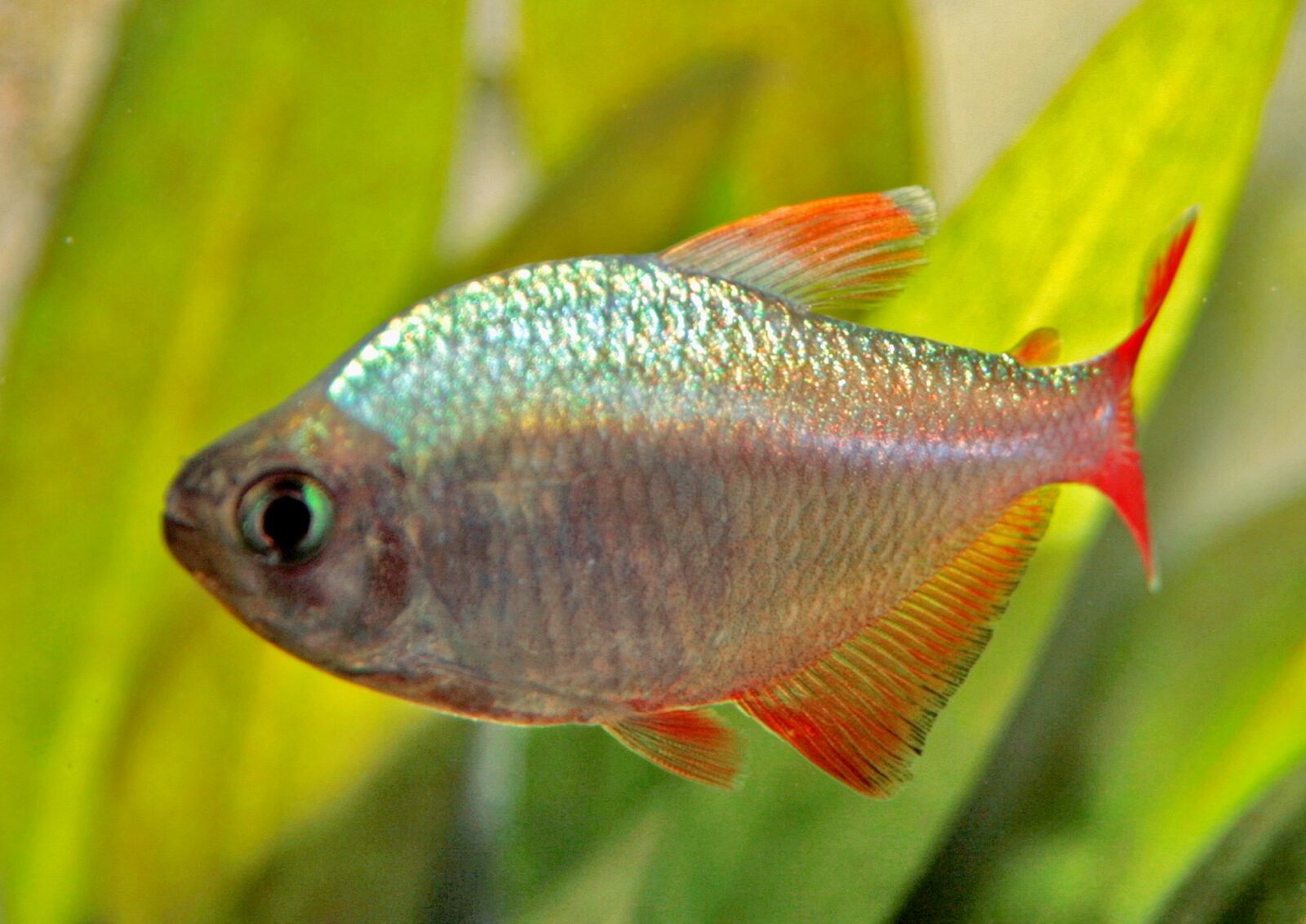
Colombian Tetra
Hyphessobrycon columbianus
- Temperature
- 23–27 °C
- pH
- 5.5 – 7.5
- Min. tank size
- 150 L
- Lifespan
- 5 years
- Diet
- omnivore
- Care level
- easy
| Scientific classification | |
|---|---|
| Scientific Name: | Hyphessobrycon columbianus |
| Family: | Acestrorhamphidae |
| Origin: | South America (northern Colombia) |
| Care Characteristics | |
| Care Level: | easy |
| Diet: | omnivore |
| Max Size: | 6.50 cm |
| Water Type: | freshwater |
| Temp Group: | tropical |
| Temperament: | semi aggressive |
| Min Group: | 6+ together |
| Varieties: | Traded as the wild form, usually under the name red blue Colombian tetra. There are no established captive strains; the variation you see between shop tanks is condition and lighting rather than genetics. |
| Lifespan: | 5 years |
Quick Tips
- Bioload:Low to medium
- Min Tank:150 L
- Substrate:Dark sand/gravel; planted with open swimming space
- Plant Safe:Plant-safe
- Filtration:Moderate
Colombian Tetra (Hyphessobrycon columbianus) is a species of fish in the family Acestrorhamphidae. It is native to South America (northern Colombia). The Colombian tetra is bigger and bolder than most community tetras, and it needs the numbers to match. It is silver-grey with an iridescent blue sheen that strengthens from the lateral line up into a band along the back, and blood-red caudal and anal fins that fade when the fish is resting or unsettled. Males are the more intensely coloured sex — slimmer, slightly smaller, with extended dorsal rays. It reaches about 6.5 cm standard length and has a strikingly small natural range: the Río Acandí in Chocó, northern Colombia, close to the Panama border, in small streams of the Atlantic coastal region. It was described only in 2002, having previously been misidentified as a different species altogether, and it should be kept in a mixed-sex group of eight or more.
Compatibility
- Temperament
- semi aggressive
- Keep in
- Groups of 6+
- Swims
- middle
- Fin nipper
- Yes
- Delicate fins
- No
Species similar to Colombian Tetra
Matched on family, then category, then water type