From Aqua Guide, the free encyclopedia
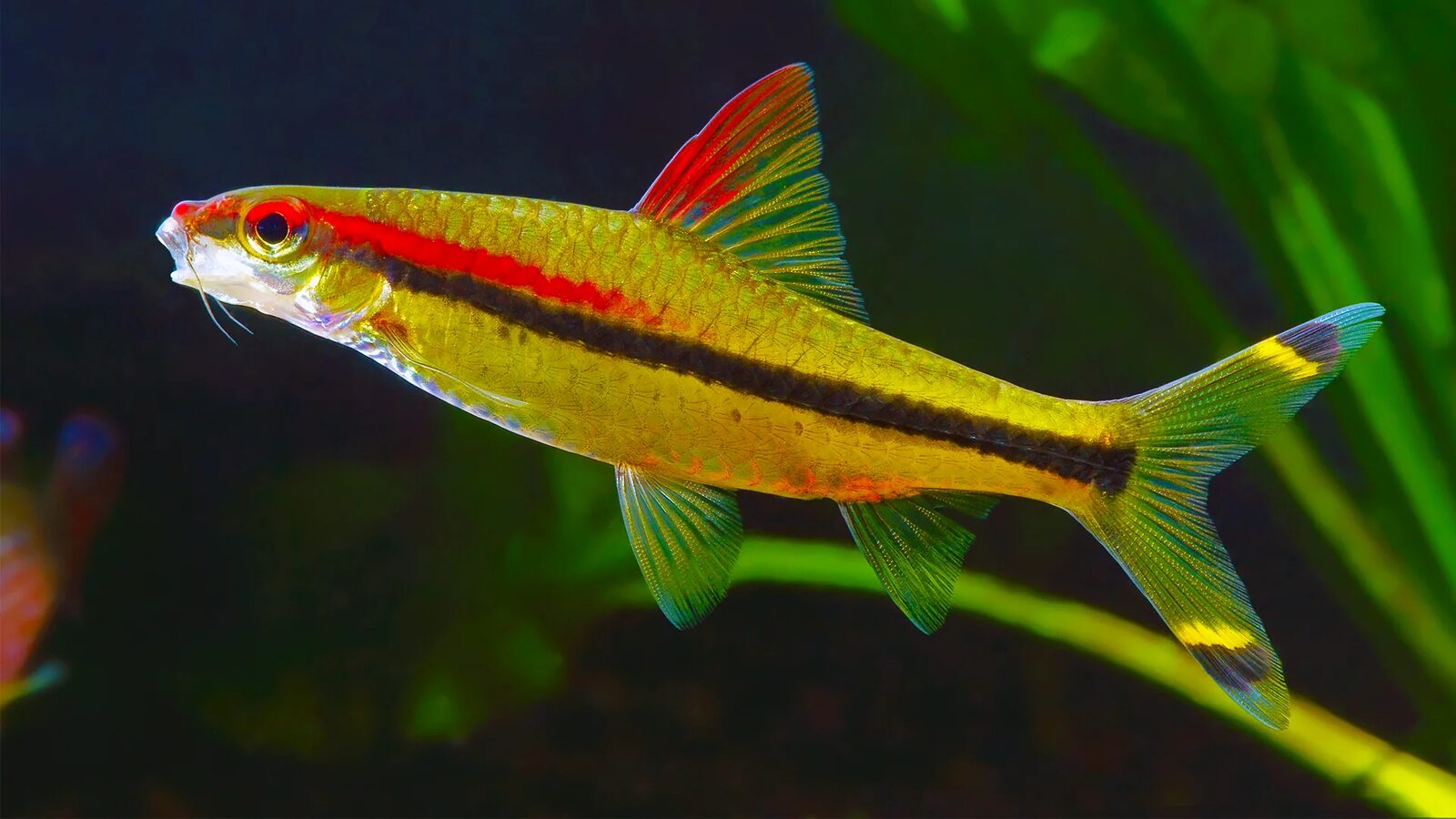
Denison Barb
Sahyadria denisonii
- Temperature
- 15–25 °C
- pH
- 6.5 – 7.8
- Min. tank size
- 243 L
- Lifespan
- 5-8 years
- Diet
- omnivore
- Care level
- moderate
Endangered on the IUCN Red List. That describes the wild population — the criteria cover only wild populations inside their natural range, and captive-bred fish are not assessed. Captive-bred stock is widely available and takes nothing from the wild population.
| Scientific classification | |
|---|---|
| Scientific Name: | Sahyadria denisonii |
| Family: | Cyprinidae |
| Origin: | South Asia (fast hill streams of the Western Ghats, India) |
| Care Characteristics | |
| Care Level: | moderate |
| Diet: | omnivore |
| Max Size: | 11.00 cm |
| Water Type: | freshwater |
| Temp Group: | subtropical |
| Temperament: | peaceful |
| Min Group: | 6+ together |
| Varieties: | No cultivated colour strains, and the wild-type fish is what the species is prized for. Some suppliers offer selected lines for a broader or deeper red band, and captive-bred fish from good breeders can be more intensely coloured than mass stock, but nothing is established as a named strain. Albino and long-finned forms have been reported and are not established in the trade. The genuine distinction is between wild-caught and captive-bred. Wild collection is now restricted following the species' Endangered listing, and captive-bred specimens remain commercially available from operations in Southeast Asia and Eastern Europe. Given the collection pressure that drove the decline, captive-bred is the responsible choice and the one to ask for specifically. Taxonomy has moved: the species was described in Puntius and later placed in its own genus, Sahyadria, named for the Western Ghats. Older labels and books use Puntius denisonii. A close relative, Sahyadria chalakkudiensis, is occasionally traded and looks similar, with a redder body and a less complete stripe. It comes from the same threatened region. |
| Lifespan: | 5-8 years |
Quick Tips
- Bioload:Medium to high
- Min Tank:243 L
- Substrate:Gravel or sand; open swimming space with some planting
- Plant Safe:Plant-safe
- Filtration:High (strong current and high oxygen)
Denison Barb (Sahyadria denisonii) is a species of fish in the family Cyprinidae. It is native to South Asia (fast hill streams of the Western Ghats, India). The Denison barb is one of the great aquarium fish of the last twenty years, and its popularity nearly finished it. It comes from fast hill streams in the Western Ghats of India and reaches 110 mm standard length. A torpedo-shaped silver body carries a black lateral stripe with a brilliant red band above it running from the snout to mid-body, and the tail is marked with black and yellow. It is often sold as the roseline shark. It is listed as Endangered on the IUCN Red List. Wild stocks may have dwindled by as much as 50 per cent in the last fifteen years, and collection for the aquarium trade has been held largely responsible, alongside habitat degradation from pollution. Wild collection is now restricted, and captive-bred fish are commercially available — which is what you should be buying. It is a shoaling fish that wants cool, fast, spotless water and a large tank.
Legality of keeping and trading this species
- India — Trade restricted. Under the Kerala state fisheries restrictions. Endemic to the Western Ghats of Kerala and Karnataka and assessed Endangered, having once made up around 60% of India's ornamental fish exports by value. Kerala has banned the collection and export of wild fish. It is not listed under the national Wild Life (Protection) Act, and captive breeding is established commercially in India — so buy captive-bred, and treat wild-caught stock as the thing that caused the decline.Source · Checked 2026-09-11
This is a summary for reference, not legal advice. Wildlife schedules, noxious-weed lists and import rules are amended, and enforcement varies by state — check the current law and your local authority before acquiring any species.
Compatibility
- Temperament
- peaceful
- Keep in
- Groups of 6+
- Swims
- middle
- Fin nipper
- No
- Delicate fins
- No
Species similar to Denison Barb
Matched on family, then category, then water type