From Aqua Guide, the free encyclopedia
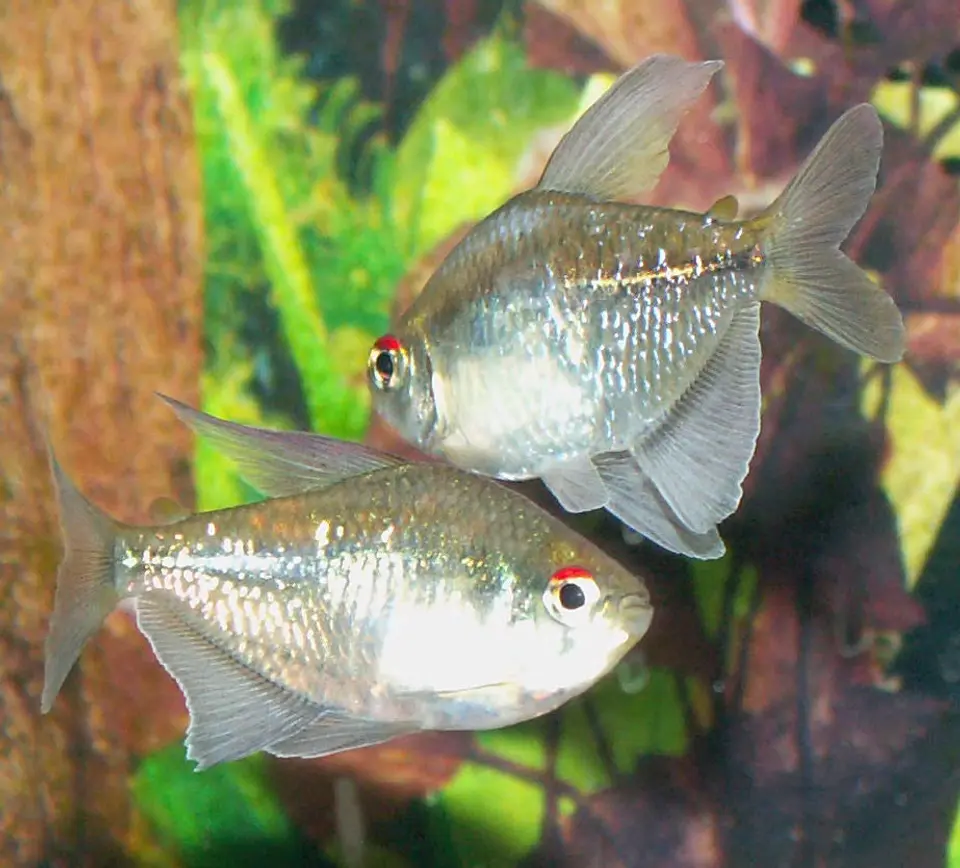
Diamond Tetra
Moenkhausia pittieri
- Temperature
- 24–28 °C
- pH
- 5.5 – 7
- Min. tank size
- 110 L
- Lifespan
- 5 years
- Diet
- omnivore
- Care level
- easy
| Scientific classification | |
|---|---|
| Scientific Name: | Moenkhausia pittieri |
| Family: | Acestrorhamphidae |
| Origin: | South America (Lake Valencia basin, Venezuela) |
| Care Characteristics | |
| Care Level: | easy |
| Diet: | omnivore |
| Max Size: | 6.00 cm |
| Water Type: | freshwater |
| Temp Group: | tropical |
| Temperament: | peaceful |
| Min Group: | 6+ together |
| Varieties: | No cultivated strains of consequence, and the wild fish is what the species is prized for once grown. Long-finned selections appear occasionally and are an odd choice in a fish whose males already develop extended finnage. Most trade stock is commercially bred, and quality varies — well-grown captive-bred adults are considerably more impressive than the juveniles that reach most shops. The species is endemic to Venezuela, in Lake Valencia and its tributaries. Several other Moenkhausia are traded and are separate species, including the red-eye tetra (M. sanctaefilomenae), which is a larger and more boisterous fish with a similar silvery build and a very different temperament. If you want the reflective look at a smaller size, the various silvertip and glowlight tetras are alternatives, though none of them develop the extended violet finnage that makes a mature male diamond tetra worth waiting for. |
| Lifespan: | 5 years |
Quick Tips
- Bioload:Low to medium
- Min Tank:110 L
- Substrate:Dark sand/gravel; planted with swimming space
- Plant Safe:Plant-safe
- Filtration:Moderate
Diamond Tetra (Moenkhausia pittieri) is a species of fish in the family Acestrorhamphidae. It is native to South America (Lake Valencia basin, Venezuela). The diamond tetra is an ugly duckling. Juveniles are bland — a plain silvery fish with nothing to recommend it — and specialists say so directly. With maturity they develop a covering of highly reflective scales that genuinely sparkle, and mature males add extended violet ventral, dorsal and anal fins. Nothing in a shop tank of young fish suggests any of that, which is why the species is so often passed over. It reaches 60 mm standard length and comes from Venezuela. It also has a fin-nipping reputation, and specialists give the remedy in the same sentence: it can usually be rectified by keeping the fish in a small shoal of at least six to eight specimens. The same pattern as every other nipping shoaler in this guide. Give it time, numbers and a dark tank, and it becomes one of the best community tetras there is.
Compatibility
- Temperament
- peaceful
- Keep in
- Groups of 6+
- Swims
- middle
- Fin nipper
- No
- Delicate fins
- No
Species similar to Diamond Tetra
Matched on family, then category, then water type