From Aqua Guide, the free encyclopedia
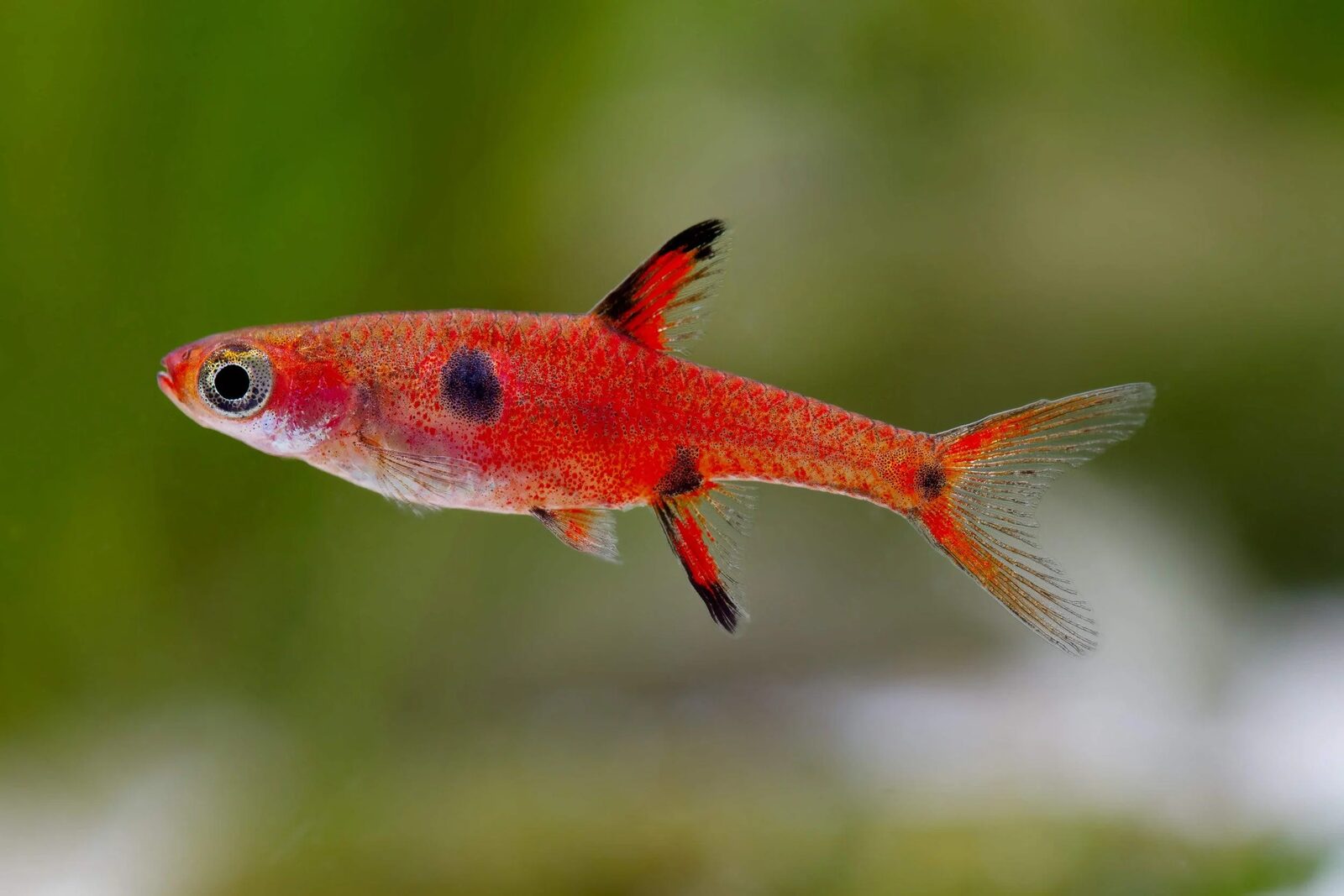
Dwarf Rasbora
Boraras maculatus
- Temperature
- 20–28 °C
- pH
- 4 – 6.5
- Min. tank size
- 41 L
- Lifespan
- 3-4 years
- Diet
- omnivore
- Care level
- moderate
| Scientific classification | |
|---|---|
| Scientific Name: | Boraras maculatus |
| Family: | Cyprinidae |
| Origin: | Southeast Asia (peat swamps of the Malay Peninsula, Sumatra, Borneo) |
| Care Characteristics | |
| Care Level: | moderate |
| Diet: | omnivore |
| Max Size: | 2.50 cm |
| Water Type: | freshwater |
| Temp Group: | tropical |
| Temperament: | peaceful |
| Min Group: | 8+ together |
| Varieties: | No cultivated strains — the wild-type fish is what is sold, and most stock is wild-caught from Southeast Asia. The genus is where the confusion lies, and the species are routinely mixed. Boraras brigittae, the chili or mosquito rasbora, is the reddest and the best known. B. merah, the phoenix rasbora, is similar with the red concentrated around dark markings. B. urophthalmoides, the exclamation point rasbora, carries a distinct line and tail spot. B. maculatus, this fish, is the largest of them at 25 mm and carries the boldest blotches. All four have essentially the same requirements — soft acidic blackwater, a big group, tiny food — and all four are traded under each other's names. Miniaturisation is the thread that connects them: the genus is a textbook example of it among cyprinids, alongside Danionella and Paedocypris, the smallest fishes known. |
| Lifespan: | 3-4 years |
Quick Tips
- Bioload:Very low
- Min Tank:41 L
- Substrate:Dark sand; densely planted with botanicals/tannins
- Plant Safe:Plant-safe
- Filtration:Low (very gentle flow)
Dwarf Rasbora (Boraras maculatus) is a species of fish in the family Cyprinidae. It is native to Southeast Asia (peat swamps of the Malay Peninsula, Sumatra, Borneo). The dwarf rasbora is one of the smallest fish in the hobby — 25 mm standard length — and it got that way through miniaturisation, a genuine evolutionary process in which a lineage reaches maturity at a juvenile size and truncates its development. Several Southeast Asian cyprinid groups have done it, and Boraras is the clearest example. The fish itself is a coppery-red nano cyprinid marked with bold dark blotches, and it is peaceful but timid, best kept in groups of eight to ten and better in far more. It is a blackwater fish: pH 4.0 to 6.5 and 1 to 5 dGH, which rules out ordinary hard tap water. It is not a community fish in the usual sense — almost anything in a standard community tank is large enough to eat it.
Compatibility
- Temperament
- peaceful
- Keep in
- Groups of 8+
- Swims
- middle
- Fin nipper
- No
- Delicate fins
- No
Species similar to Dwarf Rasbora
Matched on family, then category, then water type