From Aqua Guide, the free encyclopedia
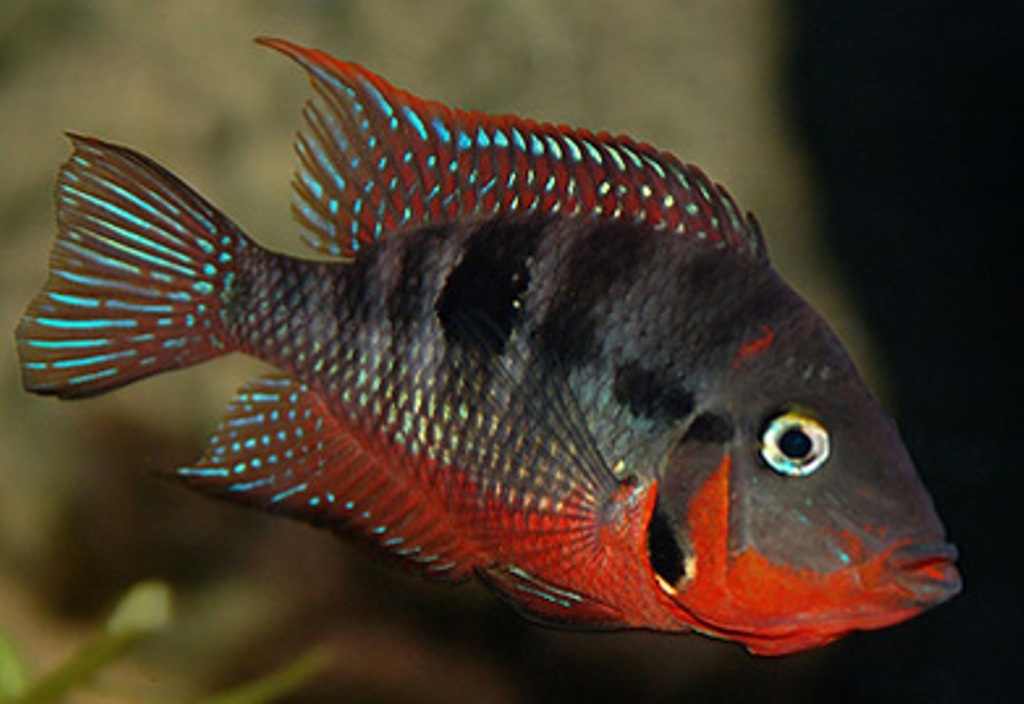
Firemouth Cichlid
Thorichthys meeki
- Temperature
- 20–32 °C
- pH
- 6.5 – 8.5
- Min. tank size
- 150 L
- Lifespan
- 8-10 years
- Diet
- omnivore
- Care level
- moderate
| Scientific classification | |
|---|---|
| Scientific Name: | Thorichthys meeki |
| Family: | Cichlidae |
| Origin: | Central America (Yucatán Peninsula rivers of Mexico, Guatemala, Belize) |
| Care Characteristics | |
| Care Level: | moderate |
| Diet: | omnivore |
| Max Size: | 15.00 cm |
| Water Type: | freshwater |
| Temp Group: | tropical |
| Temperament: | semi aggressive |
| Min Group: | 2+ together |
| Varieties: | Very little selective breeding, and the wild-type fish is what almost everyone keeps. An albino firemouth is produced and occasionally traded, a pale cream fish that retains some of the red on the throat but loses most of the contrast the display depends on. Care is identical. Some suppliers offer selected lines for stronger red, and a well-conditioned wild-type male in a mature tank develops colour that no strain improves on. Taxonomy is worth a note. The species sits in Thorichthys, a genus of several similar Central American cichlids, and older books and labels place it in Cichlasoma. Related species appear in the trade and are frequently sold as firemouths: Thorichthys aureus, the blue firemouth, and T. ellioti, the Ellioti or freckled firemouth, are both close relatives with similar habits and similar displays. They hybridise with T. meeki, so a mixed tank of "firemouths" often produces crossed fry. If you want a pure line, buy from a breeder who keeps the Thorichthys species separate — the same problem the Amatitlania convicts have. |
| Lifespan: | 8-10 years |
Quick Tips
- Bioload:Medium to high
- Min Tank:150 L
- Substrate:Sand (it sifts); rocks, caves and driftwood; robust planting
- Plant Safe:Plant-safe (may dig/sift sand)
- Filtration:High
Firemouth Cichlid (Thorichthys meeki) is a species of fish in the family Cichlidae. It is native to Central America (Yucatán Peninsula rivers of Mexico, Guatemala, Belize). The firemouth is named for a bluff. Males flare out their gill covers, dropping the branchiostegal membranes to expose a brilliant orange-red throat, in a threat display designed to ward off rival males from their territory. The fish suddenly appears twice its actual depth, and the whole underside lights up. It is one of the best displays in freshwater and it is aimed at other firemouths rather than at predators. It comes from rivers of the Yucatán Peninsula in Mexico, south through Belize into northern Guatemala, and reaches 120 mm standard length, with males up to about 15 cm. For a Central American cichlid it is relatively mild — not especially aggressive, though territorial when breeding and quite capable of eating much smaller fish. It is also unusually tolerant of temperature, from 20 all the way to 32 °C (90 °F).
Compatibility
- Temperament
- semi aggressive
- Keep in
- Groups of 2+
- Swims
- middle
- Fin nipper
- No
- Delicate fins
- No
Species similar to Firemouth Cichlid
Matched on family, then category, then water type