From Aqua Guide, the free encyclopedia
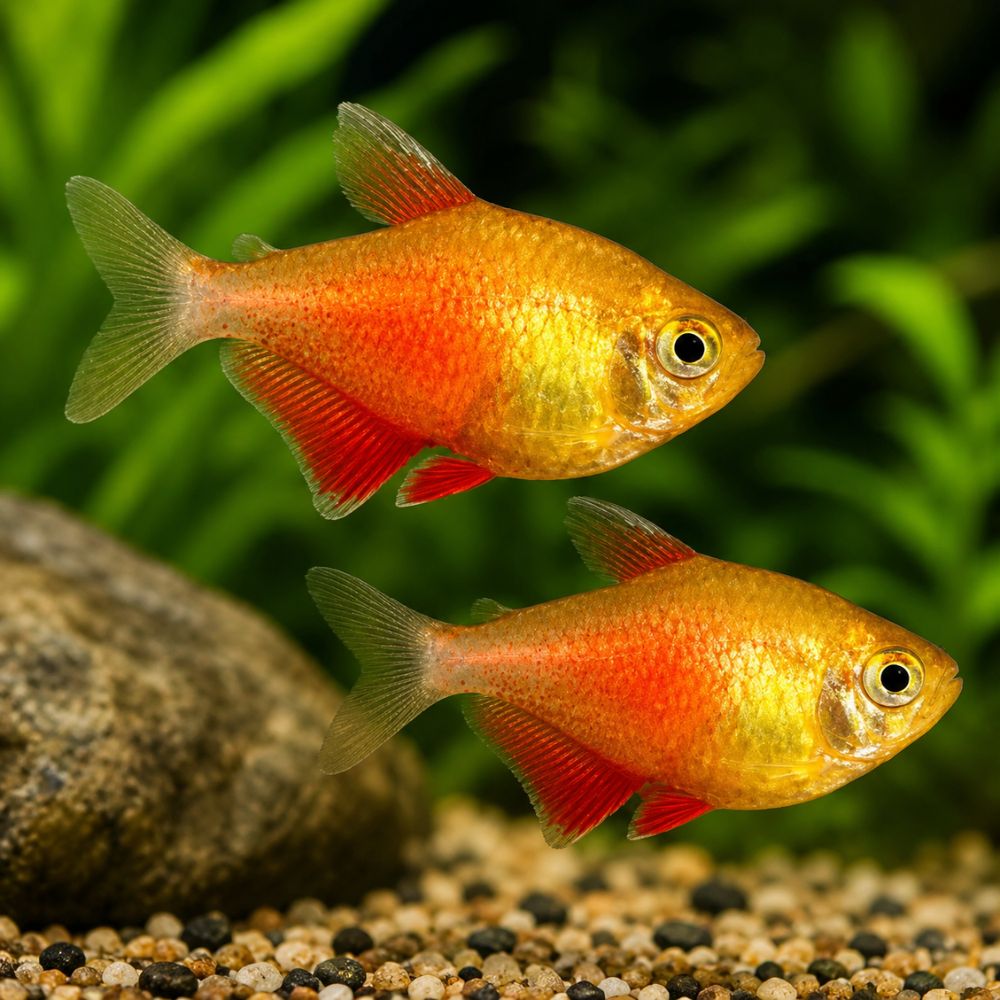
Flame Tetra
Hyphessobrycon flammeus
- Temperature
- 20–28 °C
- pH
- 5.5 – 7.5
- Min. tank size
- 75 L
- Lifespan
- 3-5 years
- Diet
- omnivore
- Care level
- easy
Endangered on the IUCN Red List. That describes the wild population — the criteria cover only wild populations inside their natural range, and captive-bred fish are not assessed. Captive-bred stock is widely available and takes nothing from the wild population.
| Scientific classification | |
|---|---|
| Scientific Name: | Hyphessobrycon flammeus |
| Family: | Acestrorhamphidae |
| Origin: | South America (coastal rivers near Rio de Janeiro, Brazil) |
| Care Characteristics | |
| Care Level: | easy |
| Diet: | omnivore |
| Max Size: | 4.00 cm |
| Water Type: | freshwater |
| Temp Group: | tropical |
| Temperament: | peaceful |
| Min Group: | 6+ together |
| Varieties: | Alongside the wild-type flame there are captive-bred golden, orange and albino strains, all developed for the aquarium trade. Care is identical; the paler strains show less of the flame colouring that gives the fish its name. |
| Lifespan: | 3-5 years |
Quick Tips
- Bioload:Low
- Min Tank:75 L
- Substrate:Dark sand/gravel; planted with swimming space
- Plant Safe:Plant-safe
- Filtration:Moderate
Flame Tetra (Hyphessobrycon flammeus) is a species of fish in the family Acestrorhamphidae. It is native to South America (coastal rivers near Rio de Janeiro, Brazil). The flame tetra is endangered in the wild and abundant in the trade, and the gap between those two facts is worth understanding before you buy one. It is small — about 2.5 cm standard length, nearer 4 cm counting the tail — with a silvery front half carrying two dark bars behind the gill, a rear half in the flame colour that names it, and red in every fin but the pectorals. Males have black-tipped anal and pelvic fins. It comes from shallow, slow-flowing, vegetated stretches of the coastal rivers of south-eastern Brazil. Habitat loss, pollution and introduced tilapia and black bass drove the decline; the last Rio de Janeiro record was in 1992. It has been bred for the aquarium since 1920, and golden, orange and albino forms exist.
Compatibility
- Temperament
- peaceful
- Keep in
- Groups of 6+
- Swims
- middle
- Fin nipper
- No
- Delicate fins
- No
Species similar to Flame Tetra
Matched on family, then category, then water type