From Aqua Guide, the free encyclopedia
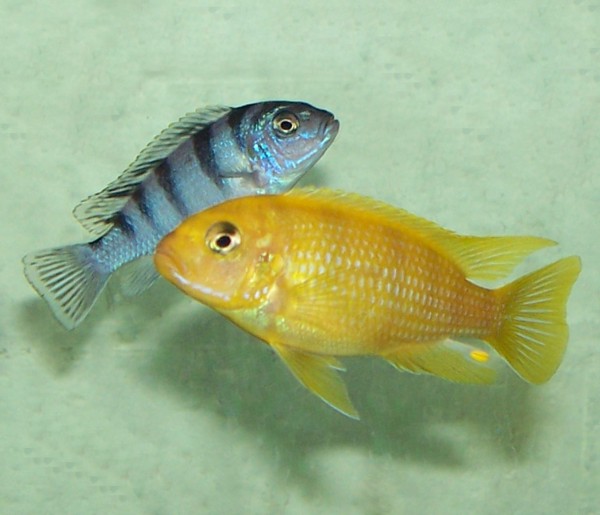
Kenyi Cichlid
Maylandia lombardoi
- Temperature
- 24–28 °C
- pH
- 7.8 – 8.6
- Min. tank size
- 280 L
- Lifespan
- 5-8 years
- Diet
- herbivore
- Care level
- moderate
| Scientific classification | |
|---|---|
| Scientific Name: | Maylandia lombardoi |
| Family: | Cichlidae |
| Origin: | Africa (Lake Malawi, East African Rift) |
| Care Characteristics | |
| Care Level: | moderate |
| Diet: | herbivore |
| Max Size: | 13.00 cm |
| Water Type: | freshwater |
| Temp Group: | tropical |
| Temperament: | aggressive |
| Min Group: | 4+ together |
| Varieties: | No cultivated strains — the wild-type fish is what is sold, and its colour scheme is dramatic enough that nobody has needed to improve it. The species is endemic to the rocky shores of Mbenji Island in Lake Malawi, so there are no widely traded geographic variants in the way there are for more broadly distributed mbuna. The specific name honours John Lombardo, an exotic fish dealer, and the fish is traded as the kenyi, kennyi or lombardoi mbuna. Taxonomy has moved around: the species appears as Pseudotropheus lombardoi, Metriaclima lombardoi and Maylandia lombardoi in different sources, and the genus question among the Malawi rock cichlids remains unsettled. Among other mbuna, the calmer options for a mixed Rift Lake community are the acei, the rusty cichlid, the socolofi and the yellow lab. This one sits with the auratus and the red zebra at the more difficult end. |
| Lifespan: | 5-8 years |
Quick Tips
- Bioload:Medium to high
- Min Tank:280 L
- Substrate:Aragonite/coral sand; many rock caves
- Plant Safe:Not reliably plant-safe (may dig/nibble)
- Filtration:High (hard alkaline water; strong filtration)
Kenyi Cichlid (Maylandia lombardoi) is a species of fish in the family Cichlidae. It is native to Africa (Lake Malawi, East African Rift). The kenyi cichlid does something almost no other aquarium fish does: it reverses the usual colour convention. Females and juvenile males are pale blue-white with several blue-black vertical bands extending into the dorsal fin. Adult males transform into bright yellow with faint brown crossbars and plain yellow fins carrying egg spots on the anal fin. So the blue fish in the tank are the females, and the yellow ones are the males — the opposite of what most keepers assume from experience with other cichlids. It is endemic to the rocky shores of Mbenji Island in Lake Malawi, reaches around 13 cm, and is aggressive enough that it is usually kept in a single-species tank or with comparably robust mbuna. Mouthbrooding females may even take on male colouration.
Compatibility
- Temperament
- aggressive
- Keep in
- Groups of 4+
- Swims
- middle
- Fin nipper
- No
- Delicate fins
- No
Species similar to Kenyi Cichlid
Matched on family, then category, then water type