From Aqua Guide, the free encyclopedia
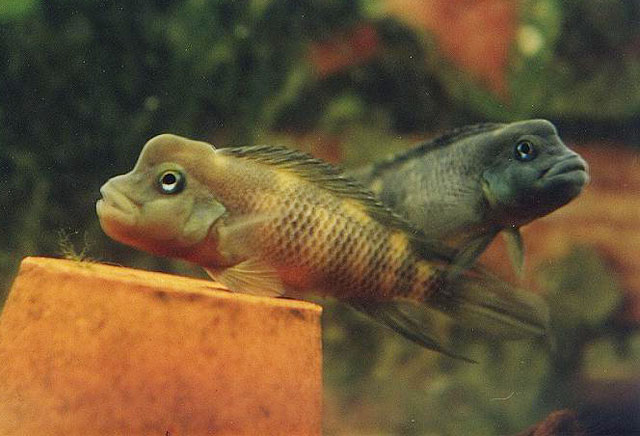
Lionhead Cichlid
Steatocranus casuarius
- Temperature
- 24–28 °C
- pH
- 6 – 7.5
- Min. tank size
- 68 L
- Lifespan
- 8-10 years
- Diet
- omnivore
- Care level
- moderate
| Scientific classification | |
|---|---|
| Scientific Name: | Steatocranus casuarius |
| Family: | Cichlidae |
| Origin: | Africa (rapids of the lower Congo River) |
| Care Characteristics | |
| Care Level: | moderate |
| Diet: | omnivore |
| Max Size: | 12.00 cm |
| Water Type: | freshwater |
| Temp Group: | tropical |
| Temperament: | semi aggressive |
| Min Group: | 2+ together |
| Varieties: | No cultivated strains — the wild-type fish is what is sold, and its character is in shape and behaviour rather than colour. The genus contains several species that reach the trade sporadically and are frequently confused. Steatocranus casuarius, this fish, is the common one, sometimes called the blockhead or buffalohead cichlid. S. tinanti, the slender lionhead, is longer-bodied with a much smaller hump. S. gibbiceps, S. glaber and S. irvinei also appear. All are Congo river fish adapted to fast water, all share the reduced swim bladder and the hopping locomotion, and all have similar requirements. The wider group of Congo rapids fishes is worth knowing for a biotope tank: Teleogramma species, various Lamprologus from the lower Congo, and the African darter tetras all come from the same water and suit the same setup — flow, rounded stones, caves and moderate chemistry. |
| Lifespan: | 8-10 years |
Quick Tips
- Bioload:Medium
- Min Tank:68 L
- Substrate:Sand or fine gravel; rocks and caves; smooth stones and some current
- Plant Safe:Plant-safe (may dig a little when spawning)
- Filtration:High (well-oxygenated water with some flow, mimicking rapids)
Lionhead Cichlid (Steatocranus casuarius) is a species of fish in the family Cichlidae. It is native to Africa (rapids of the lower Congo River). The lionhead cichlid is built for fast water and it shows in everything it does. It comes from the rapids of the Congo, and it has a modified swim bladder that reduces buoyancy so the fish is not swept away by the current. The consequence in an aquarium is that it cannot hover: it rests on the substrate and moves in short hops along the bottom, which is unmistakable once you have seen it. Mature males develop a large nuchal hump on the forehead — the "lionhead" — and can rapidly adjust its size. It reaches 120 mm standard length, forms exceptionally strong monogamous pair bonds, and cares for its fry for up to three months, which is remarkable among aquarium cichlids.
Compatibility
- Temperament
- semi aggressive
- Keep in
- Groups of 2+
- Swims
- bottom
- Fin nipper
- No
- Delicate fins
- No
Species similar to Lionhead Cichlid
Matched on family, then category, then water type