From Aqua Guide, the free encyclopedia
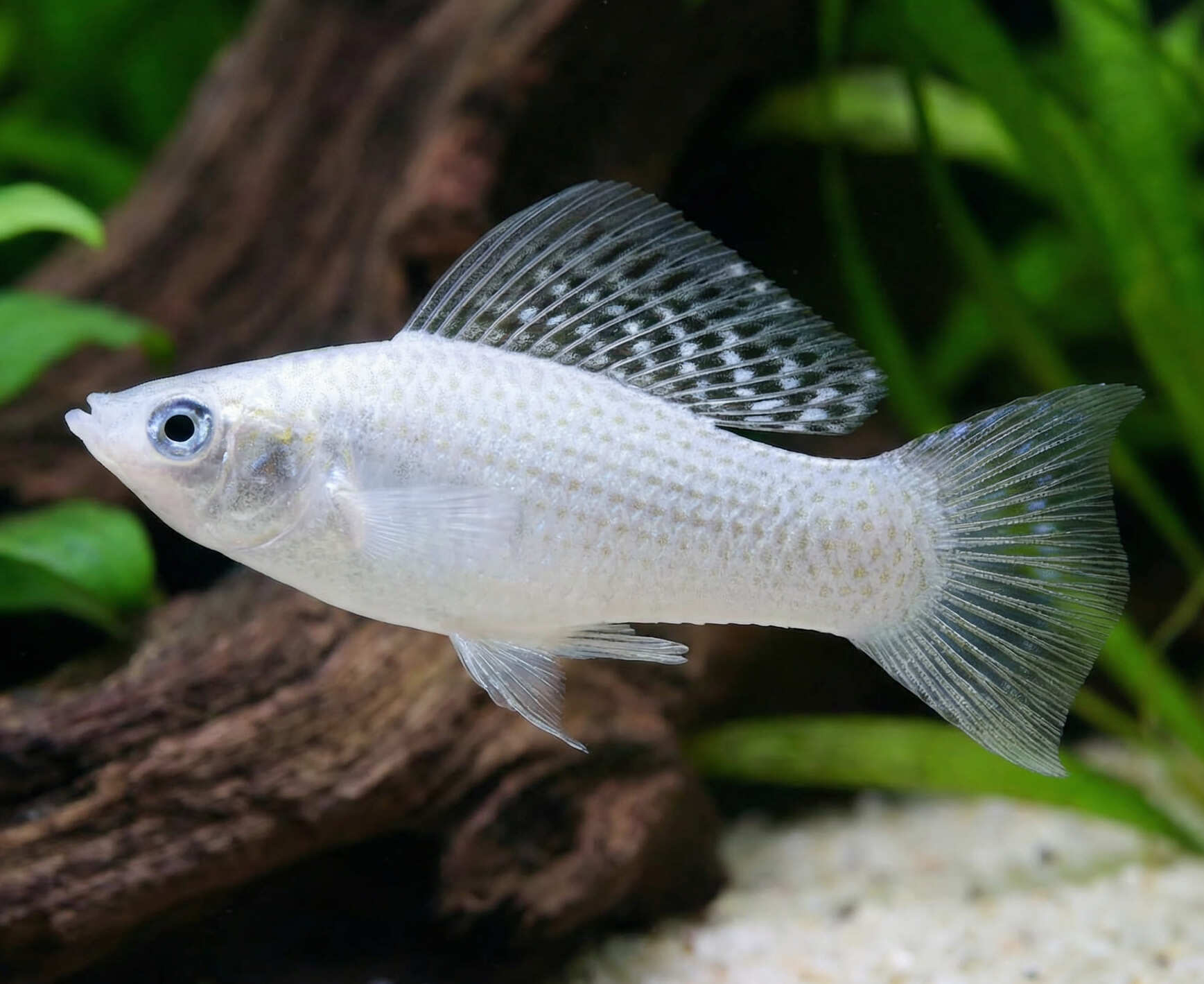
Molly
Poecilia sphenops
- Temperature
- 21–28 °C
- pH
- 7 – 8.5
- Min. tank size
- 81 L
- Lifespan
- 3-5 years
- Diet
- omnivore
- Care level
- easy
| Scientific classification | |
|---|---|
| Scientific Name: | Poecilia sphenops |
| Family: | Poeciliidae |
| Origin: | Central and South America |
| Care Characteristics | |
| Care Level: | easy |
| Diet: | omnivore |
| Max Size: | 8.00 cm |
| Water Type: | freshwater |
| Temp Group: | tropical |
| Temperament: | peaceful |
| Min Group: | 3+ together |
| Varieties: | Numerous strains, and a good deal of hybridisation between species behind them. Colour and pattern morphs include black, gold, green, silver, dalmatian and marbled forms. Fin strains include the lyretail, with extended points on the caudal fin, and the sailfin, where mature males carry an enormous dorsal fin. Many of these came from crossing Poecilia sphenops with P. latipinna, the sailfin molly, and the two interbreed freely — keeping only one species per tank is how you avoid it if you care about keeping a line pure. P. velifera, the Yucatan sailfin, is also in the mix in some strains. Two health notes carry real weight. Wild forms are hardy, but years of inbreeding and over-production have weakened captive-bred stock generally, and losses in the first weeks after purchase are common. And black morphs are particularly disease-prone in fresh water. The balloon molly is a deliberate body malformation, with a shortened, rounded spine that brings swim bladder and digestive problems. It is widely sold and worth avoiding. Wild-type silver mollies from a specialist breeder are consistently the toughest fish of the group. |
| Lifespan: | 3-5 years |
Quick Tips
- Bioload:Medium
- Min Tank:81 L
- Substrate:Sand or smooth, fine gravel
- Plant Safe:Completely safe
- Filtration:High
Molly (Poecilia sphenops) is a species of fish in the family Poeciliidae. It is native to Central and South America. The molly is a hard-water fish, and nearly everything that goes wrong with it comes from that being missed. It is a livebearer from Central and South America, reaching 80 mm standard length — larger than a guppy or a platy and with a noticeably heavier build. Females are the bigger sex. Specialists are blunt about the water: it needs moderately hard or harder water with a basic pH, and in soft or acidic conditions it weakens rapidly, showing shimmying, fungus and clamped fins. Shimmying — a molly rocking in place without moving forward — is the classic sign, and it is a mineral problem, not a disease. That requirement makes it a poor candidate for a general community tank, despite being sold as one of the easiest fish available. Given hard water, it is hardy, active, endlessly productive and one of the better algae grazers among the livebearers.
Compatibility
- Temperament
- peaceful
- Keep in
- Groups of 3+
- Swims
- middle
- Fin nipper
- Yes
- Delicate fins
- Yes — keep away from nippers
Species similar to Molly
Matched on family, then category, then water type