From Aqua Guide, the free encyclopedia
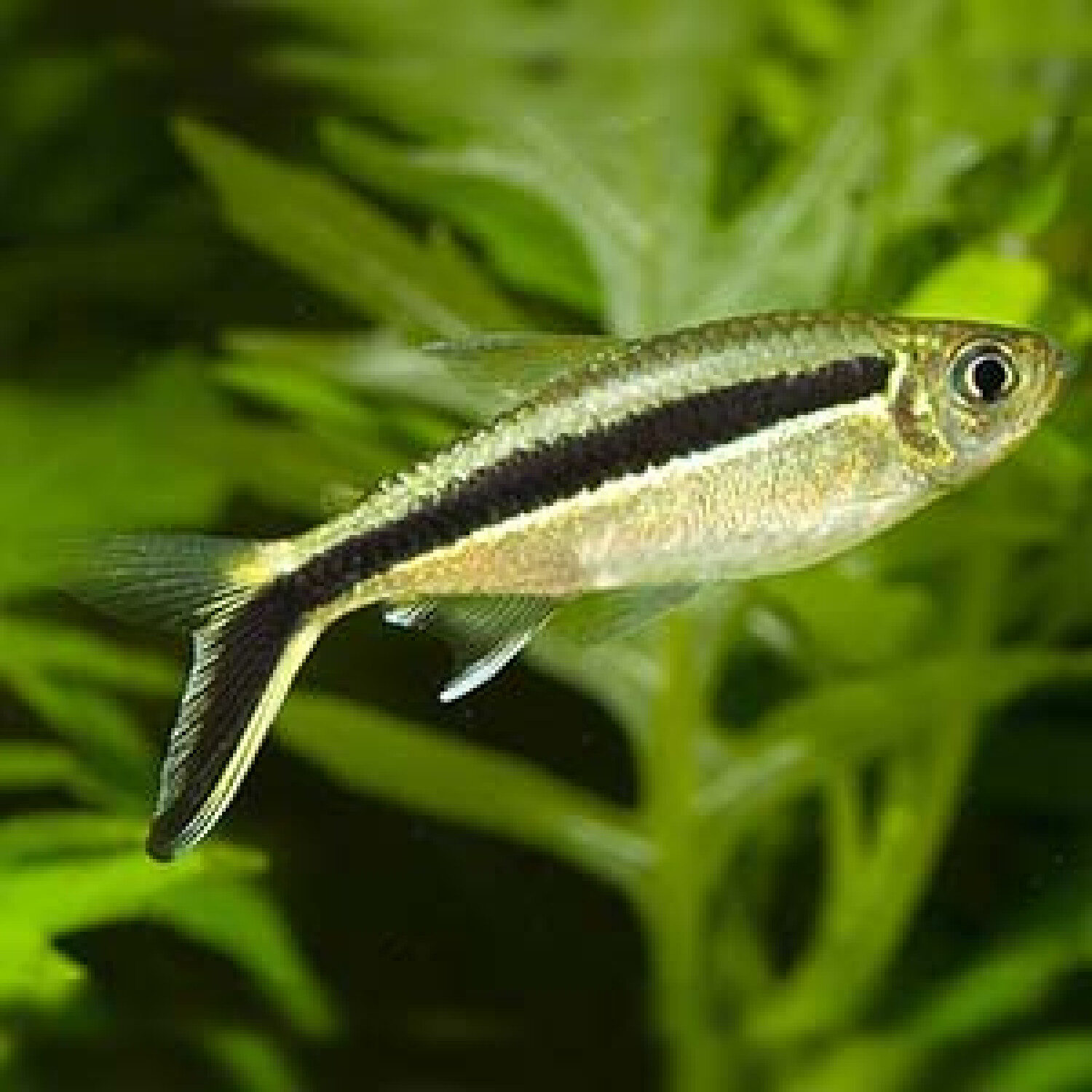
Penguin Tetra
Thayeria boehlkei
- Temperature
- 22–28 °C
- pH
- 5.5 – 8
- Min. tank size
- 68 L
- Lifespan
- 3-5 years
- Diet
- omnivore
- Care level
- easy
| Scientific classification | |
|---|---|
| Scientific Name: | Thayeria boehlkei |
| Family: | Acestrorhamphidae |
| Origin: | South America (Amazon basin, Peru and Brazil) |
| Care Characteristics | |
| Care Level: | easy |
| Diet: | omnivore |
| Max Size: | 3.60 cm |
| Water Type: | freshwater |
| Temp Group: | tropical |
| Temperament: | peaceful |
| Min Group: | 6+ together |
| Varieties: | No cultivated strains — the wild-type fish is what is sold, and its appeal is the sharp black stripe against silver. The identification question is between species rather than varieties. Thayeria boehlkei, the fish described here and the one usually sold as the penguin tetra, carries a black stripe running from behind the gill cover along the whole body and into the lower caudal lobe. Thayeria obliqua, the true penguin or short-striped penguin tetra, has a stripe that begins further back, below the dorsal fin. Both are traded under the same names, and confusingly this species is sometimes called the false penguin tetra despite being the commoner of the two. A third species, T. ifati, appears occasionally. All three share the head-up posture, the requirements and the temperament, so a keeper who ends up with the other one has not gone wrong. |
| Lifespan: | 3-5 years |
Quick Tips
- Bioload:Low to medium
- Min Tank:68 L
- Substrate:Dark sand/gravel; planted with open swimming space
- Plant Safe:Plant-safe
- Filtration:Moderate
Penguin Tetra (Thayeria boehlkei) is a species of fish in the family Acestrorhamphidae. It is native to South America (Amazon basin, Peru and Brazil). The penguin tetra is instantly recognisable for two things: a bold black stripe that runs the length of the body and continues into the lower lobe of the tail, and a permanent head-up swimming posture. That oblique, nose-up attitude is normal — all three Thayeria species swim in an oblique, head-up style typical of the genus — and it is one of the first things new keepers worry about unnecessarily. It reaches 36 mm standard length, which makes it smaller than most people expect, and it is highly adaptable, tolerating pH 5.5 to 8.0 and hardness up to 20 dGH. It is peaceful, but with a caveat that decides how it behaves: fin-nipping is reduced when it is kept in sufficient numbers, which means at least six and preferably ten or more.
Compatibility
- Temperament
- peaceful
- Keep in
- Groups of 6+
- Swims
- middle
- Fin nipper
- Yes
- Delicate fins
- No
Species similar to Penguin Tetra
Matched on family, then category, then water type