From Aqua Guide, the free encyclopedia
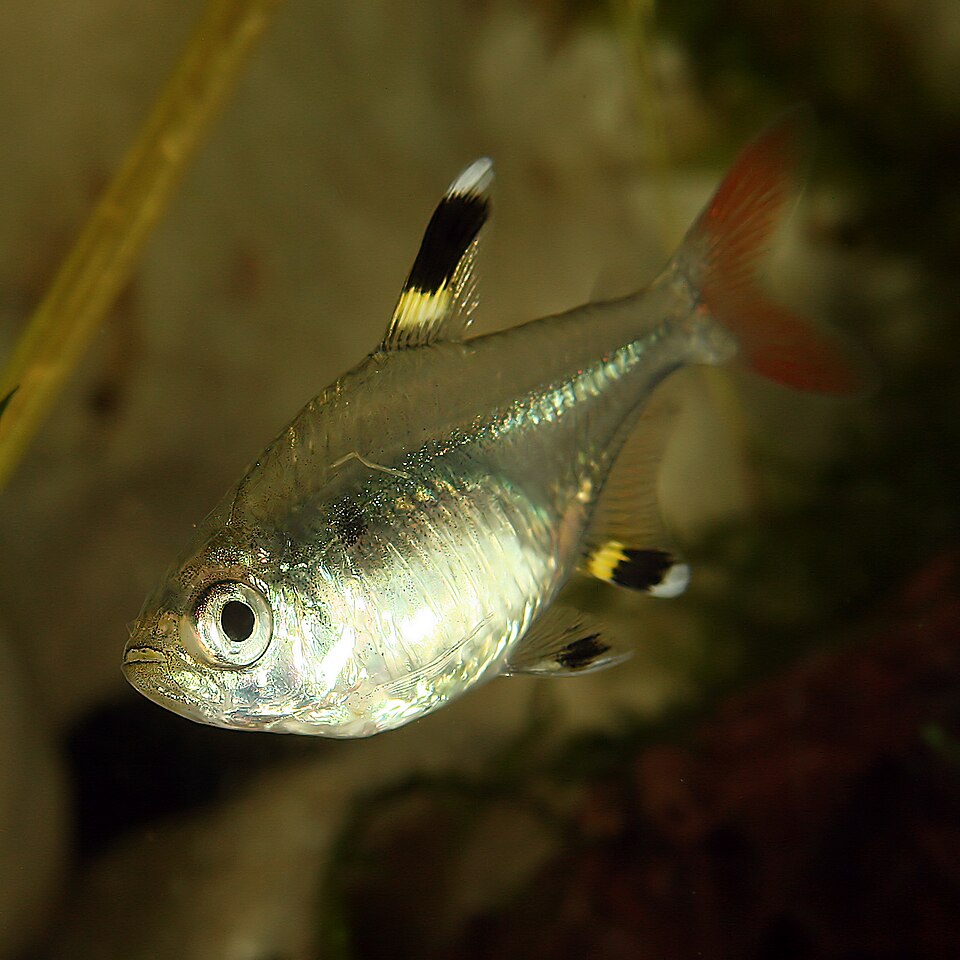
Pristella Tetra (X-ray Tetra)
Pristella maxillaris
- Temperature
- 22–28 °C
- pH
- 6 – 8
- Min. tank size
- 75 L
- Lifespan
- 5 years
- Diet
- omnivore
- Care level
- easy
| Scientific classification | |
|---|---|
| Scientific Name: | Pristella maxillaris |
| Family: | Acestrorhamphidae |
| Origin: | South America (Amazon and Orinoco basins, coastal Guianas) |
| Care Characteristics | |
| Care Level: | easy |
| Diet: | omnivore |
| Max Size: | 4.50 cm |
| Water Type: | freshwater |
| Temp Group: | tropical |
| Temperament: | peaceful |
| Min Group: | 6+ together |
| Varieties: | A golden or albino strain is traded alongside the wild form, and a veiltail form appears occasionally. Both are captive-developed and identical in care; the albino loses the black fin markings that give the wild fish most of its character, and the veiltail needs calmer company since the trailing fins invite nipping. |
| Lifespan: | 5 years |
Quick Tips
- Bioload:Low
- Min Tank:75 L
- Substrate:Dark sand/gravel; planted with swimming space
- Plant Safe:Plant-safe
- Filtration:Moderate
Pristella Tetra (X-ray Tetra) (Pristella maxillaris) is a species of fish in the family Acestrorhamphidae. It is native to South America (Amazon and Orinoco basins, coastal Guianas). The X-ray tetra is named for a body clear enough to show the spine through it. The scales are yellowish-silver and almost golden, the caudal fin is red, and the dorsal and anal fins carry sharp flashes of black, yellow and white. There is a small dark shoulder spot about the size of the pupil, and the adipose fin is glassy. It reaches about 4.5 cm and lives in slow-flowing and still waters with heavy vegetation across the Amazon and Orinoco and the coastal rivers of the Guianas. Both its names come from its teeth: the genus from a Greek word for a sawyer, for the row of minute conical teeth along the upper jaw. It is among the hardiest tetras in the trade, and almost every fish sold is captive bred.
Compatibility
- Temperament
- peaceful
- Keep in
- Groups of 6+
- Swims
- middle
- Fin nipper
- No
- Delicate fins
- No
Species similar to Pristella Tetra (X-ray Tetra)
Matched on family, then category, then water type