From Aqua Guide, the free encyclopedia
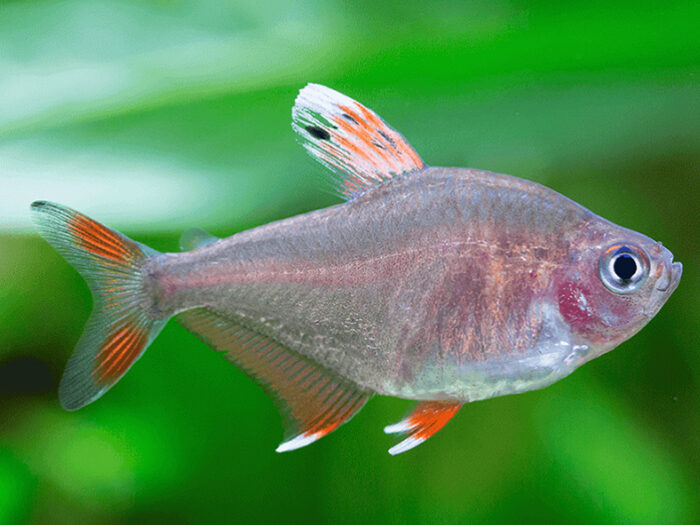
Rosy Tetra
Megalamphodus rosaceus
- Temperature
- 23–28 °C
- pH
- 5.5 – 7.5
- Min. tank size
- 110 L
- Lifespan
- 5 years
- Diet
- omnivore
- Care level
- easy
| Scientific classification | |
|---|---|
| Scientific Name: | Megalamphodus rosaceus |
| Family: | Acestrorhamphidae |
| Origin: | South America (Guianas and lower Amazon) |
| Care Characteristics | |
| Care Level: | easy |
| Diet: | omnivore |
| Max Size: | 4.00 cm |
| Water Type: | freshwater |
| Temp Group: | tropical |
| Temperament: | peaceful |
| Min Group: | 6+ together |
| Varieties: | Traded as the wild form, with a long-finned strain sometimes offered — confusingly, since mature wild-type males are already long-finned. It is also sold under both Hyphessobrycon rosaceus and Megalamphodus rosaceus following the 2024 reclassification, and frequently mislabelled as the very similar bentosi tetra. |
| Lifespan: | 5 years |
Quick Tips
- Bioload:Low
- Min Tank:110 L
- Substrate:Dark sand/gravel; planted with swimming space
- Plant Safe:Plant-safe
- Filtration:Moderate
Rosy Tetra (Megalamphodus rosaceus) is a species of fish in the family Acestrorhamphidae. It is native to South America (Guianas and lower Amazon). The rosy tetra is kept for the male's dorsal fin. Mature males carry it long and flowing, along with an extended anal fin, and they are the larger, slimmer and more colourful sex — which is unusual enough among tetras to be most of the reason people buy the species. It reaches about 4 cm and comes from the Essequibo, Corantijn and Suriname drainages of Guyana, Suriname and Brazil, in sluggish forest tributaries off the main channels, where decaying leaf litter stains the water and drives the pH down. It colours best in exactly those conditions: acidic water, dim light, driftwood and leaves. It was once treated as a subspecies of Hyphessobrycon bentosi, which it is still regularly confused with; the absence of a dark mark behind the gill cover separates the two.
Compatibility
- Temperament
- peaceful
- Keep in
- Groups of 6+
- Swims
- middle
- Fin nipper
- No
- Delicate fins
- No
Species similar to Rosy Tetra
Matched on family, then category, then water type