From Aqua Guide, the free encyclopedia
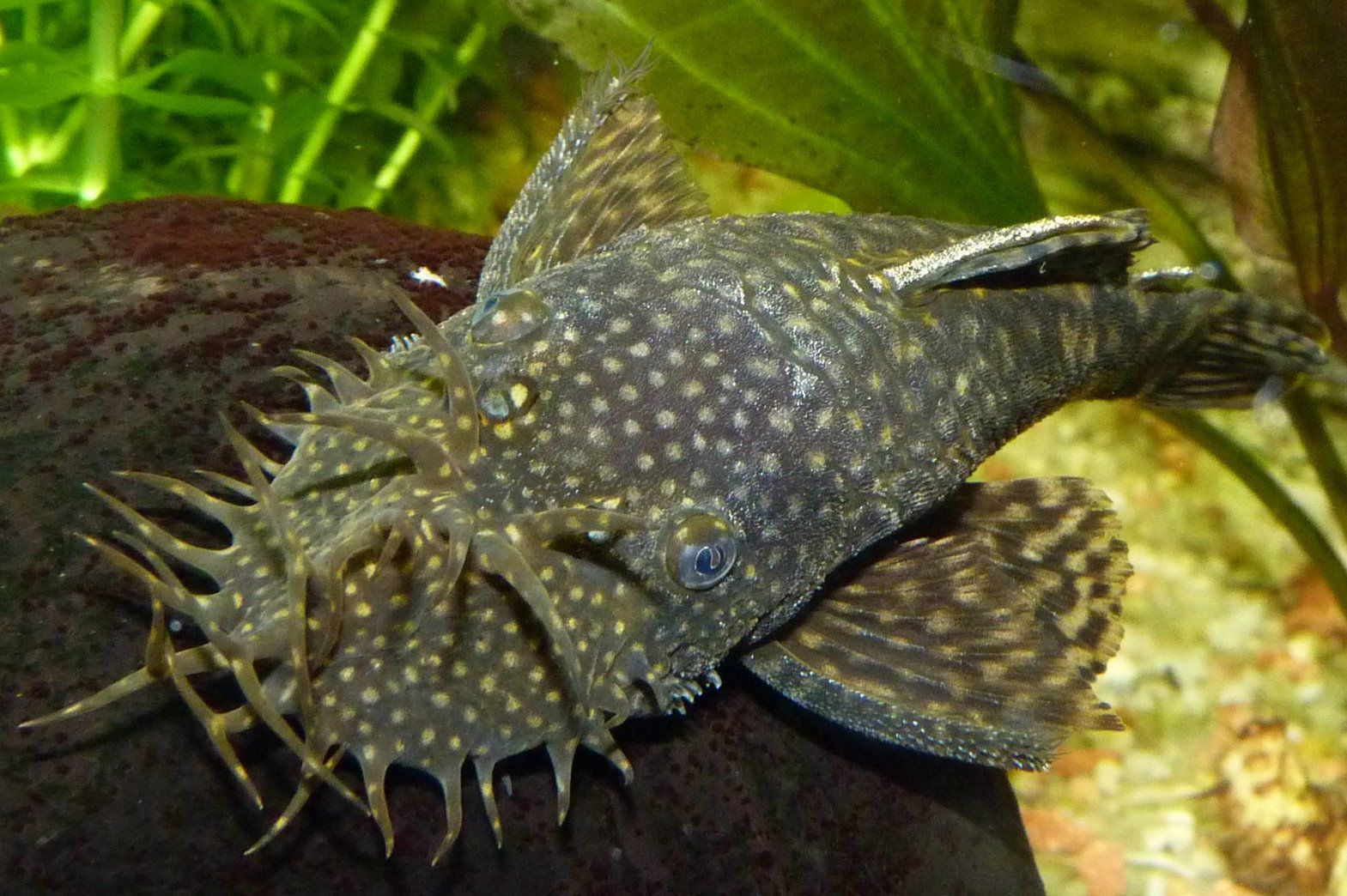
Bristlenose Pleco
Ancistrus cirrhosus
- Temperature
- 21–26 °C
- pH
- 6.5 – 7.5
- Min. tank size
- 90 L
- Lifespan
- 8 years
- Diet
- herbivore
- Care level
- easy
| Scientific classification | |
|---|---|
| Scientific Name: | Ancistrus cirrhosus |
| Family: | Loricariidae |
| Origin: | South America (Amazon and Paraná basins) |
| Care Characteristics | |
| Care Level: | easy |
| Diet: | herbivore |
| Max Size: | 13.00 cm |
| Water Type: | freshwater |
| Temp Group: | tropical |
| Temperament: | peaceful |
| Min Group: | Can be kept alone |
| Varieties: | Start with the taxonomy, because it is genuinely unresolved. The fish sold everywhere as the common bristlenose is catalogued by specialists as Ancistrus sp. '3'. Its precise origin is unknown, and some hold that it may be a hybrid. It is bred commercially on an enormous scale regardless, and it is usually labelled Ancistrus cirrhosus in the trade — including here. Selectively bred strains are numerous. Albino is the most common, a pale cream or pink fish with red eyes. Others include the calico or marbled form, lemon or gold, the blue-eyed lemon, super red, chocolate, and green dragon. Long-finned versions of most of these exist and are widely sold. As with every long-finned strain, the fins are an impediment on a fish built to cling to surfaces in current. Distinct Ancistrus species also appear in the trade under L-numbers: the starlight ancistrus (A. dolichopterus, L183), the gold marble (A. claro, LDA 008) which stays smaller at around 7 cm, and the horned bristlenose (A. triradiatus). These are separate fish with their own requirements, not colour forms of the common one. |
| Lifespan: | 8 years |
Quick Tips
- Bioload:Medium to high
- Min Tank:90 L
- Substrate:Sand or smooth gravel; driftwood is essential
- Plant Safe:Plant-safe
- Filtration:High (messy; needs good filtration)
Bristlenose Pleco (Ancistrus cirrhosus) is a species of fish in the family Loricariidae. It is native to South America (Amazon and Paraná basins). The bristlenose is the answer to the common pleco problem. It does the same job, has far more personality, and stops at around 12–13 cm instead of 45. Ancistrus are found across South America and into Panama, mostly in the rivers and floodplains of the Amazon basin. The genus runs to some ninety species, including three true cave fish. Mature males grow a spray of fleshy tentacles across the head — the bristles — plus evertible cheek odontodes, sharp spines that flick out from the gill covers. Females have at most a few small tentacles along the snout margin and none on the head. Nothing else in the hobby looks like it. One of the theories about those tentacles is worth knowing: they may mimic fry, letting a male without a brood look like a male who already has one, which is what females are choosing for. A well-kept bristlenose lives eight years or more.
Compatibility
- Temperament
- peaceful
- Keep in
- Can be kept alone
- Swims
- bottom
- Fin nipper
- No
- Delicate fins
- No
Species similar to Bristlenose Pleco
Matched on family, then category, then water type