From Aqua Guide, the free encyclopedia
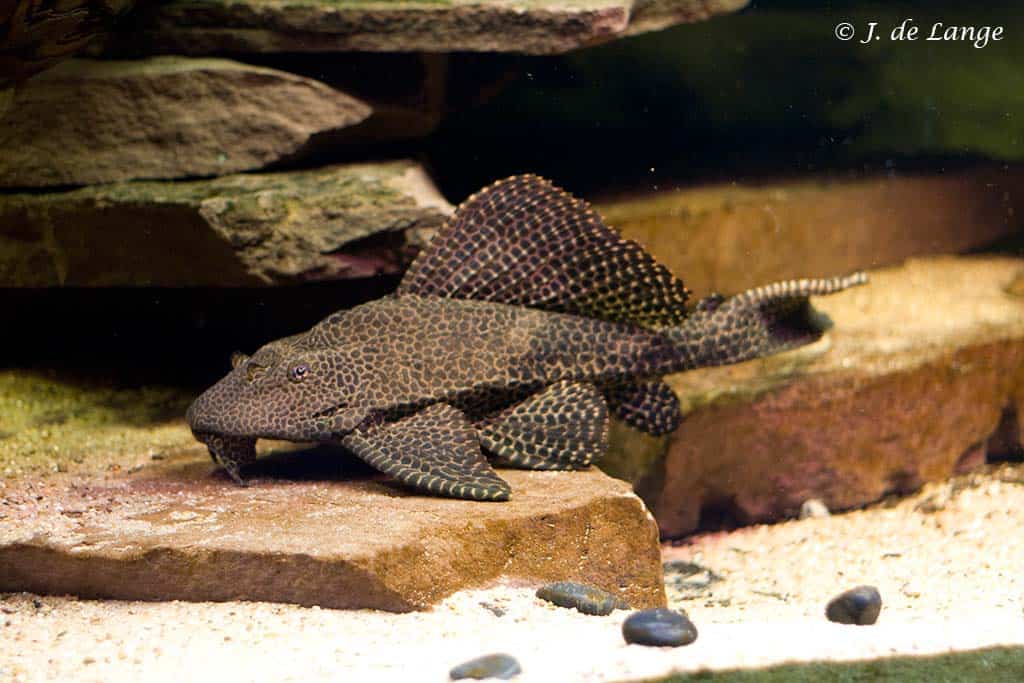
Sailfin Pleco
Pterygoplichthys gibbiceps
- Temperature
- 23–28 °C
- pH
- 6 – 7.5
- Min. tank size
- 380 L
- Lifespan
- 15-20 years
- Diet
- herbivore
- Care level
- easy
| Scientific classification | |
|---|---|
| Scientific Name: | Pterygoplichthys gibbiceps |
| Family: | Loricariidae |
| Origin: | South America (Amazon and Orinoco basins) |
| Care Characteristics | |
| Care Level: | easy |
| Diet: | herbivore |
| Max Size: | 45.00 cm |
| Water Type: | freshwater |
| Temp Group: | tropical |
| Temperament: | peaceful |
| Min Group: | Can be kept alone |
| Varieties: | Albino and, less commonly, other colour forms are produced in the ponds that supply the trade, and the wild-type spotted fish is what is usually sold. The genus is the source of confusion. Pterygoplichthys contains several very similar large plecos, distinguished mainly by the dorsal ray count — nine or more, usually ten, against the six or seven of Hypostomus — and by the belly pattern. P. gibbiceps, this fish, is the leopard or sailfin pleco proper. P. pardalis, the common pleco, is the fish most often sold under that name and reaches a similar size. P. multiradiatus and P. anisitsi also reach the trade. All are sold interchangeably as "plecos" and all grow far larger than most buyers expect. If you want an algae eater for a normal aquarium, the bristlenose pleco at 12 cm or the rubber lip pleco at 10 cm are the species to look at instead. Neither will outgrow the tank. |
| Lifespan: | 15-20 years |
Quick Tips
- Bioload:Very high
- Min Tank:380 L
- Substrate:Sand/smooth gravel; large driftwood and caves; open space
- Plant Safe:Not reliably plant-safe (may rasp and damage soft plants)
- Filtration:Very high (large, very messy fish)
Sailfin Pleco (Pterygoplichthys gibbiceps) is a species of fish in the family Loricariidae. It is native to South America (Amazon and Orinoco basins). The sailfin pleco is sold as a 6 cm juvenile with a spotted body and a huge, banner-like dorsal fin. It reaches around 32 cm standard length, with specimens over 50 cm total length documented, and it gets there fast — roughly a year to eighteen months to reach 20 cm. That growth curve is the reason so many end up rehomed, released or dead. A fish this size needs a tank measured in hundreds of litres and produces waste to match. It is not aggressive, and as an adult it is an impressive animal: a slow-moving, armoured, sail-finned catfish that will live for decades. It also breathes air. The genus has a vascularised stomach and can survive up to 30 hours out of water, which is part of why it has become invasive across the tropics after aquarium releases.
Compatibility
- Temperament
- peaceful
- Keep in
- Can be kept alone
- Swims
- bottom
- Fin nipper
- No
- Delicate fins
- No
Species similar to Sailfin Pleco
Matched on family, then category, then water type