From Aqua Guide, the free encyclopedia
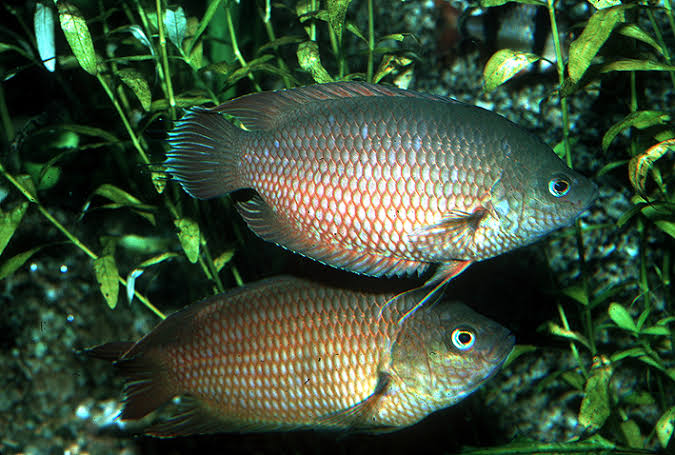
Combtail Gourami
Belontia signata
- Temperature
- 20–27 °C
- pH
- 6 – 7.5
- Min. tank size
- 108 L
- Lifespan
- 5-8 years
- Diet
- omnivore
- Care level
- moderate
| Scientific classification | |
|---|---|
| Scientific Name: | Belontia signata |
| Family: | Osphronemidae |
| Origin: | Sri Lanka (forest streams) |
| Care Characteristics | |
| Care Level: | moderate |
| Diet: | omnivore |
| Max Size: | 12.00 cm |
| Water Type: | freshwater |
| Temp Group: | tropical |
| Temperament: | semi aggressive |
| Min Group: | Can be kept alone |
| Varieties: | No cultivated strains, but three distinct natural phenotypes, which is unusual enough to be worth knowing. The forms differ in colouration, patterning and habitat preference across Sri Lanka, and stock from different populations varies noticeably in ground colour and in the amount of red. Most fish in the trade are commercially bred, and the phenotypes are not usually distinguished on labels. The genus contains one other species in the hobby: Belontia hasselti, the Java combtail, which is larger, somewhat plainer and comes from Southeast Asia rather than Sri Lanka. Its requirements are similar and its temperament is comparable. Elsewhere among the anabantoids, the paradise fish occupies a similar niche — a hardy, assertive, cool-tolerant labyrinth fish that is not a community animal — while the pearl, honey and snakeskin gouramis are the peaceful options. For a Sri Lankan biotope, the combtail sits naturally with black ruby barbs and cherry barbs. |
| Lifespan: | 5-8 years |
Quick Tips
- Bioload:Medium
- Min Tank:108 L
- Substrate:Dark substrate; planted with cover and a calm surface
- Plant Safe:Plant-safe
- Filtration:Low to moderate (surface air access)
Combtail Gourami (Belontia signata) is a species of fish in the family Osphronemidae. It is native to Sri Lanka (forest streams). The combtail is named for its tail: the caudal fin rays extend beyond the membrane, giving the edge a frayed, comb-like appearance that no other common aquarium anabantoid has. It reaches 120 mm standard length and is endemic to Sri Lanka, where three distinct phenotypes occur, differing in colouration, patterning and habitat preference. It is a labyrinth fish, breathing atmospheric air, and it is considerably more assertive than the gouramis most people know. Specialists are direct about it: this is not a community fish. Very small fishes are best avoided as they may be eaten, males are aggressive toward one another, and a single sexed pair is the arrangement recommended for most aquarists. Its parental care is unusual — biparental bubble nesting with extended broodcare.
Compatibility
- Temperament
- semi aggressive
- Keep in
- Can be kept alone
- Swims
- middle
- Fin nipper
- No
- Delicate fins
- No
Species similar to Combtail Gourami
Matched on family, then category, then water type