From Aqua Guide, the free encyclopedia
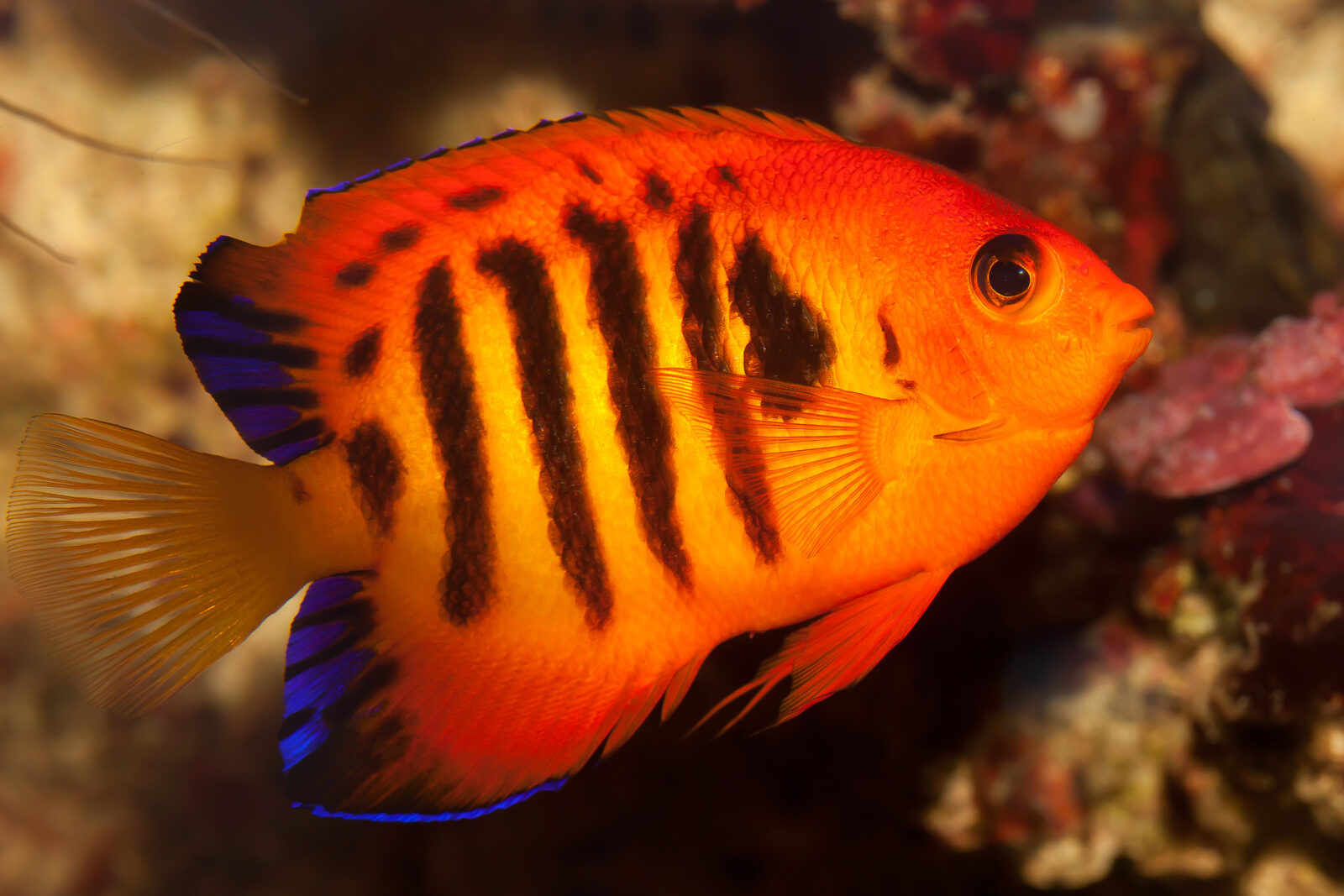
Flame Angelfish
Centropyge loriculus
- Temperature
- 24–27 °C
- Salinity
- 1.02 – 1.026 SG
- Min. tank size
- 110 L
- Lifespan
- 5-10 years
- Diet
- omnivore
- Care level
- moderate
| Scientific classification | |
|---|---|
| Scientific Name: | Centropyge loriculus |
| Family: | Pomacanthidae |
| Origin: | Pacific reefs |
| Care Characteristics | |
| Care Level: | moderate |
| Diet: | omnivore |
| Max Size: | 10.00 cm |
| Water Type: | marine |
| Temp Group: | tropical |
| Reef Safe: | Reef Safe with Caution |
| Temperament: | peaceful |
| Min Group: | Can be kept alone |
| Varieties: | No cultivated colour strains, but genuine geographic variation. Specimens from the Marquesas Islands lack the typical vertical black bars, and fish from different island groups vary in the depth of the red-orange and in the extent of the barring. Marshall and Christmas Island fish are traditionally regarded as the most intensely coloured. Captive breeding has been achieved commercially in Thailand, and tank-raised specimens appear in the trade in small numbers. The genus Centropyge contains the dwarf angelfish as a group, and several are common in the trade: C. bispinosa, the coral beauty; C. argi, the cherub angel; C. eibli; C. flavissima, the lemonpeel; and C. bicolor. All share the harem structure, the protogynous sex change, the grazing diet and the coral-nipping caveat. |
| Lifespan: | 5-10 years |
Quick Tips
- Bioload:Low to medium
- Min Tank:110 L
- Substrate:Live rock with algae and grazing surfaces
- Plant Safe:Yes
- Filtration:Moderate to high (mature reef)
Flame Angelfish (Centropyge loriculus) is a species of fish in the family Pomacanthidae. It is native to Pacific reefs. The flame angel is the dwarf angelfish people save up for: brilliant red-orange, crossed by vertical black bars, with blue-tipped dorsal and anal fins. It comes from tropical Pacific reefs, most common in the Marshall, Line and Cook Islands and less frequent in Hawaiian waters, on the foreslopes of coral reefs and in clear lagoons. Males are generally larger and slightly more coloured than females, and the species is haremic in nature — a male holding a territory containing several females. It is initially shy when introduced, gaining confidence within about a week, after which it spends the day grazing over live rock. It has been captive-bred commercially in Thailand.
Compatibility
- Temperament
- peaceful
- Keep in
- Can be kept alone
- Swims
- middle
- Fin nipper
- No
- Delicate fins
- No
- Reef
- Reef Safe with Caution
Species similar to Flame Angelfish
Matched on family, then category, then water type