From Aqua Guide, the free encyclopedia
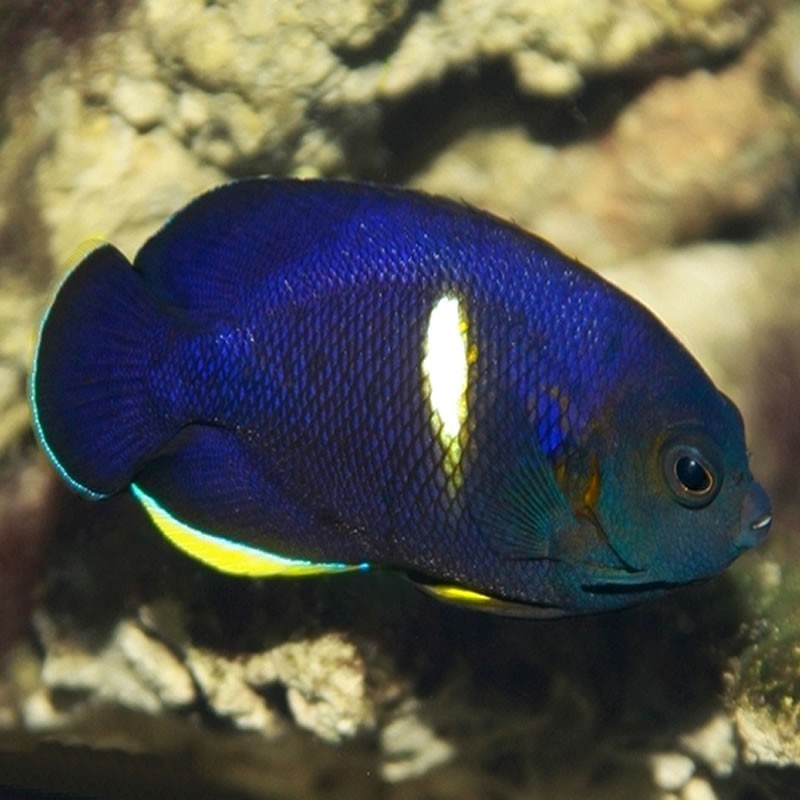
Keyhole Angelfish
Centropyge tibicen
- Temperature
- 24–27 °C
- Salinity
- 1.02 – 1.026 SG
- Min. tank size
- 250 L
- Lifespan
- 5-10 years
- Diet
- omnivore
- Care level
- moderate
| Scientific classification | |
|---|---|
| Scientific Name: | Centropyge tibicen |
| Family: | Pomacanthidae |
| Origin: | Indo-Pacific reefs |
| Care Characteristics | |
| Care Level: | moderate |
| Diet: | omnivore |
| Max Size: | 19.00 cm |
| Water Type: | marine |
| Temp Group: | tropical |
| Reef Safe: | Reef Safe with Caution |
| Temperament: | semi aggressive |
| Min Group: | Can be kept alone |
| Varieties: | No cultivated strains — this is a wild-caught fish, described as uncommon in the wild and collected across the Indo-Australian archipelago. Juveniles are darker with a more pronounced white keyhole marking, which fades in some adults, so a shop juvenile and a mature specimen can look noticeably different. The specific epithet tibicen means "trumpeter", a name inherited from historical Dutch naturalist nomenclature. The genus Centropyge contains the dwarf angelfish as a group, and this is among the largest of them. C. bispinosa, the coral beauty; C. loricula, the flame angel; C. nox, the midnight angel; and C. fisheri are all considerably smaller. All share the harem structure, the protogynous sex change, the grazing diet and the coral-nipping caveat, and none should be kept two to a tank. |
| Lifespan: | 5-10 years |
Quick Tips
- Bioload:Low to medium
- Min Tank:250 L
- Substrate:Live rock with abundant algae and cover
- Plant Safe:Yes
- Filtration:Moderate to high (mature reef)
Keyhole Angelfish (Centropyge tibicen) is a species of fish in the family Pomacanthidae. It is native to Indo-Pacific reefs. The keyhole angelfish is the dwarf angel that is not dwarf. It reaches 19 cm total length — nearly twice the size of a coral beauty or a flame angel — and is dark blue-black with a white "keyhole" mark on the flank and a yellow patch on the belly, both of which fade with maturity in some individuals. It comes from the Indo-Pacific, from north-western Australia and Christmas Island through the Indo-Australian archipelago to Vanuatu and Tonga, at 4 to 35 metres in areas mixing coral and rubble. It is described as uncommon in the wild. It lives in harems of three to seven fish, and when no male is present one of the females changes sex.
Compatibility
- Temperament
- semi aggressive
- Keep in
- Can be kept alone
- Swims
- middle
- Fin nipper
- No
- Delicate fins
- No
- Reef
- Reef Safe with Caution
Species similar to Keyhole Angelfish
Matched on family, then category, then water type