From Aqua Guide, the free encyclopedia
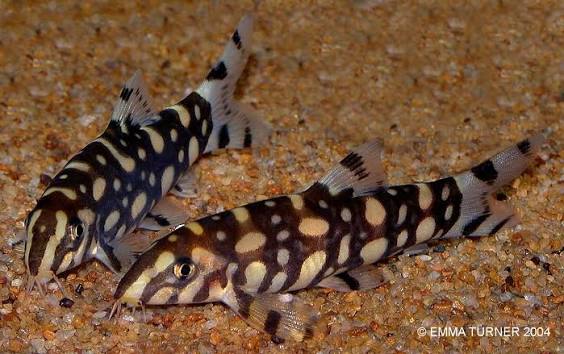
Polka Dot Loach
Botia kubotai
- Temperature
- 22–28 °C
- pH
- 6 – 7.5
- Min. tank size
- 243 L
- Lifespan
- 8-12 years
- Diet
- omnivore
- Care level
- moderate
| Scientific classification | |
|---|---|
| Scientific Name: | Botia kubotai |
| Family: | Botiidae |
| Origin: | Southeast Asia (Ataran and Salween basins, Myanmar/Thailand) |
| Care Characteristics | |
| Care Level: | moderate |
| Diet: | omnivore |
| Max Size: | 15.00 cm |
| Water Type: | freshwater |
| Temp Group: | tropical |
| Temperament: | semi aggressive |
| Min Group: | 6+ together |
| Varieties: | No cultivated strains — the variation is individual, and it is considerable. The cream-and-black reticulation differs between fish and changes with age, so juveniles with clean round spots grow into adults with maze-like banding. Some keepers can identify individual fish in a group by pattern alone. The species was described in 2004 from the Ataran basin on the Thailand-Myanmar border, making it a relatively recent arrival in the hobby. The genus is where the alternatives sit. Botia contains several familiar aquarium fish: B. striata, the zebra loach, smaller and calmer; B. almorhae, the yoyo loach; B. histrionica, the golden zebra loach; and B. dario, the Bengal loach. All share the group requirement, the need for structure and a tight lid, and the tendency to nip long fins. The clown loach, now Chromobotia macracanthus, is the giant of the family and needs a far larger tank than any of them. |
| Lifespan: | 8-12 years |
Quick Tips
- Bioload:Medium
- Min Tank:243 L
- Substrate:Soft sand; caves and hiding spots
- Plant Safe:Plant-safe
- Filtration:Moderate to high (clean, oxygenated water)
Polka Dot Loach (Botia kubotai) is a species of fish in the family Botiidae. It is native to Southeast Asia (Ataran and Salween basins, Myanmar/Thailand). The polka dot loach is one of the best-looking fish in the Botia group and one of the most rewarding to keep, provided you keep enough of them. It reaches 150 mm standard length and is patterned in cream and black — a reticulated arrangement that shifts as the fish grows, so a juvenile with clean round spots becomes an adult with a maze-like network of bands and blotches. No two are quite alike. It was only described in 2004, from the Ataran river basin on the Thailand-Myanmar border, and it entered the hobby shortly after. Like all Botia it is gregarious, forms complex social hierarchies, and should be kept in groups of at least five or six specimens and preferably ten or more. It is also known to jump, so a tight lid is required.
Compatibility
- Temperament
- semi aggressive
- Keep in
- Groups of 6+
- Swims
- bottom
- Fin nipper
- No
- Delicate fins
- No
Species similar to Polka Dot Loach
Matched on family, then category, then water type