From Aqua Guide, the free encyclopedia
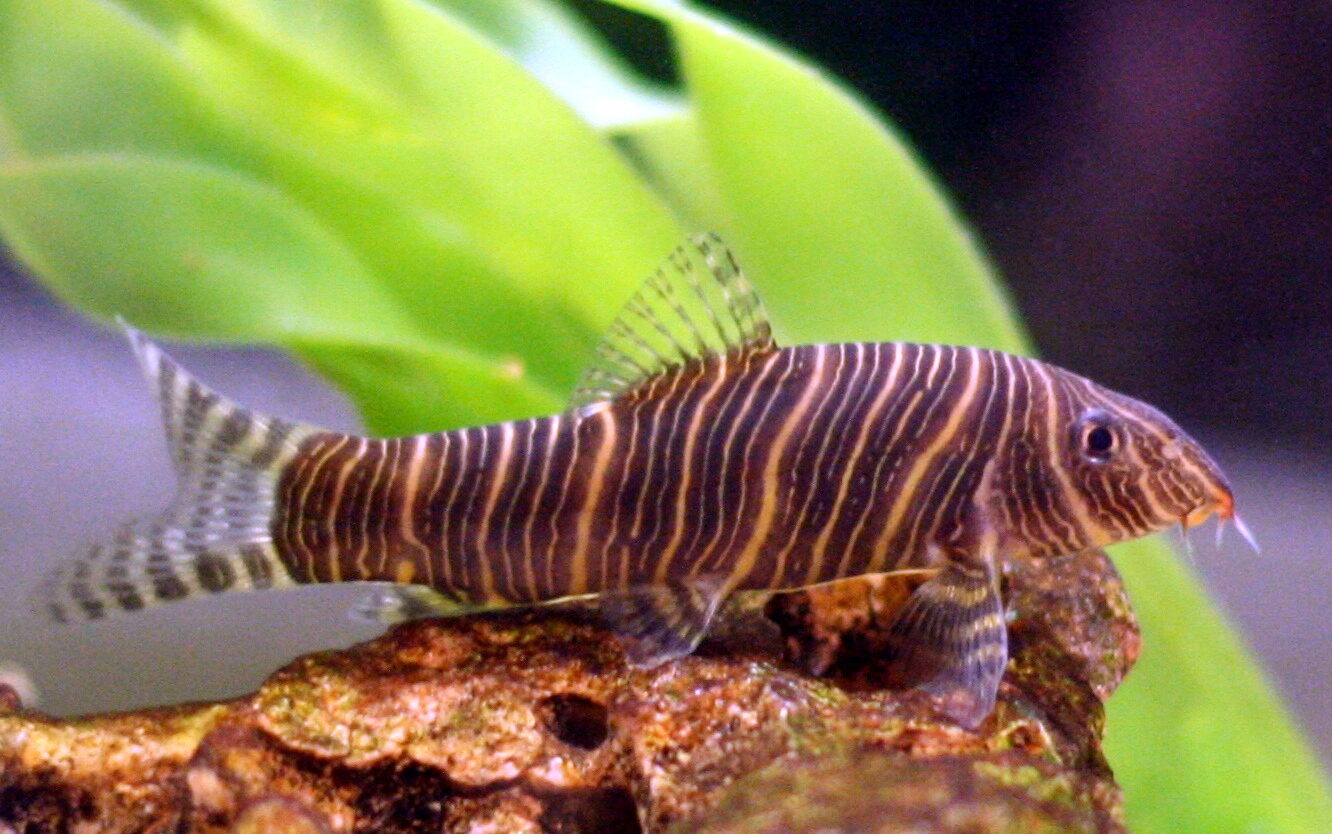
Zebra Loach
Botia striata
- Temperature
- 21–26 °C
- pH
- 6 – 7.5
- Min. tank size
- 110 L
- Lifespan
- 12 years
- Diet
- omnivore
- Care level
- moderate
| Scientific classification | |
|---|---|
| Scientific Name: | Botia striata |
| Family: | Botiidae |
| Origin: | India (Western Ghats rivers) |
| Care Characteristics | |
| Care Level: | moderate |
| Diet: | omnivore |
| Max Size: | 9.00 cm |
| Water Type: | freshwater |
| Temp Group: | tropical |
| Temperament: | peaceful |
| Min Group: | 6+ together |
| Varieties: | No cultivated strains — this is a wild-type fish and the fine barring needs no improvement. Almost all trade fish are wild-caught from the Western Ghats or produced commercially by hormone induction. Its range is restricted. The species is recorded from the Tunga and Bhadra river drainages in Karnataka, alongside other endemics of the Western Ghats — the same threatened region that produces the Denison barb, and worth keeping in mind when buying. Several other botiids are traded alongside it and are separate species with similar habits. The polka dot loach (Botia kubotai) is spotted rather than barred and reaches about 13 cm. The dwarf chain loach (Ambastaia sidthimunki) stays around 6 cm and is the smallest of the group. The yoyo loach reaches 16 cm and the clown loach 40. For a normal household tank the zebra and the dwarf chain are the two that genuinely fit, and of those the zebra is the more robust and the easier to find. |
| Lifespan: | 12 years |
Quick Tips
- Bioload:Medium
- Min Tank:110 L
- Substrate:Soft sand; caves and hiding spots
- Plant Safe:Plant-safe
- Filtration:Moderate to high (likes clean, oxygenated water)
Zebra Loach (Botia striata) is a species of fish in the family Botiidae. It is native to India (Western Ghats rivers). The zebra loach is the botiid to buy when a clown loach is out of the question, and it is a genuinely good fish rather than a consolation. It comes from the Tunga River drainage in Karnataka, in the Western Ghats of India, over a substrate of bedrock, boulders, cobbles, gravel, sand and leaf litter. It reaches 90 mm standard length — a tenth the volume requirement of a clown loach and a fifth of a yoyo. The pattern is the appeal: fine dark bars over a pale gold body, closely spaced and running the full depth of the fish, more numerous and more delicate than any other loach in the trade. It is peaceful, sociable, long-lived, and busy in a way that makes a tank feel alive. It also has the same three requirements as every botiid: a proper group, mature well-oxygenated water, and a tight lid.
Compatibility
- Temperament
- peaceful
- Keep in
- Groups of 6+
- Swims
- bottom
- Fin nipper
- No
- Delicate fins
- No
Species similar to Zebra Loach
Matched on family, then category, then water type