From Aqua Guide, the free encyclopedia
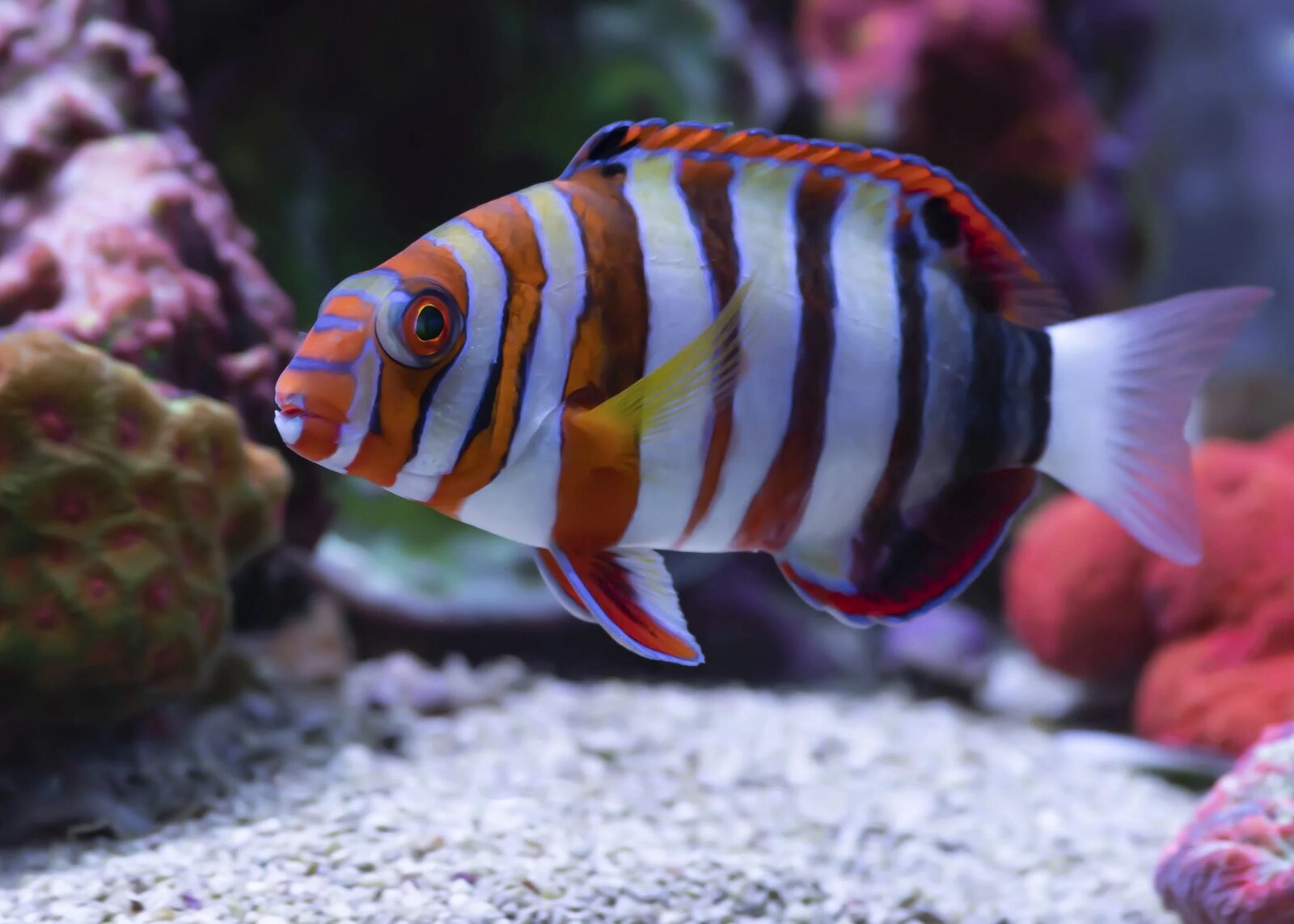
Harlequin Tuskfish
Choerodon fasciatus
- Temperature
- 25–28 °C
- Salinity
- 1.02 – 1.026 SG
- Min. tank size
- 450 L
- Lifespan
- 10-15 years
- Diet
- carnivore
- Care level
- moderate
| Scientific classification | |
|---|---|
| Scientific Name: | Choerodon fasciatus |
| Family: | Labridae |
| Origin: | Western Pacific reefs |
| Care Characteristics | |
| Care Level: | moderate |
| Diet: | carnivore |
| Max Size: | 30.00 cm |
| Water Type: | marine |
| Temp Group: | tropical |
| Reef Safe: | Reef Safe with Caution |
| Temperament: | semi aggressive |
| Min Group: | Can be kept alone |
| Varieties: | No cultivated strains — this is a wild-caught fish, and the variation is geographic and well known in the trade. Australian specimens display notably brighter colours, with more intense orange and cleaner white banding, and they command a considerable premium over fish from the Philippines and Indonesia. The difference is real enough that suppliers advertise origin. Juveniles are more subdued and become brighter with maturity. The genus Choerodon contains a number of tuskfish, most of which grow considerably larger and few of which reach the aquarium trade. C. anchorago and C. schoenleinii are food fish in parts of their range. Among aquarium wrasses generally, this species sits at the large, robust, invertebrate-eating end — the Halichoeres and Cirrhilabrus wrasses are the reef-safe alternatives. |
| Lifespan: | 10-15 years |
Quick Tips
- Bioload:Medium to high
- Min Tank:450 L
- Substrate:Live rock with caves; sand
- Plant Safe:Yes
- Filtration:High (large fish; clean water)
Harlequin Tuskfish (Choerodon fasciatus) is a species of fish in the family Labridae. It is native to Western Pacific reefs. The harlequin tuskfish has blue teeth, and they are not a trick of the light. Its canines are genuinely blue — an unusual pigment in a vertebrate tooth — and prominent enough to be visible across a room. The body is banded in about eight pairs of alternating orange, blue and white vertical bars, and Australian specimens are notably brighter than those from elsewhere. It reaches 30 cm and comes from the western Pacific, from Okinawa and the Philippines south to Papua New Guinea, Queensland, Lord Howe Island and New Caledonia, on reefs between 5 and 35 metres. Juveniles are shy; adults become aggressive.
Compatibility
- Temperament
- semi aggressive
- Keep in
- Can be kept alone
- Swims
- middle
- Fin nipper
- No
- Delicate fins
- No
- Reef
- Reef Safe with Caution
Species similar to Harlequin Tuskfish
Matched on family, then category, then water type