From Aqua Guide, the free encyclopedia
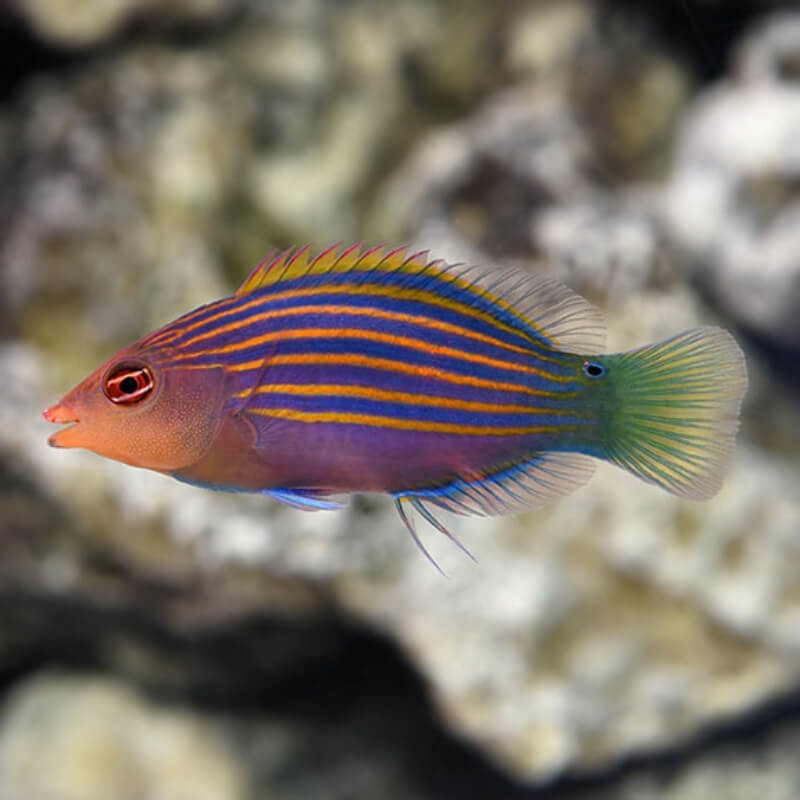
Sixline Wrasse
Pseudocheilinus hexataenia
- Temperature
- 24–27 °C
- Salinity
- 1.02 – 1.026 SG
- Min. tank size
- 110 L
- Lifespan
- 4-6 years
- Diet
- carnivore
- Care level
- easy
| Scientific classification | |
|---|---|
| Scientific Name: | Pseudocheilinus hexataenia |
| Family: | Labridae |
| Origin: | Indo-Pacific reefs |
| Care Characteristics | |
| Care Level: | easy |
| Diet: | carnivore |
| Max Size: | 10.00 cm |
| Water Type: | marine |
| Temp Group: | tropical |
| Reef Safe: | Reef Safe |
| Temperament: | semi aggressive |
| Min Group: | Can be kept alone |
| Varieties: | No cultivated strains — this is a wild-caught fish with a vast Indo-Pacific range from the Red Sea and East Africa to Japan, northern Australia and the Tuamotus, and its colouring is consistent. The genus Pseudocheilinus contains several small wrasses in the trade, and they share both the usefulness and the temperament. P. hexataenia, this fish, is the sixline. P. octotaenia, the eightline wrasse, is larger and considerably more aggressive. P. tetrataenia, the fourline wrasse, is smaller and less often seen. P. ocellatus and P. evanidus also appear. All hunt small invertebrates, all become territorial with age and none are bred commercially. For pest control with less aggression, the Halichoeres wrasses are the alternative — larger, and requiring a sand bed to sleep in rather than a mucus cocoon. |
| Lifespan: | 4-6 years |
Quick Tips
- Bioload:Low
- Min Tank:110 L
- Substrate:Live rock with crevices; sand
- Plant Safe:Yes
- Filtration:Moderate (reef conditions)
Sixline Wrasse (Pseudocheilinus hexataenia) is a species of fish in the family Labridae. It is native to Indo-Pacific reefs. The sixline wrasse is 10 cm of violet crossed by six orange stripes, and it never stops moving. It works the rockwork all day hunting small crustaceans, and it has been documented performing cleaning functions, removing copepods and isopods from other fish — a useful habit that makes it one of the standard recommendations for a reef with a pest problem. It also does something quietly remarkable at night: it secretes a mucus cocoon to sleep in, which is thought to mask its scent from nocturnal predators. It has a reputation for being feisty as it matures, and that reputation is earned. It has not been bred in captivity.
Compatibility
- Temperament
- semi aggressive
- Keep in
- Can be kept alone
- Swims
- middle
- Fin nipper
- No
- Delicate fins
- No
- Reef
- Reef Safe
Species similar to Sixline Wrasse
Matched on family, then category, then water type