From Aqua Guide, the free encyclopedia
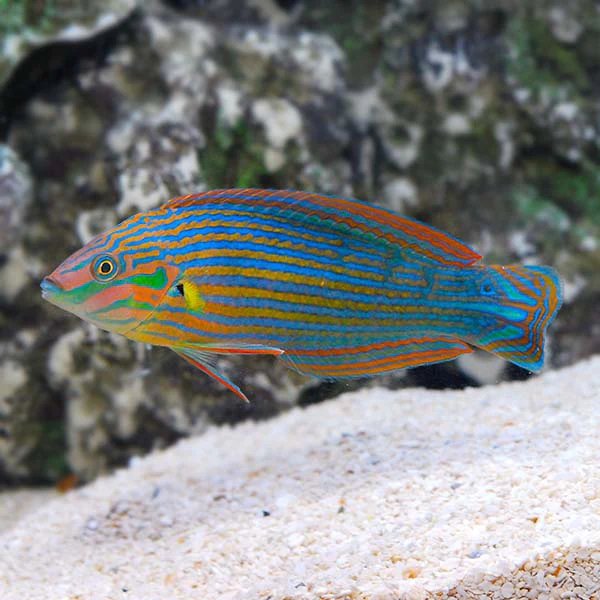
Melanurus Wrasse
Halichoeres melanurus
- Temperature
- 24–27 °C
- Salinity
- 1.02 – 1.026 SG
- Min. tank size
- 150 L
- Lifespan
- 4-8 years
- Diet
- carnivore
- Care level
- moderate
| Scientific classification | |
|---|---|
| Scientific Name: | Halichoeres melanurus |
| Family: | Labridae |
| Origin: | Western Pacific reefs |
| Care Characteristics | |
| Care Level: | moderate |
| Diet: | carnivore |
| Max Size: | 12.00 cm |
| Water Type: | marine |
| Temp Group: | tropical |
| Reef Safe: | Reef Safe with Caution |
| Temperament: | peaceful |
| Min Group: | Can be kept alone |
| Varieties: | No cultivated strains — this is a wild-caught fish, and the variation a buyer sees is between colour phases rather than between populations. Initial-phase fish, usually female, carry distinctive eye-spot markings on the dorsal and caudal fins over a green ground; terminal-phase males are larger, more intensely patterned in green, orange and blue lines, and lack the eye-spots. The species was described by Bleeker in 1851 and carries several historical synonyms including Julis melanurus and Platyglossus melanurus. The genus Halichoeres is very large and several species are reef-trade staples: H. chrysus, the canary wrasse; H. iridis, the radiant wrasse; H. marginatus; and H. claudia. All share the sand-sleeping habit, the pest-hunting usefulness, the risk to small invertebrates and the tendency to jump. |
| Lifespan: | 4-8 years |
Quick Tips
- Bioload:Low to medium
- Min Tank:150 L
- Substrate:Sand bed for burrowing (it sleeps buried); live rock
- Plant Safe:Yes
- Filtration:Moderate (reef conditions)
Melanurus Wrasse (Halichoeres melanurus) is a species of fish in the family Labridae. It is native to Western Pacific reefs. The melanurus or tail-spot wrasse is the working wrasse of the reef trade — bought for colour, kept for what it does. It is patterned in green, orange and blue lines, reaches 12 cm, and comes from the western Pacific from Japan to Samoa and Tonga, south to the Great Barrier Reef, on rocky shores and coral reefs in shallow water between 1 and 15 metres. Males display more vibrant colouring than females and can flash intensified colours when around them, which is a genuinely visible behaviour in a tank. Females are identified by distinctive eye-spot markings on the dorsal and caudal fins. Like other Halichoeres it sleeps buried in the sand.
Compatibility
- Temperament
- peaceful
- Keep in
- Can be kept alone
- Swims
- middle
- Fin nipper
- No
- Delicate fins
- No
- Reef
- Reef Safe with Caution
Species similar to Melanurus Wrasse
Matched on family, then category, then water type