From Aqua Guide, the free encyclopedia
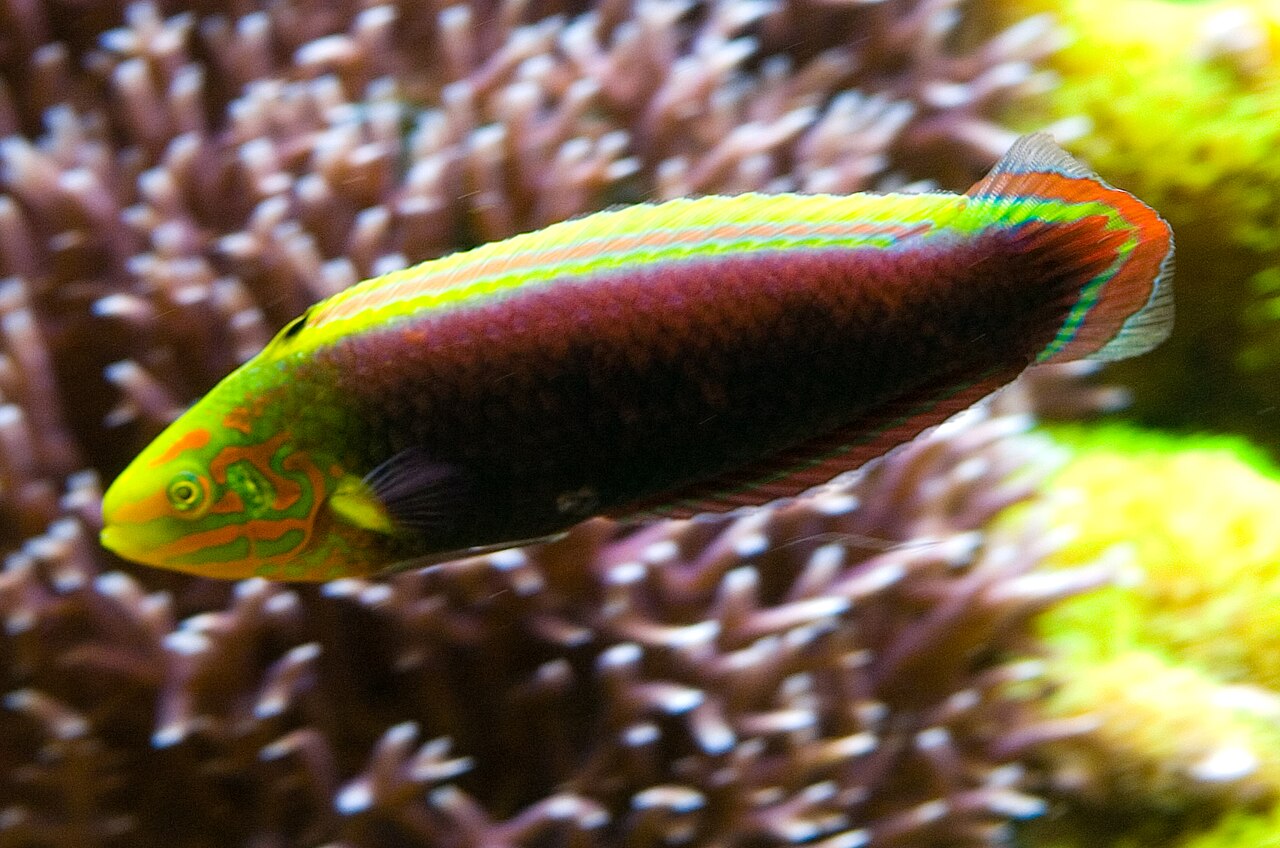
Radiant Wrasse
Halichoeres iridis
- Temperature
- 24–27 °C
- Salinity
- 1.02 – 1.026 SG
- Min. tank size
- 150 L
- Lifespan
- 5-8 years
- Diet
- carnivore
- Care level
- moderate
| Scientific classification | |
|---|---|
| Scientific Name: | Halichoeres iridis |
| Family: | Labridae |
| Origin: | Indian Ocean reefs |
| Care Characteristics | |
| Care Level: | moderate |
| Diet: | carnivore |
| Max Size: | 11.50 cm |
| Water Type: | marine |
| Temp Group: | tropical |
| Reef Safe: | Reef Safe |
| Temperament: | peaceful |
| Min Group: | Can be kept alone |
| Varieties: | No cultivated strains — this is a wild-caught fish from the western Indian Ocean, described by Randall and Smith in 1982. The colour phases within the species account for most of the variation a buyer will see: juveniles and initial-phase fish carry the prominent dark eye-spot on the dorsal fin, while terminal-phase males are larger and more intensely marked. The genus Halichoeres is very large and several species are staples of the reef trade: H. melanurus, the tail-spot wrasse; H. chrysus, the canary wrasse; H. marginatus; and H. claudia among many others. All share the sand-sleeping habit, the pest-hunting usefulness, the risk to small invertebrates and the tendency to jump. For a reef keeper wanting a working wrasse, any of them will do the job; the choice is largely about colour and adult size. |
| Lifespan: | 5-8 years |
Quick Tips
- Bioload:Low to medium
- Min Tank:150 L
- Substrate:Sand bed for burrowing (it sleeps buried); live rock
- Plant Safe:Yes
- Filtration:Moderate (reef conditions)
Radiant Wrasse (Halichoeres iridis) is a species of fish in the family Labridae. It is native to Indian Ocean reefs. The radiant wrasse is a small, glowing orange Halichoeres with a dark eye-spot on the dorsal fin, and it belongs to the group of wrasses that reef keepers buy for work as much as for looks. It reaches 11.5 cm in total length and comes from the western Indian Ocean along the African coast and nearby islands, over rubble and sand around reefs between 6 and 43 metres. That rubble-and-sand habitat is the important part. Like other Halichoeres it sleeps buried in the sand, diving into it at lights-out and emerging in the morning, and a tank without a soft sand bed cannot house one. It is reef safe and hunts pest invertebrates.
Compatibility
- Temperament
- peaceful
- Keep in
- Can be kept alone
- Swims
- middle
- Fin nipper
- No
- Delicate fins
- No
- Reef
- Reef Safe
Species similar to Radiant Wrasse
Matched on family, then category, then water type