From Aqua Guide, the free encyclopedia
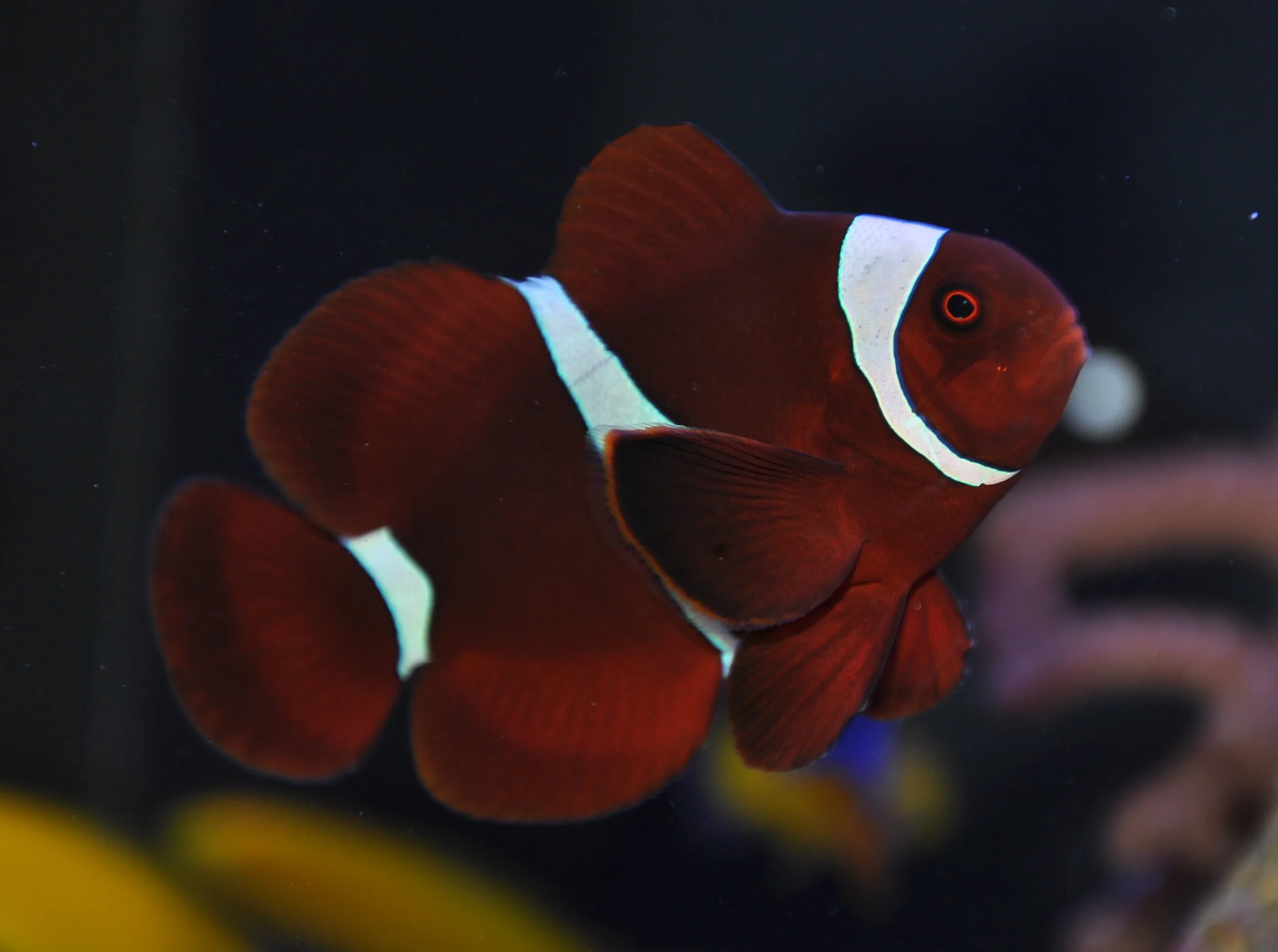
Maroon Clownfish
Amphiprion biaculeatus
- Temperature
- 24–27 °C
- Salinity
- 1.02 – 1.026 SG
- Min. tank size
- 110 L
- Lifespan
- 8-15 years
- Diet
- omnivore
- Care level
- moderate
| Scientific classification | |
|---|---|
| Scientific Name: | Amphiprion biaculeatus |
| Family: | Pomacentridae |
| Origin: | Indo-Pacific (Southeast Asia to western Pacific) |
| Care Characteristics | |
| Care Level: | moderate |
| Diet: | omnivore |
| Max Size: | 17.00 cm |
| Water Type: | marine |
| Temp Group: | tropical |
| Reef Safe: | Reef Safe |
| Temperament: | semi aggressive |
| Min Group: | Can be kept alone |
| Varieties: | Extensively bred, and the designer strains are a significant part of the trade. The Lightning Maroon, with jagged white bars branching across the body, is the best known and was developed from a single wild-caught fish from Papua New Guinea. Gold Stripe forms, in which the bars are broad and yellow-gold rather than white, are widely available and are a natural geographic variant of the species from Sumatra. Hybridisation with Amphiprion ocellaris has produced the Blood Orange clownfish, a commercially bred cross. The wild type has three white or gold bars on a maroon body. Among other clownfish, the ocellaris and percula are the peaceful beginners' species, the tomato and clarkii complexes sit in between, and this one is the difficult end of the group. |
| Lifespan: | 8-15 years |
Quick Tips
- Bioload:Low to medium
- Min Tank:110 L
- Substrate:Live rock and sand reef setup
- Plant Safe:Yes
- Filtration:Moderate (stable reef conditions)
Maroon Clownfish (Amphiprion biaculeatus) is a species of fish in the family Pomacentridae. It is native to Indo-Pacific (Southeast Asia to western Pacific). The maroon clownfish is the largest and the most aggressive of the anemonefish, and the size difference between the sexes is the most extreme in the group. A female reaches 17 cm; a male typically stays at 6 or 7 cm. That is not a subtle dimorphism — it is a fish and a fish a third its length sharing an anemone. It is considered the most territorial of all anemonefish, and unlike most clownfish it lives as a single mated pair rather than in a hierarchical group. In the wild it associates exclusively with the bubble-tip anemone, Entacmaea quadricolor, usually the solitary form. Genetic work moved it from Premnas to Amphiprion in 2021.
Compatibility
- Temperament
- semi aggressive
- Keep in
- Can be kept alone
- Swims
- middle
- Fin nipper
- No
- Delicate fins
- No
- Reef
- Reef Safe
Species similar to Maroon Clownfish
Matched on family, then category, then water type