From Aqua Guide, the free encyclopedia
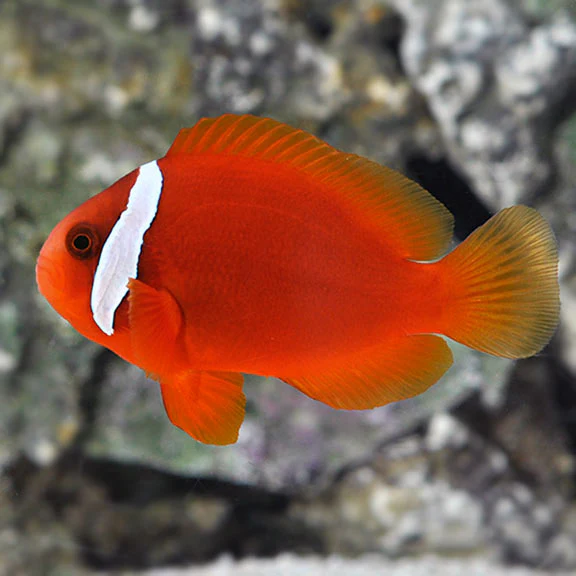
Tomato Clownfish
Amphiprion frenatus
- Temperature
- 24–27 °C
- Salinity
- 1.02 – 1.026 SG
- Min. tank size
- 110 L
- Lifespan
- 6-12 years
- Diet
- omnivore
- Care level
- easy
| Scientific classification | |
|---|---|
| Scientific Name: | Amphiprion frenatus |
| Family: | Pomacentridae |
| Origin: | Western Pacific (Southeast Asia, Japan) |
| Care Characteristics | |
| Care Level: | easy |
| Diet: | omnivore |
| Max Size: | 14.00 cm |
| Water Type: | marine |
| Temp Group: | tropical |
| Reef Safe: | Reef Safe |
| Temperament: | semi aggressive |
| Min Group: | 2+ together |
| Varieties: | The wild form dominates the trade, with captive-bred stock now widely available and better adapted to aquarium life. Selectively bred variants with reduced or irregular barring appear under trade names; care is identical. The very similar cinnamon clownfish, Amphiprion melanopus, is often confused with it in shops. |
| Lifespan: | 6-12 years |
Quick Tips
- Bioload:Low to medium
- Min Tank:110 L
- Substrate:Live rock and sand reef setup
- Plant Safe:Yes
- Filtration:Moderate (stable reef conditions)
Tomato Clownfish (Amphiprion frenatus) is a species of fish in the family Pomacentridae. It is native to Western Pacific (Southeast Asia, Japan). The tomato clownfish is among the hardiest clownfish in the trade, and it may have the best immune system of any of them. Fish that survive a non-lethal bout of marine velvet develop strong, long-lasting antibody-based immunity to it — a resistance that has been studied specifically in this species and is unusual among reef fish. Adults are bright orange-red with a single white head bar behind the eyes, outlined in black. Females are the larger sex and turn largely blackish along the sides; males stay considerably smaller and remain red overall. Juveniles are darker, with two or three white bars. It reaches 14 cm, ranges from the Ryukyus through the South China Sea to Indonesia, and hosts naturally in the bubble-tip anemone. It is also thoroughly territorial once mature.
Compatibility
- Temperament
- semi aggressive
- Keep in
- Groups of 2+
- Swims
- middle
- Fin nipper
- No
- Delicate fins
- No
- Reef
- Reef Safe
Species similar to Tomato Clownfish
Matched on family, then category, then water type