From Aqua Guide, the free encyclopedia
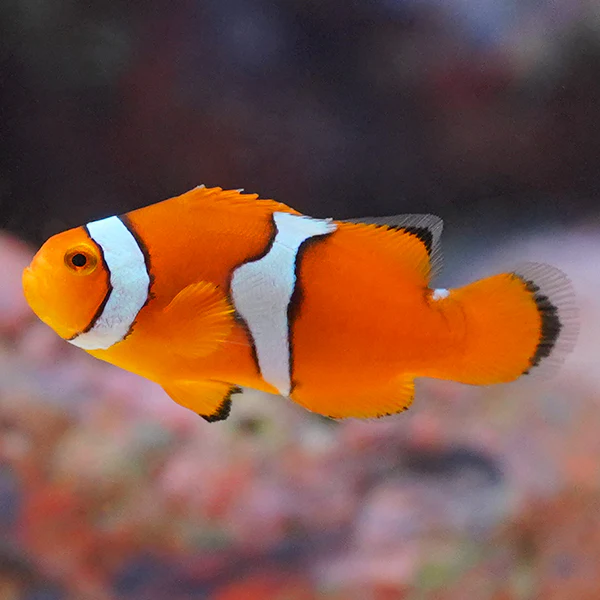
Percula Clownfish
Amphiprion percula
- Temperature
- 24–27 °C
- Salinity
- 1.02 – 1.026 SG
- Min. tank size
- 75 L
- Lifespan
- 6-10 years
- Diet
- omnivore
- Care level
- easy
| Scientific classification | |
|---|---|
| Scientific Name: | Amphiprion percula |
| Family: | Pomacentridae |
| Origin: | Western Pacific (Great Barrier Reef, Melanesia) |
| Care Characteristics | |
| Care Level: | easy |
| Diet: | omnivore |
| Max Size: | 11.00 cm |
| Water Type: | marine |
| Temp Group: | tropical |
| Reef Safe: | Reef Safe |
| Temperament: | peaceful |
| Min Group: | 2+ together |
| Varieties: | Extensively selectively bred, and the designer strains command high prices. The Picasso percula, with irregular broken bars, is the best known, alongside Platinum, Onyx, Black Ice and various Longfin forms. Wild-type fish are orange with three white bars edged in black, and remain the hardiest. Onyx perculas from the Solomon Islands, with extensive black, are a natural regional variant that has been line-bred. Captive breeding is now the main source, which has taken substantial pressure off wild populations. The species is frequently confused with Amphiprion ocellaris, and both are sold simply as "clownfish" or "Nemo" — the dorsal spine count is the reliable check, and for a keeper the two are effectively interchangeable in care. |
| Lifespan: | 6-10 years |
Quick Tips
- Bioload:Low
- Min Tank:75 L
- Substrate:Live rock and sand reef setup
- Plant Safe:Yes
- Filtration:Moderate (stable reef conditions)
Percula Clownfish (Amphiprion percula) is a species of fish in the family Pomacentridae. It is native to Western Pacific (Great Barrier Reef, Melanesia). The percula is the "true" clownfish, and telling it from the ocellaris is harder than the marketing suggests. Both are orange with three white bars. The percula's black outlines are usually thicker, but that varies. The one reliable difference is anatomical: this species has 10 spines in its first dorsal fin, where A. ocellaris has 11. It reaches up to 11 cm but averages 8, lives in shallow water no deeper than about 12 metres off north-west Australia, Southeast Asia and Japan, and associates with two anemone species — Radianthus magnifica and Stichodactyla gigantea. Larvae use chemical signals to find and identify a suitable host.
Compatibility
- Temperament
- peaceful
- Keep in
- Groups of 2+
- Swims
- middle
- Fin nipper
- No
- Delicate fins
- No
- Reef
- Reef Safe
Species similar to Percula Clownfish
Matched on family, then category, then water type