From Aqua Guide, the free encyclopedia
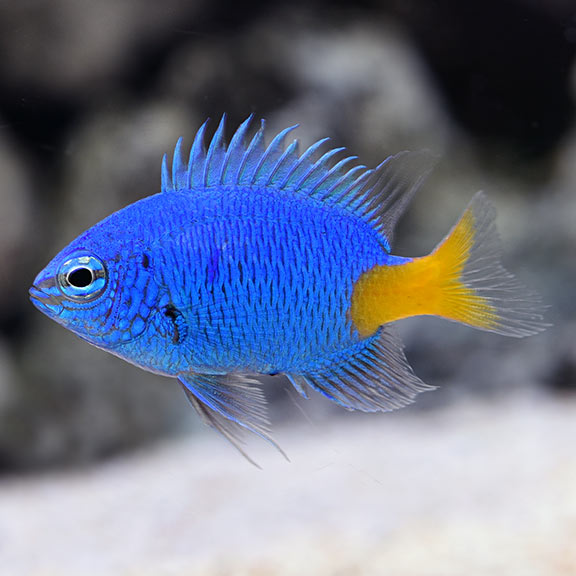
Yellowtail Damsel
Chrysiptera parasema
- Temperature
- 24–27 °C
- Salinity
- 1.02 – 1.026 SG
- Min. tank size
- 110 L
- Lifespan
- 4-6 years
- Diet
- omnivore
- Care level
- easy
| Scientific classification | |
|---|---|
| Scientific Name: | Chrysiptera parasema |
| Family: | Pomacentridae |
| Origin: | Western Pacific reefs |
| Care Characteristics | |
| Care Level: | easy |
| Diet: | omnivore |
| Max Size: | 7.60 cm |
| Water Type: | marine |
| Temp Group: | tropical |
| Reef Safe: | Reef Safe |
| Temperament: | semi aggressive |
| Min Group: | 3+ together |
| Varieties: | Traded as the wild form. Fish from Papua New Guinea often carry yellow extending up into the anal and dorsal fins, and some individuals show yellow pelvic or pectoral fins — regional variation rather than separate strains. The yellow never appears on the back or belly, which distinguishes it from the similar-looking azure and yellowtail blue damsels it is shelved beside. |
| Lifespan: | 4-6 years |
Quick Tips
- Bioload:Low
- Min Tank:110 L
- Substrate:Live rock and sand reef setup
- Plant Safe:Yes
- Filtration:Moderate (reef conditions)
Yellowtail Damsel (Chrysiptera parasema) is a species of fish in the family Pomacentridae. It is native to Western Pacific reefs. The yellowtail damsel is the damselfish most often handed to beginners, and for once the recommendation holds up. It is electric blue with a clean yellow tail — the yellow sometimes running into the anal and dorsal fins in Papua New Guinea fish, never onto the back or belly — and it can shift shade within minutes, darkening to conserve energy when stressed. It reaches around 7.5 cm and lives between 1 and 16 metres over dense coral in sheltered lagoons and inshore reefs. It is less aggressive than most of its family, though still territorial toward its own kind. Breeding males are the interesting part: they collect eggs from several females, up to ten thousand at a time, and prefer territories that already hold eggs — because a nest that is filling up attracts more.
Compatibility
- Temperament
- semi aggressive
- Keep in
- Groups of 3+
- Swims
- middle
- Fin nipper
- No
- Delicate fins
- No
- Reef
- Reef Safe
Species similar to Yellowtail Damsel
Matched on family, then category, then water type