When algae shows up, the natural impulse is to buy an "algae eater" and let nature solve the problem. The fish store happily obliges — there are dozens of species marketed for algae control. But many don't work, some create more problems than they solve, and the right algae eater depends entirely on which algae type you have. Here's an honest breakdown of which algae eaters actually earn their keep, which to avoid, and how to use them properly.
What is the best algae eater for a freshwater aquarium?
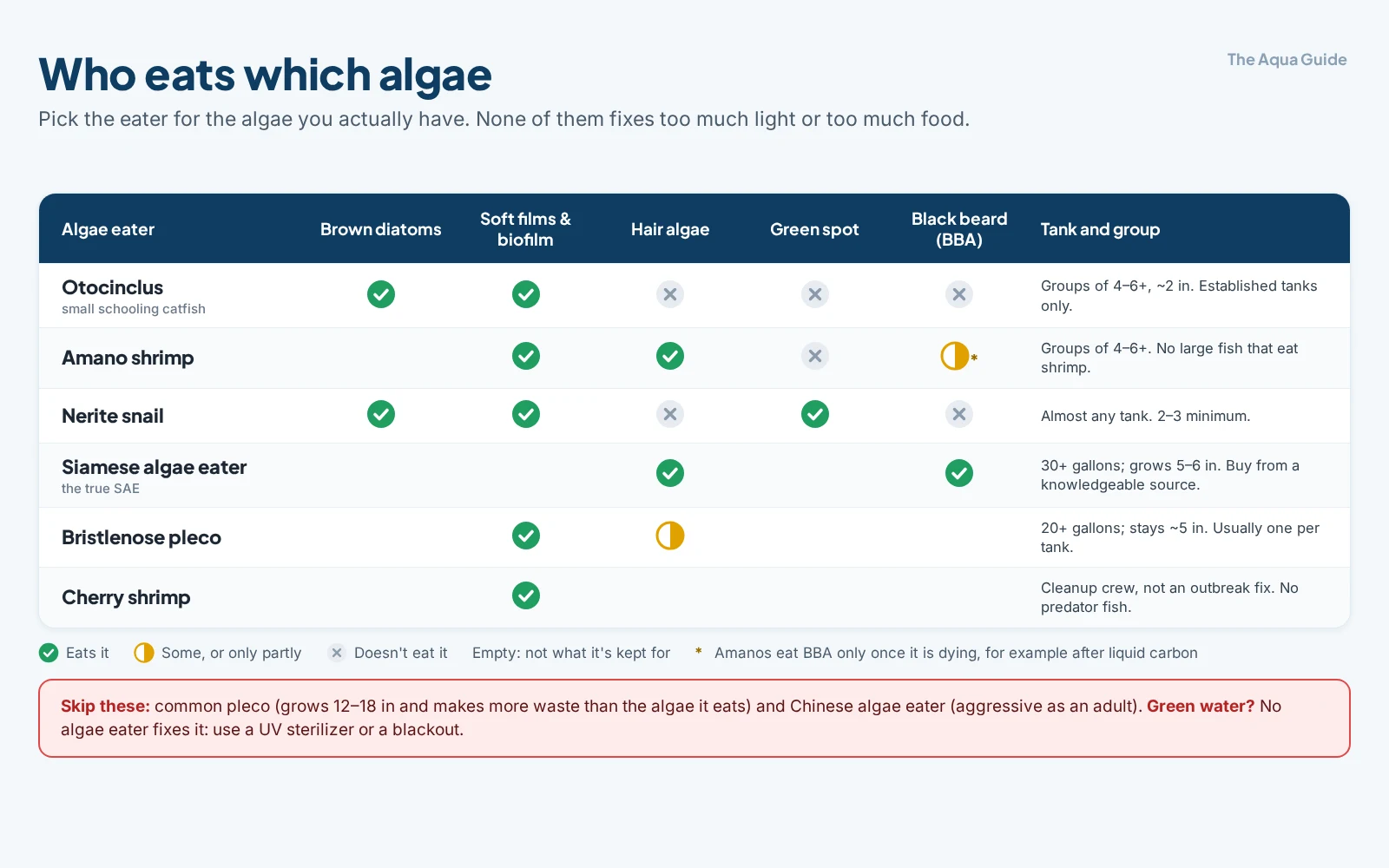
It depends entirely on which algae you have: otocinclus for brown diatoms and soft films, amano shrimp for hair algae, nerite snails for green spot algae and glass film, and a true Siamese algae eater for black beard algae. Avoid the common pleco, which outgrows most tanks and produces more waste than algae it eats, and the Chinese algae eater, which turns aggressive with age.
The Most Important Thing About Algae Eaters
Before any specific recommendations, the most important truth: algae eaters can't fix a fundamentally imbalanced tank. If your tank has too much light, too many nutrients, and not enough plant competition, no shrimp or snail will keep up. They help with existing visible algae and ongoing maintenance, but they're support, not solutions.
Tanks that rely entirely on algae eaters to compensate for poor maintenance always lose. Tanks where algae eaters complement good husbandry stay clear with much less effort. Get the conditions right first, then add algae eaters to maintain — not the other way around.
What Each Algae Eater Actually Eats
Different species target different algae types. Knowing which is which prevents the disappointment of buying an algae eater that ignores your specific problem.
Otocinclus Catfish ("Otos")
What they eat: Soft algae and biofilms on plant leaves and smooth surfaces — particularly brown diatoms in new tanks, soft green algae films, and biofilm coatings. Excellent for new-tank diatom outbreaks.
What they DON'T eat: Hair algae, BBA, green spot algae, tough/hard algae types.
Suitable for: Almost any community tank. Small (~2 inches), peaceful, schooling fish kept in groups of 4–6+. Perfect for general tank-maintenance algae control.
Cautions: Sensitive to poor water quality and ammonia spikes — only add to established, properly cycled tanks. Need algae available; can starve in new bare tanks if added too early.
Verdict: Excellent for diatoms and biofilms. A small group is highly recommended for almost any community tank.
Amano Shrimp
What they eat: Hair algae, soft green algae, biofilms, leftover food, dying matter. The closest thing to an all-purpose algae eater.
What they DON'T eat: Live BBA (will eat dying BBA after liquid carbon treatment), green spot algae.
Suitable for: Most community tanks without large predator fish. Get a group of 4–6+ for visible effect; more for larger tanks.
Cautions: Larger fish can eat them. Need stable water conditions. Won't reproduce in freshwater (so they don't multiply uncontrollably).
Verdict: The most useful single algae eater for most tanks. Particularly valuable for hair algae control. Stay focused on algae throughout their lives.
Nerite Snails
What they eat: Green spot algae (one of the few things that does), diatoms, soft green films on glass, hardscape, and équipment. Excellent glass cleaners.
What they DON'T eat: Hair algae (mostly), BBA (no), live plants (a real plus — they don't damage plants).
Suitable for: Almost any tank. Peaceful, can't reproduce in freshwater (lay eggs but eggs don't hatch — eggs may appear as small white dots on hardscape, which is purely cosmetic). Multiple varieties available.
Cautions: Can right themselves if flipped onto their backs, but sometimes need help. Eggs on hardscape can be considered unsightly by some.
Verdict: Excellent for surface algae control. Hands-down best for green spot algae and glass film. Nearly every tank benefits from a couple of nerites.
Siamese Algae Eaters (SAE)
What they eat: Hair algae, black beard algae (BBA) — one of the very few species that reliably eats live BBA — and various other algae types.
What they DON'T eat: Once they grow larger, they may stop eating algae as enthusiastically (preferring richer food).
Suitable for: Larger community tanks (30+ gallons preferably). Grow to 5–6 inches; need swimming room. Generally peaceful but become more boisterous with age.
Cautions: Buy from a knowledgeable source — many fish labeled "SAE" are actually flying foxes (Crossocheilus species look-alikes), Chinese algae eaters, or hybrids that don't eat BBA. True SAE has a single horizontal black stripe running unbroken from snout to tail with no other markings; the stripe doesn't fade at the tail.
Verdict: The go-to for BBA control. If BBA is your problem and you have the tank size, a true SAE is one of the few biological solutions.
Cherry Shrimp (and other Neocaridina)
What they eat: Soft biofilms, dying plant matter, leftover food, soft green algae growth.
What they DON'T eat: Major algae outbreaks won't be controlled by cherry shrimp. They're cleanup crew, not algae warriors.
Suitable for: Smaller community tanks without predator fish (most fish that fit shrimp in their mouths will eat them). They breed readily, which is part of the appeal but means populations grow.
Verdict: A nice cleanup crew, not a real algae solution. Get them for the colony itself; algae control is a side benefit.
Florida Flagfish (Jordanella floridae)
What they eat: Hair algae aggressively — sometimes too aggressively, completely clearing tanks in days.
What they DON'T eat: BBA mostly, harder algae types.
Suitable for: Tanks where hair algae is a chronic problem. Reasonably hardy.
Cautions: Can be nippy with fancy-finned tankmates (bettas, fancy guppies, angelfish). Best in species-tailored setups or with similar-sized non-fancy community fish.
Verdict: Effective for hair algae but with compatibility limits. Not a default choice for most communities.
Plecostomus (Common Pleco)
What they eat: Various algae when young; primarily fish food and waste once adult.
What they DON'T eat: Hair algae generally, BBA generally. And once they're large (8+ inches), they often stop eating algae enthusiastically.
Suitable for: Tanks of 75+ gallons. Common plecos grow huge (12–18 inches) and produce enormous amounts of waste.
Verdict: NOT recommended. Common plecos are sold as algae eaters but outgrow most tanks, produce more waste than algae they consume, and aren't reliable as adults. Choose smaller pleco species like bristlenose plecos (max ~5 inches) if you want a pleco; they're better algae eaters and stay tank-appropriate.
Bristlenose Pleco (Ancistrus species)
What they eat: Various algae including some hair algae and biofilms, vegetable matter. More reliable than common plecos through their full lifespan.
Suitable for: Tanks of 20+ gallons. Stay at ~5 inches max. Peaceful in most community tanks.
Verdict: A good choice if you want a pleco. Far better than the common pleco — stays smaller, eats algae more consistently, produces less waste.
Algae Eaters to Avoid
A few species commonly sold as algae eaters that aren't worth it:
Chinese Algae Eater (Gyrinocheilus aymonieri). Marketed as an algae eater but eats only minimally when young; as adults, becomes aggressive and often harasses tankmates (rasping their slime coat for food). Almost universally not recommended.
Common Pleco. As discussed — outgrows tanks, produces more waste than algae eaten, unreliable as adult.
Bala Sharks, Iridescent Sharks. Sometimes sold as algae eaters; they're not really, and grow huge.
Apple/Mystery Snails. Eat some biofilm but mostly fish food. Not algae-focused. Also can be aggressive plant-eaters in some cases.
Pond Snails (Physa, Lymnaea). Often come accidentally with plants. Eat some algae but reproduce uncontrollably and many keepers consider them pests. Manage rather than rely on them.
Matching Algae Eaters to Your Algae Problem
A quick reference:
| If you have… | Try… |
|---|---|
| Brown diatoms (new tank) | Otocinclus catfish (4–6) |
| Green spot algae on glass | Nerite snails (2–3) |
| Green water | UV sterilizer or blackout (not algae eaters) |
| Hair / thread algae | Amano shrimp (4–6+) |
| Black beard algae (BBA) | True Siamese algae eater (in a 30+ gallon tank) |
| Soft general algae film | Otocinclus, nerites, amano shrimp |
| Mixed tank-maintenance algae | Amanos + nerites combo (highly recommended) |
The Amano shrimp + nerite snail combination is among the most useful general-purpose algae control setups in beginner-friendly community tanks.
How Many to Get
A common question: how many algae eaters do I need? Some general guidance:
- Otocinclus: minimum group of 4 (they're social schooling fish); 4–6 for a 20-gallon, 6–10 for larger tanks
- Amano shrimp: about 1 per 2–3 gallons for noticeable algae effect; minimum group of 4–6 for visible behavior
- Nerite snails: 1 nerite per 5–10 gallons for glass/hardscape coverage; 2–3 minimum for visible cleaning effect
- Bristlenose pleco: typically 1 per tank (multiple males can fight); pairs are okay in larger tanks
- Siamese algae eater: typically 1 per tank for community setups; will school in larger tanks
The pattern: schoolers in groups, others adjusted to tank size.
Acclimating Algae Eaters
These species, especially shrimp and otocinclus, are often more sensitive than typical fish. Drip-acclimation (covered in Part 7) is strongly recommended rather than the basic float-and-mix. Add them only to established tanks where biofilms and algae are available as food — they can starve in brand-new bare tanks.
The Bottom Line
The most useful algae eaters are: otocinclus for diatoms and biofilms, amano shrimp for hair algae and general grazing, nerite snails for green spot algae and glass film, Siamese algae eaters for BBA in larger tanks, and bristlenose plecos if you want a pleco. Avoid common plecos (too big, too messy), Chinese algae eaters (aggressive as adults), and over-relying on any algae eater to compensate for poor husbandry. The amano-shrimp-plus-nerite combination handles most community-tank algae well as ongoing maintenance. Match the eater to your specific algae type, add them to established tanks where their food is available, drip-acclimate to reduce stress, and remember they're support — fix your tank's lighting, feeding, and plant balance first, and algae eaters keep things tidy on top of that. The right algae eaters in a balanced tank are some of the easiest, most low-maintenance ways to keep your aquarium looking sharp long-term.
Related guides
- The beginner's guide to aquarium algae
- Brown diatoms in new tanks
- Hair, thread and string algae control
- Black beard algae (BBA): what it is and how to beat it
- Green water and free-floating algae blooms
- Why algae keeps coming back
- Freshwater shrimp: cherry, amano and more
- Aquarium snails: helpful vs pest
Got questions about your specific setup? Drop them in our Community Forum — we love helping new fishkeepers get started right.