If you've read our setup guide, you already know the hardest part of starting a tank is the wait. A nitrogen cycle left to establish on its own usually takes six to eight weeks — six to eight weeks of testing water, dosing ammonia, and resisting the urge to add fish. The good news is you don't have to wait the full stretch. With a few biological and mechanical shortcuts, you can cut that time down substantially, and in the best case get close to an "instant" cycle.
Here's the thing to understand first: you can't create beneficial bacteria faster than they grow. What you can do is borrow them from somewhere they already exist, or remove the obstacles slowing them down. Every method below is really just one of those two ideas. Let's go through them in order of how much they actually move the needle.
At a glance: four ways to undo your own progress
| Habit | Why it sets you back |
|---|---|
| Go easy on water changes | Frequent large changes in a new tank clear the water, then trigger a worse cloudy rebound as fresh nutrients feed the free-floating bacteria |
| Don't overfeed | Feed sparingly for the first month — roughly once every other day. Overfeeding spikes ammonia past what a young colony can process |
| Stock slowly | A crowd at once dumps in more waste than the bacteria can handle: the classic recipe for New Tank Syndrome |
| Never rinse filter media under the tap | Chlorine kills the exact bacteria you are cultivating |
Six to eight weeks is the unaided wait. Seeding can get you there in a week or two — but the test kit, not the calendar, says when.
1. Seed Your Filter with Mature Media
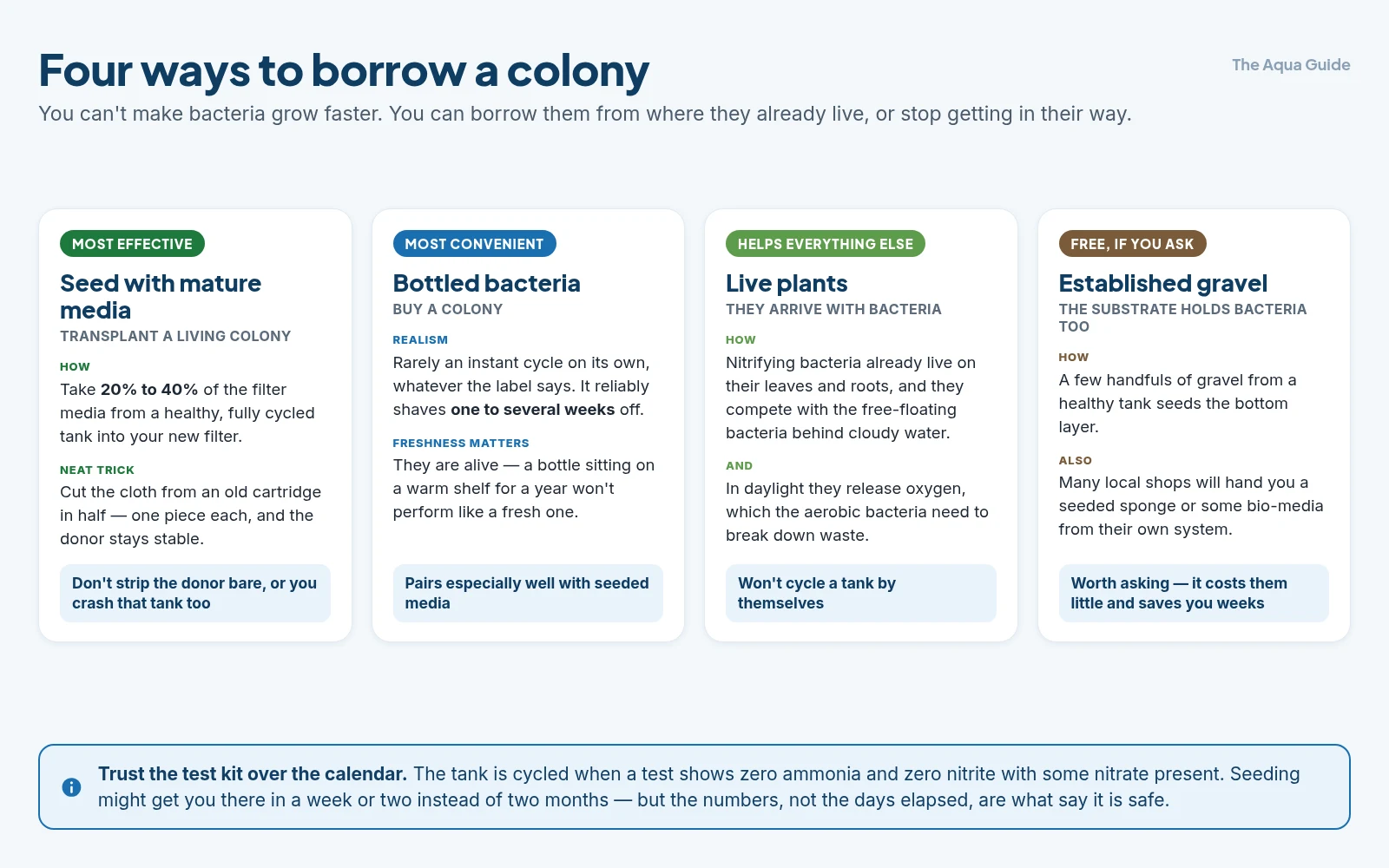
This is the single most effective trick, and it's what experienced keepers reach for when they want a fast — sometimes nearly instant — cycle. The logic is simple: instead of waiting weeks for bacteria to multiply from scratch, you transplant a colony that's already thriving.
To do it, take 20% to 40% of the filter media from a healthy, fully cycled tank and move it into your new filter. That established media is coated in living nitrifying bacteria, and they get straight to work in their new home.
If you're using a hang-on-back filter with cartridges, here's a neat way to share the wealth without harming the donor tank: cut the cloth from an old cartridge in half, put one piece in your new filter, and return the other half to the established tank. The mature tank keeps enough bacteria to stay stable, and your new tank gets a serious head start. The one rule is not to take too much — strip an established filter bare and you risk crashing the tank you borrowed from.
2. Add Bottled Nitrifying Bacteria
Commercial bacteria starters introduce live nitrifying colonies the moment you pour them in. They're the most convenient option since you can just buy a bottle.
A note of realism, though: despite the "instant cycle" claims on the label, these products rarely deliver an instant result on their own. What they reliably do is shave one to several weeks off your cycle, with the exact benefit depending on the brand and — crucially — how fresh the bottle is. Bacteria in a bottle are alive, so a product that's been sitting on a warm shelf for a year won't perform like a fresh one. Buy from a shop with good turnover, check dates where you can, and follow the dosing directions exactly. Bottled bacteria pair especially well with seeded media: the media provides the durable colony, the bottle gives it an early boost.
3. Add Live Plants
Plants help in a few quietly powerful ways. First, they almost always arrive with beneficial nitrifying bacteria already living on their leaves and roots — so much like seeded media, they bring a starter colony with them.
They also compete directly with the free-floating bacteria responsible for cloudy water, drawing down the same nutrients and helping the tank stabilize faster. And during daylight hours they release oxygen, which the aerobic beneficial bacteria need to break down waste efficiently. (If you want the full rundown on which plants work best for this, see our guide on live plants for clearing cloudy water.)
Plants won't cycle a tank by themselves, but they make every other method work better and leave you with a healthier, better-looking tank in the bargain.
4. Seed the Substrate with Established Gravel
Filter media gets most of the attention, but bacteria colonize your substrate too. If you have access to a healthy, established aquarium, scooping a few handfuls of its gravel into your new tank seeds the bottom layer with beneficial bacteria. Many local aquatic stores will also hand you a "seeded" sponge or some bio-media from their own system to get you started — it's worth asking, since it costs them little and saves you weeks.
5. Don't Undo Your Own Progress
This is the part beginners miss. All the seeding in the world won't help if you're accidentally resetting the cycle at the same time. These habits protect the bacteria you're working so hard to grow:
Go easy on water changes. In a new tank, frequent large water changes feel productive but often backfire — clearing the water temporarily, then triggering a worse cloudy rebound as fresh nutrients feed the free-floating bacteria. Let the cycle do its work.
Don't overfeed. During the first month, feed sparingly — roughly once every other day. Overfeeding produces an ammonia spike that a young, still-growing bacterial colony simply can't keep up with.
Stock slowly. Adding a crowd of fish at once dumps in more waste than your bacteria can process, which is the classic recipe for "New Tank Syndrome." Add a few fish, let the colony catch up, then add a few more.
Never rinse filter media under the tap. Tap water contains chlorine, and chlorine kills the exact bacteria you're cultivating. When your filter needs cleaning, rinse the media gently in a bucket of old tank water instead.
How to Know It Worked
Regardless of which methods you use, the finish line is the same and it's measured, not guessed. Your tank is fully cycled when a water test shows zero ammonia and zero nitrites, with some nitrate present. That combination means both bacterial colonies are established and processing waste on their own — and you're ready for fish.
Trust the test kit over the calendar. Seeding might get you there in a week or two instead of two months, but the numbers, not the days elapsed, are what tell you it's safe.
Related guides
- Fish-in vs fish-less cycling: which is right for you?
- Do I need bottled bacteria, and which kinds work?
- What is ghost feeding, and how does it help cycling?
- How do I know if my tank is fully cycled?
- The best live plants for clearing cloudy water
- How to clean your filter without crashing the cycle
- How does the aquarium nitrogen cycle work?
- The nitrogen cycle, explained
Got questions about your specific setup? Drop them in our Community Forum — we love helping new fishkeepers get started right.