Filter maintenance is one of those things that sounds routine but actually trips up a lot of beginners — because if you clean it wrong, you can wipe out the beneficial bacteria living in it and crash your nitrogen cycle. The good news is the right method is simple, and once you know it, you can keep your filter clean without ever endangering your tank.
At a glance: the rules
| Rule | Why |
|---|---|
| Rinse media in old tank water, saved from a water change | It is already the right temperature, dechlorinated and bacteria-friendly. A gentle swish until the water runs noticeably cleaner is enough |
| Clean when flow reduces, not on a schedule | Usually every few weeks to a couple of months. Over-cleaning strips bacteria that did not need stripping |
| Replace media in stages, one section at a time over weeks | The new media seeds with bacteria from the old before the old comes out |
| Never soap, vinegar or cleaning chemicals | Nothing chemical goes back into the tank. Stick to plain mechanical rinsing |
| Never let media dry out | Bacteria die quickly if they dry. If media comes out, keep it submerged in tank water |
The single sentence to remember: tank water, not tap water. Slightly gunky media that flows well is healthier than aggressively cleaned media.
Why Cleaning a Filter Is Risky
A reminder of why this matters. Your beneficial bacteria — the colony that converts toxic ammonia into nitrite and then into far-safer nitrate — lives mostly on surfaces in your filter. Your filter media (sponges, ceramic media, biomedia) is essentially a city for these bacteria. When you "clean" your filter, you're touching that city.
Two things can wreck that colony. First, chlorine in tap water — your tap water is treated to kill bacteria, including beneficial ones, so rinsing media under the tap is the most common way beginners crash their cycle. Second, scrubbing too hard or replacing too much media at once strips away the very bacteria you depend on. Get either of these wrong and you're suddenly in a partial recycling phase, with ammonia and nitrite rising and your fish at risk.
The framework: keep the filter functioning (flow, mechanical filtration working), but never harm the bacteria living in it.
The Right Way to Clean Filter Media
The single most important rule:
Rinse filter media gently in old tank water, never under the tap.
When you do a water change, save a bucket of the water you remove. Use that water — already at the right temperature, dechlorinated, and bacteria-friendly — to swish and squeeze your media clean. The goal is to dislodge debris, not to sterilize. A gentle swish until the water runs noticeably cleaner is enough; you don't need pristine-looking media. The bacteria stay alive on the media throughout, the gunk comes off, and your cycle is untouched.
That single change — tank water instead of tap water — prevents the vast majority of filter-cleaning disasters.
When to Clean
Clean when flow noticeably reduces — the filter struggles, the outflow weakens, debris accumulates visibly. This is usually every few weeks to a couple of months, depending on stocking, feeding, and tank size. Don't clean on a strict schedule; clean when it actually needs it. Over-cleaning is itself a mistake — you're stripping bacteria that don't need to be stripped.
A practical pattern: combine filter cleaning with your normal water change. You'll already have a bucket of tank water available, so it's the natural moment. Don't do it every water change unless the filter genuinely needs it.
What to Clean (and What to Leave)
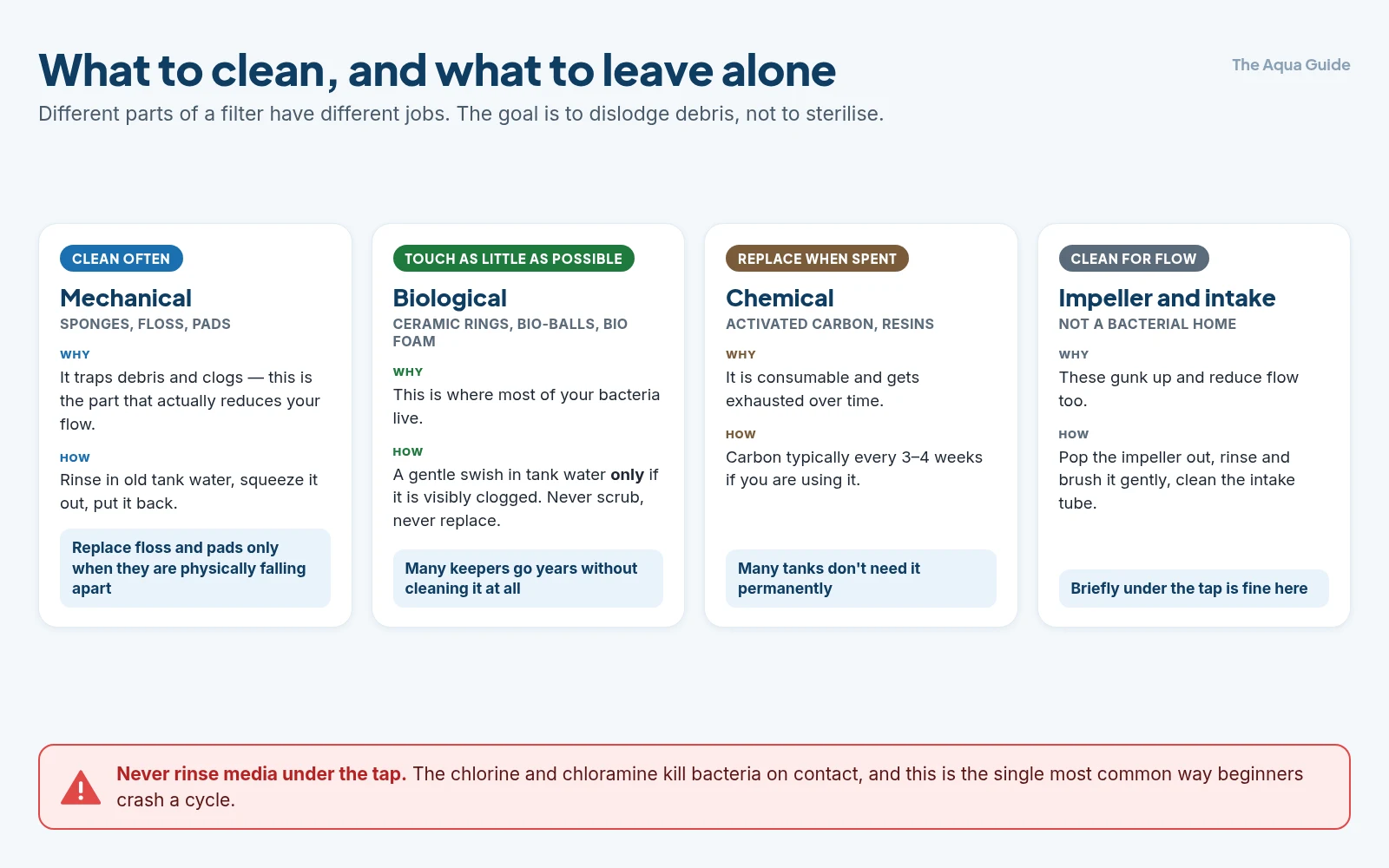
Different parts of a filter have different roles. Knowing which is which lets you clean the right things and leave the right things alone.
Mechanical media (sponges, filter floss, pads) traps debris and clogs over time. This is the part you actually need to clean often, because it's what reduces flow. Rinse it in old tank water, squeeze it out, put it back. Replace floss/pads only when they're physically falling apart, not on a schedule.
Biological media (ceramic rings, bio-balls, foam blocks specifically labeled for bio) is where most of your bacteria live. Touch it as little as possible. Give it a gentle swish in tank water if it's visibly clogged or has reduced flow, but don't scrub, don't replace, and definitely don't rinse under the tap. Many keepers go years without "cleaning" biomedia at all — they just give it a swish if it's gunky.
Chemical media (activated carbon, special resins) is consumable and gets exhausted over time. Replace it when it stops doing its job (carbon typically every 3–4 weeks if you're using it; many tanks don't need it permanently).
The impeller and intake tube can get gunked up and reduce flow too. Pop the impeller out, rinse and brush it gently, clean the intake tube — all in tank water or briefly under tap water (since these aren't bacterial homes).
What NOT to Do
A short list of things that crash cycles, gathered from the most common mistakes:
Don't rinse media under the tap — the chlorine and chloramine kill bacteria on contact.
Don't replace all your media at once. If you really do need to swap out an old sponge or pad, replace it in stages — one section at a time over weeks, so the new media seeds with bacteria from the old before the old comes out.
Don't use soap, vinegar, or cleaning chemicals on anything that goes back in the tank. Stick to plain mechanical rinsing.
Don't let media dry out. If you take media out for any reason, keep it submerged in tank water — bacteria die quickly if they dry.
Don't over-clean. Filter media doesn't need to look sterile to work — it needs to flow and to host bacteria. Slightly-gunky media that flows well is healthier than aggressively-cleaned media.
What to Do If You Slip and Crash It
If you do accidentally rinse media in tap water or strip too much and your tank starts showing ammonia or nitrite again, treat it like a mini re-cycling event: test your water frequently, do partial water changes to keep readings down, reduce feeding to lower the bacterial load, and let the colony rebuild over the next few weeks. (A bottled bacteria starter can speed recovery.) Most cycle "crashes" from filter mistakes recover, especially in tanks with other bacterial reservoirs like gravel and décor — but it's a stressful few weeks for your fish, so it's much better avoided in the first place.
The Bottom Line
Clean your filter when flow reduces — and clean it the right way: rinse media gently in old tank water you've reserved from a water change, never under the tap. Focus on cleaning mechanical media (sponges and floss) that actually clog; leave biological media alone as much as possible, since that's where your bacteria live. Replace media in stages rather than all at once, never use soap or chemicals, and don't let media dry out. Following these simple rules, you can clean your filter regularly for years without ever risking your cycle. The single sentence to remember: tank water, not tap water.
Related guides
- Filter media explained: mechanical, biological, chemical
- Choosing the right filter: HOB vs sponge vs canister
- What causes a nitrogen cycle crash?
- The correct step-by-step water change
- Do I need bottled bacteria, and which kinds work?
- How does the aquarium nitrogen cycle work?
- The daily, weekly and monthly maintenance checklist
- The nitrogen cycle, explained
Got questions about your specific setup? Drop them in our Community Forum — we love helping new fishkeepers get started right.