If you've been fighting cloudy water with water changes and filter tweaks, there's a quieter fix sitting in plain sight: plants. Live plants act as natural biological filters, competing for the very same nutrients that fuel cloudy water in the first place. They won't fix a problem overnight the way a UV sterilizer might, but they're the closest thing to a permanent solution — a tank with healthy plants simply gets cloudy far less often.
The trick is matching the right type of plant to the cause of your cloudiness. Here's how to choose.
At a glance: where plants backfire
| Watch out for | What happens |
|---|---|
| Decaying plants | Dying or melting leaves are a leading cause of ammonia spikes — which trigger bacterial blooms. Remove rotting or yellowing leaves promptly. A neglected plant makes your water worse |
| New planted substrate | Some specialised substrates contain very fine particles that cloud the water for at least 24 hours after setup. Normal, temporary, and not a problem to solve |
| Too many plants, too few fish | A plant-heavy tank with a light fish load may not produce enough waste to feed them. A starving plant starts to rot, which — ironically — clouds the water. A liquid fertiliser dosed to the bottle solves it |
Plants are the long game of water clarity. UV sterilizers, clarifiers and filter pads treat the symptom; plants quietly remove the cause by eating the nutrients cloudiness depends on.
Floating Plants — Best for Green Water (Algae Blooms)
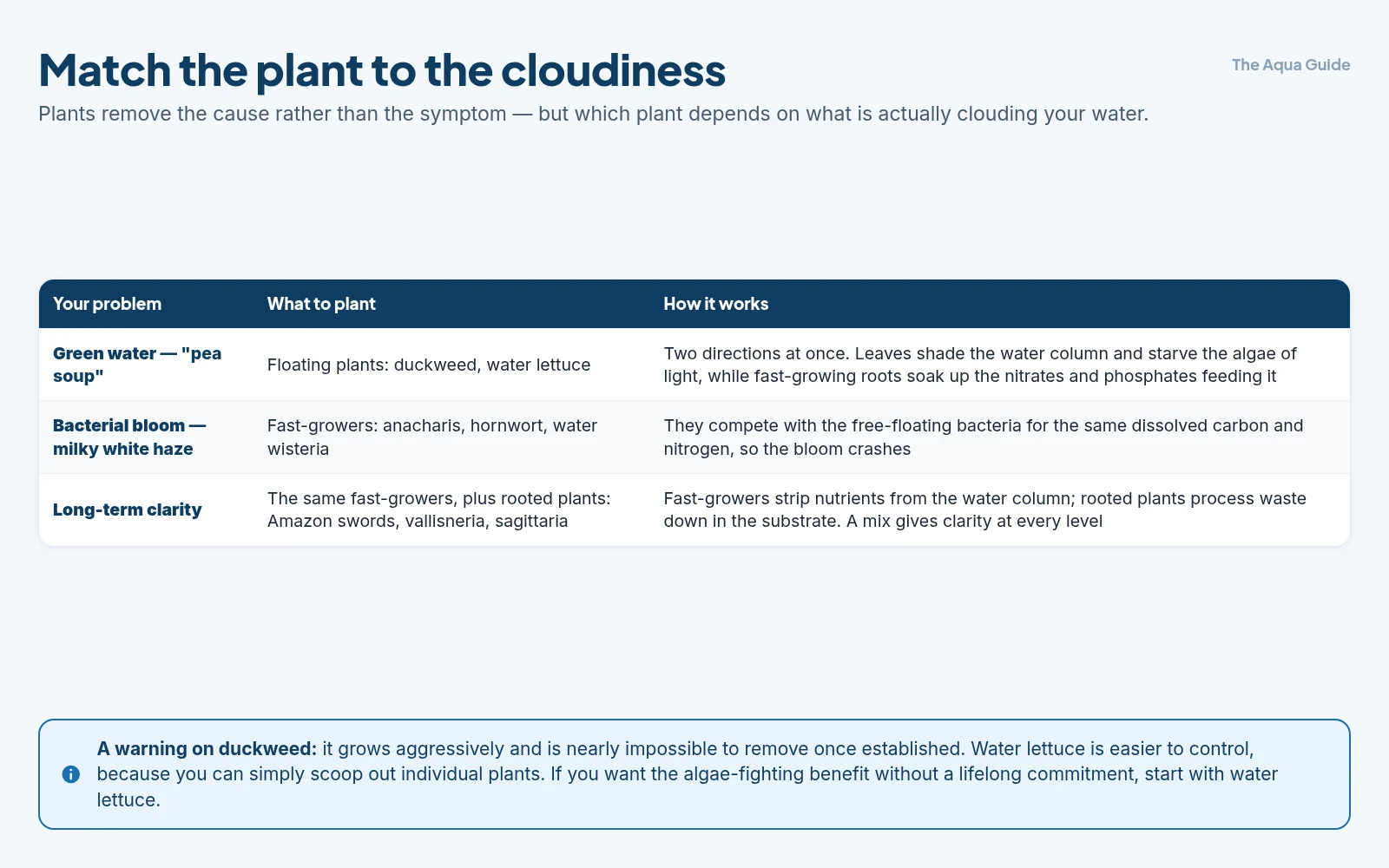
If you're dealing with "pea soup" green water, floating plants are your best weapon. They tackle an algae bloom from two directions at once: their leaves sit on the surface and shade the water column, starving the free-floating algae of the light it needs, while their fast-growing roots soak up the excess nitrates and phosphates that were feeding the bloom. Cut off an algae bloom's light and nutrients, and it collapses.
Reliable beginner-friendly options include duckweed and water lettuce.
A fair warning on duckweed: it grows aggressively and is nearly impossible to fully remove once established. Water lettuce is easier to control because you can simply scoop out individual plants. If you want the algae-fighting benefit without a lifelong commitment, start with water lettuce.
Fast-Growing Plants — Best for Bacterial Blooms
During a bacterial bloom — that milky-white haze common in new tanks — fast-growing plants help the tank find its balance more quickly. They compete with the free-floating heterotrophic bacteria for the same dissolved organic carbon and nitrogen, effectively starving out the microbes so the bloom crashes and the water clears.
There are bonus effects, too. Live plants usually arrive with beneficial nitrifying bacteria already living on them, which helps seed your tank and establish the nitrogen cycle faster. And during the day, plants pump out oxygen, which supports the aerobic bacteria that break down waste and the dead microbes causing the haze.
Anacharis, hornwort, and water wisteria are the classic fast-growers here — they grow quickly enough to make a real dent in available nutrients.
Nutrient Sponges — Best for Long-Term Clarity
Clearing cloudy water once is good; preventing it from coming back is better. The strategy is simple: keep a healthy volume of plants in the tank so they consume ammonia and nitrates before those nutrients can ever build up to cloud-causing levels.
The same fast-growers — anacharis, hornwort, and water wisteria — are excellent at stripping nutrients straight from the water column. For deeper, slower stability, rooted plants like Amazon swords, vallisneria, and sagittaria pull their weight by processing waste down in the substrate. A mix of both gives you clarity at every level of the tank.
A Few Things to Watch Out For
Plants are powerful, but they can backfire if you're not paying attention to a few details.
Decaying plants cause the very problem you're solving. Dying or melting leaves are a leading cause of ammonia spikes — which trigger bacterial blooms. Remove any rotting or yellowing leaves promptly. A neglected plant can make your water worse, not better.
New plant substrate clouds the water at first. Some specialized planted-tank substrates contain very fine particles that will naturally cloud the water for at least 24 hours after setup. This is normal and temporary, and the substrate is great for your plants in the long run — just don't mistake it for a problem.
Too many plants and too few fish can starve the plants. If your tank is plant-heavy with a light fish load, there may not be enough natural waste to feed them. A starving plant starts to rot — which, ironically, clouds the water. A liquid fertilizer dosed according to the bottle solves this easily.
The Bottom Line
Plants are the long game of water clarity. UV sterilizers, water clarifiers, and filter pads all treat the symptom; plants quietly remove the cause by eating the nutrients that cloudiness depends on. Match the plant to your problem, keep them healthy, and over time you'll find your tank settling into the kind of effortless clarity that makes the hobby feel easy.
Related guides
- How to clear green water without a UV sterilizer
- Floating and carpeting plants for beginners
- The easiest fast-growing plants for beginners
- How do plants help process ammonia and nitrates?
- Why are my plant leaves melting or yellowing?
- Can I use chemical clarifiers during the cycle?
- The beginner's guide to live aquarium plants
- Advanced fertilisation: dosing methods for planted tanks
Got questions about your specific setup? Drop them in our Community Forum — we love helping new fishkeepers get started right.