You notice one of your fish has ragged-looking fins — the edges look frayed, maybe slightly discolored, possibly with white edges. A few days later, the damage has spread. This is fin rot, and it's one of the most common bacterial conditions in aquariums. Caught early, it's very treatable and fish recover fully. Caught late, it can spread to the body and become serious. Here's how to recognize it, what causes it, and how to handle treatment.
How do I treat fin rot?
Mild cases usually clear with improved water quality, stable conditions and aquarium salt where the species tolerates it; moderate to severe cases need a direct antibacterial medication, ideally in a hospital tank. Fin rot is almost always secondary to something else — poor water quality, fin damage or stress — so finding and fixing that trigger matters as much as treating the fins.
At a glance: what let it in
| Trigger | How it does the damage |
|---|---|
| Poor water quality | The #1 cause. Elevated ammonia or nitrite, or chronically high nitrate, damages fin tissue and lowers immune defences. Tanks with infrequent water changes are particularly prone |
| Fin damage from nipping or fighting | Damaged fins are open to bacterial colonisation. Keep nippy fish with long-finned tankmates and expect fin rot eventually |
| Netting or rough handling | Tears from being moved become infection sites |
| Cold water stress | Fish below their preferred temperature have weakened immunity. A failed heater is a common trigger |
| Overcrowding | Crowded fish are stressed fish |
| Recent shipping or a new addition | Transport stress plus exposure to new pathogens. Often noticed in the first weeks after purchase |
| Another illness | A fish fighting ich or something else often develops fin rot as a secondary problem |
Fin rot is almost always secondary to something else. Fish in clean, stable conditions with healthy immune systems rarely develop it spontaneously — so treating the fins without fixing the trigger usually leads to recurrence.
What Fin Rot Looks Like
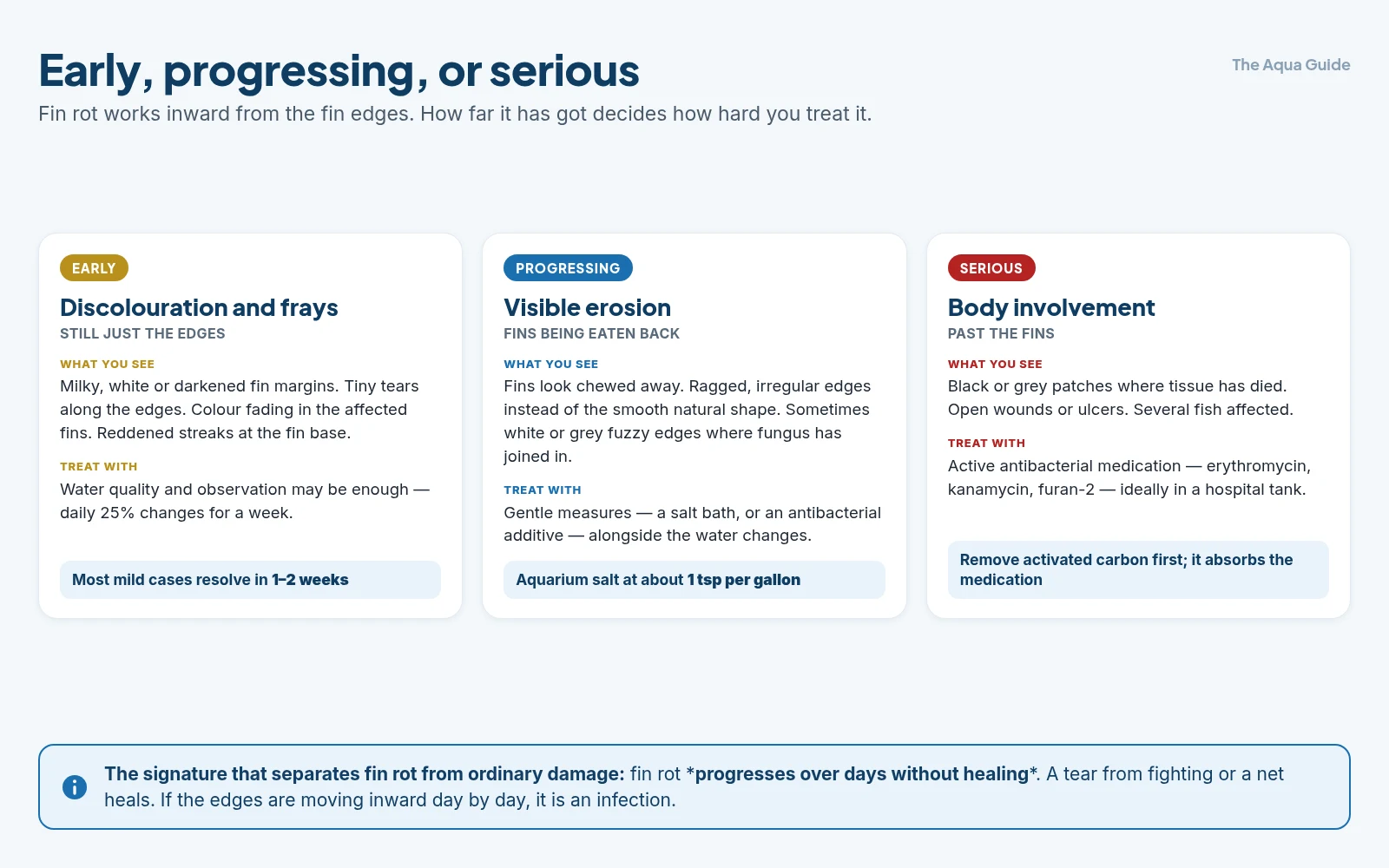
Fin rot is a bacterial infection that affects the edges of fins, progressing inward toward the body if untreated. Recognizable signs:
Early stage:
- Slight discoloration at fin edges — milky, white, or darkened margins
- Tiny tears or frays appearing along edges
- Loss of color intensity in affected fins compared to healthy fins
- Reddened streaks at the base of fins (blood vessels showing inflammation)
Progressing stage:
- Visible erosion — fins look chewed away or eaten back
- Ragged, irregular edges rather than the smooth natural fin shape
- White or grey fuzzy edges in some cases (where secondary fungal infection joins in)
- Increasing loss of fin tissue, particularly on the long flowing fins of bettas, guppies, and angelfish
Advanced/serious stage:
- Fins eroded down to the body
- Tissue damage extending to the body itself — at this point you're looking at body rot, which is much harder to treat
- Black or grey patches where tissue has died
- Open wounds or ulcers
The key signature of fin rot vs. ordinary fin damage from fighting or accidents: fin rot progresses over days without healing; mechanical damage heals.
Common Causes
Fin rot is almost always secondary to something else — fish in clean stable conditions with healthy immune systems rarely develop it spontaneously. Common triggers:
Poor water quality. The #1 cause. Elevated ammonia, nitrite, or chronically high nitrate damage fin tissue and reduce immune defenses. Tanks with infrequent water changes are particularly prone.
Fin damage from fighting or fin nipping. Damaged fins are vulnerable to bacterial colonization. If you keep nippy fish (some tetras, barbs) with long-finned tankmates (bettas, fancy guppies, angels), expect fin rot eventually.
Damaged fins from netting or rough handling. Tears in fins from being netted or moved can become infection sites.
Cold water stress. Fish kept below their preferred temperature have weakened immune systems. Heater failures are common triggers.
Overcrowding stress. Crowded fish are stressed fish are diseased fish.
Recent shipping or new addition. Stress of transport plus exposure to new pathogens. Fin rot in new fish is common, often noticed in the first weeks after purchase.
Concurrent disease. Fish fighting off ich or another condition often develop fin rot as a secondary issue.
Identifying the trigger matters because treating the fin rot without fixing the cause usually leads to recurrence.
The First Response
When you see fin rot starting, work through this in order:
1. Test your water. Ammonia and nitrite should be zero; nitrate should be reasonable. If anything's off, this is likely your trigger — fix it.
2. Do a 30–40% water change. Immediate improvement in water quality alone often slows or stops mild fin rot. Use dechlorinated, temperature-matched water.
3. Check for the source. Is a tankmate fin-nipping the affected fish? Has something stressed them recently? Is the heater working? Identify and address the underlying issue.
4. Decide on treatment intensity based on severity:
- Mild (edges slightly discolored, minor fraying): Water quality improvement + observation may be enough
- Moderate (visible erosion, multiple fins affected): Add gentle treatments (salt bath, antibacterial additive)
- Severe (extensive erosion, body involvement, multiple fish affected): Active medication, possibly hospital tank
5. Observe daily — fin rot can progress fast. Daily checks let you escalate treatment if it's spreading.
Treatment for Mild Fin Rot
For mild cases caught early, often these are enough:
Improved water quality. Daily 25% water changes for a week, ensuring zero ammonia and nitrite, helps fish heal themselves. Clean water is the single most powerful tool.
Aquarium salt at moderate concentration (about 1 tsp per gallon, dissolved before adding) supports healing and is antibacterial. Continue for a week or two. Skip if you have scaleless fish, sensitive species, plants, or invertebrates.
Temperature stability. Confirm heater is working and temperature is appropriate (most tropical fish heal best at the upper end of their preferred range).
Reduced stocking pressure. If aggression or fin-nipping is involved, separate aggressors or rehome them.
Feed well. Good nutrition supports healing. A varied diet with some frozen foods (bloodworms, brine shrimp) provides extra protein for tissue repair.
Most mild cases resolve in 1–2 weeks with these alone.
Treatment for Moderate to Severe Fin Rot
When fins are visibly eroded or the rot is spreading, more direct treatment is needed:
Antibacterial medications. Several commercial options target gram-negative bacteria responsible for most fin rot:
- Erythromycin — common, effective against many bacterial issues
- Kanamycin — broad-spectrum, good for fin rot
- Furan-2 / nitrofurazone — effective and gentle
- API Fin & Body Cure or similar combination products
Process:
- Remove activated carbon from the filter (absorbs medication).
- Follow label dosing exactly for your tank volume.
- Treat for the full duration specified — typically 5–10 days.
- Maintain heavy aeration during treatment.
- Daily water changes between doses help keep water quality high.
- After treatment, replace carbon and do a large water change to remove residual medication.
Consider hospital tank treatment for severe cases — concentrates treatment, protects healthy tankmates from medication exposure, and lets you monitor the affected fish closely. (Hospital tanks have their own guide.)
Distinguishing Fin Rot from Other Conditions
Several conditions look fin-rot-ish but aren't:
Fin damage from fighting or accidents — tears appear suddenly, don't progress, and heal with good water quality alone. No erosion.
Fungal infection — fuzzy, cottony, white growths rather than erosion. Different treatment.
Columnaris — also bacterial but typically affects mouth/head first, faster-progressing, more aggressive. Treatment overlaps with fin rot but columnaris is more urgent.
Ammonia burn — tissue damage from prolonged ammonia exposure, often affecting gills and fin tips. Looks like fin rot but caused by water quality directly. Fix water immediately.
Natural fin shedding — bettas and some other long-finned fish occasionally have slight natural fin shedding without infection. No erosion or discoloration.
When in doubt, water quality improvement plus gentle antibacterial treatment (salt or mild medication) addresses fin rot without harming other conditions much.
Recovery and Regrowth
When treatment works, you'll see:
- Spread halts within 3–5 days of treatment starting
- Edges become smooth (no longer ragged or discolored)
- New tissue regrowth appears at fin edges — usually pale and thin at first
- Color and shape restoration gradually over weeks to months
Important: regrown fins may look slightly different from original — sometimes paler, sometimes irregularly shaped. This is normal. Most fish recover fin function and appearance over time, though severe damage may leave permanent marks.
Don't expect overnight recovery. Even with good treatment, full fin regrowth takes weeks. Be patient and consistent with care.
When Fin Rot Becomes Body Rot
If fin rot progresses to the point where fins are eroded down to the body and the rot is now affecting body tissue, you're looking at much more serious infection. Signs:
- Open wounds or ulcers on the body
- Red inflamed areas where fins met the body
- Lethargy and refusal to eat
- Possibly other systemic signs (bloating, color loss)
At this stage, aggressive antibiotic treatment in a hospital tank is needed, and survival is uncertain. The lesson from these cases: catch fin rot early. Daily observation pays off.
Preventing Fin Rot
Strong prevention rests on routine fundamentals:
Excellent water quality. Weekly water changes, low stocking, proper filtration. The single biggest factor.
Stable temperature. Reliable heater, no swings.
Compatible tankmates. Don't keep fin-nippers with long-finned fish. Don't crowd peaceful fish with aggressive ones.
Gentle handling. When you must net fish, use a soft net and be quick. Avoid stressful catch-and-release situations.
Quarantine new arrivals. Fish from stores often have low-level fin damage and stress; quarantine catches developing issues.
Daily observation. Catching fin rot at first appearance lets you fix it with water quality alone in many cases.
The Bottom Line
Fin rot is a bacterial infection of fin tissue, recognizable by ragged, eroded, discolored, or white-edged fins that progress over days. It's almost always secondary to poor water quality, fin damage, stress, or another underlying issue — identifying and fixing the trigger is as important as treating the rot itself. Mild cases often resolve with improved water quality, aquarium salt (where tolerated), and stable conditions. Moderate to severe cases need direct antibacterial medication, possibly in a hospital tank. Recovery is gradual but most fish fully heal when caught early and treated properly. Prevent fin rot by maintaining excellent water quality, compatible stocking, stable temperatures, and quarantining new fish — and observe daily so you catch problems while they're still small and easy to fix.
Related guides
- Common aquarium diseases: treatment lookup
- Fungal infections: cotton-like growth
- Velvet, columnaris and other bacterial issues
- Aquarium medications: when to use what
- Setting up and using a hospital tank
- Community tank compatibility: what gets along
- How to spot a healthy vs stressed fish
- What are safe ammonia, nitrite and nitrate levels?
Got questions about your specific setup? Drop them in our Community Forum — we love helping new fishkeepers get started right.